


Glastonbury 2024: Arcadia’s Dragonfly continues to push green initiative

As the dust settles on another excellent year at Worthy Farm; with the come-down of all come-downs setting in, and tired feet gradually recovering, it can be easy to overlook the environmental advances made at Glastonbury Festival this year.
Expectedly, for a festival that places such a focus on sustainability and respecting the land around Worthy Farm, this year’s Glastonbury played host to a wide range of technological developments that aim to make the world of festivals much kinder to the environment. Many of these changes were obvious to punters trekking around the festival site last weekend, but others were hidden in the background.
One of the most noteworthy changes over the past few years, not just for Glastonbury but for live music festivals as a whole, has been a focus on renewable power. Glastonbury was certainly ahead of the curve in that sense, having used renewable energy and battery power for nearly 40 years, which they continued to push in 2024.
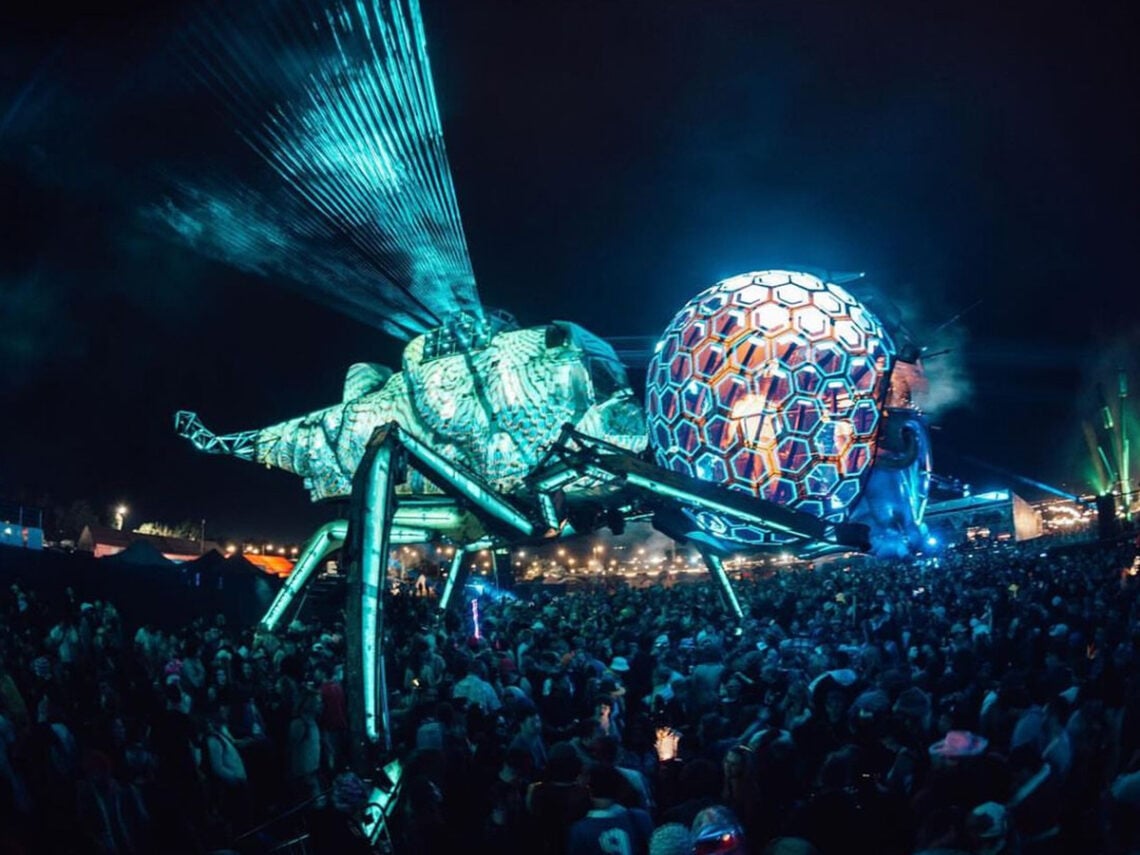
Arcadia was certainly among the most visually impressive stages throughout the site. As you walked through the farm at night, you could hardly ignore the colossal Dragonfly flanked by pyrotechnics and a seemingly constant light show. While other amentites around Arcadia, such as bars, production areas and catering sourced power from renewable HVO generators, the Dragonfly stage itself used energy from batteries during stage hours.
Dale Vince, the founder of Ecotricity, which focuses on renewable energy and a greener approach to electricity, announced on X – formerly Twitter – that the Dragonfly stage at Arcadia used power by batteries during show hours, albeit not through the entire festival. Within the post, he described the batteries as “the biggest festival batteries we’ve ever built”.
Vince also added, “These batteries were specifically designed for outdoor events to replace diesel generators,” which, up until now, had been the main source of power for the vast majority of music festivals and outdoor events – although Glastonbury has long-since used generators running on renewable, virgin palm-oil free HVO. The advancing of battery technology, as Vince states, is likely “to be a game changer in how we power festivals”. However, that stage is yet to be reached, but could be a possibility in the future.
It is, as yet, unclear how this advancement in festival technology will develop further, but it seems likely that these partially battery-powered stages will become increasingly commonplace at music festivals, as organisers across the board become more and more focused on issues of climate and sustainability, just as Glastonbury has been for decades.
This article was updated for clarification at 17:55 on July 4th, 2024, after previously incorrectly claiming Arcadia was entirely battery-powered in 2024.

Never Miss A Beat
The Far Out Music Newsletter
All the latest music news from the independent voice of culture.
Straight to your inbox.