


Glastonbury 2025: Why do festivals have so many stage clashes?

As Noname finished her set on The West Holts stage at Glastonbury last year, delivering one of the finest, most underrated shows of the festival, I wandered over to my favourite food stall, conveniently placed at The West Holts: Bayou BBQ, if you know you know.
While I was queuing, a frenzied army of music fans rushed by me to fill the void left by Noname, seemingly to catch a glimpse of what was about to become an iconic set. Because of how dialled down I thought I had my schedule, combined with the consistency with which The West Holts stage showcases the festival’s best acts, I panicked I was missing something seismic. When I was reassured to hear it was the Sugababes, I carried on with my headline-worthy bowl of BBQ food.
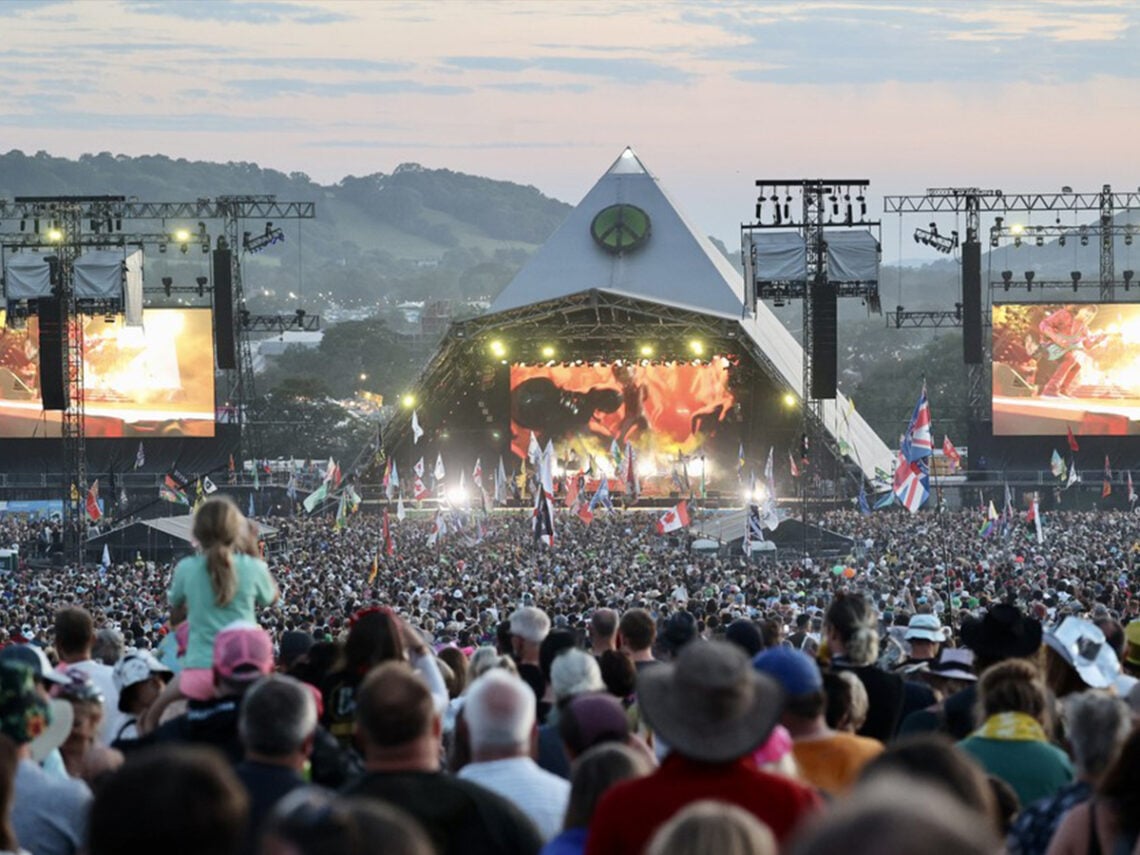
Soon after, the field was closed, and it became another campfire story of worrying overcrowding symptoms. Last year, in particular, felt pertinent in that regard and many of the grounds’ most popular spots were swarmed with punters, making them at times dangerous and at others inaccessible. To some extend, this is par for the course when you attend the most sought-after festival in the entire world, one where break-ins are somewhat inevitable given the demand and whose position as an independent festival, devoid of the commercial overlords, means they had to heave themselves out of a Covid shaped hole rather than rely on private equity.
It meant the ticket sale process had been pushed to its limits recently, and stories of stage closures have become more frequent. Which is why, as a result, this year the festival has reacted and sold a “few thousand less tickets”, according to Eavis, in a bid to combat overcrowding.
But as she explained in BBC’s Sidetracked podcast, “It’ll be interesting just to see how that affects the dynamics on site” because since Covid, the festival have noticed, people have moved slightly differently.”
She continued, “So they tend to move more in a herd,” Eavis said. “So my main thing really this year is just to communicate that there are like ten routes to anywhere.”
But it is this exact reason why the festival puts on so many clashes. There simply has to be a reason to incentivise the crowds from actively swarming to the exact same area and becoming an overwhelming health and safety risk.
I am a perfect case study. Last year, the festival cruelly put Idles and Fontaines DC on at the same time. After much deliberating, I chose the latter – a wise choice given the impact of that set – but only after weeks spent grumbling at the unfair reality a music fan with my taste had placed in. But would I have preferred it more if the Park Stage was overwhelmed with fans for the Irish five-piece’s set, crushing me into a sea of discomfort and resentment, leaving a core memory of mine ruined? Once I reminded myself it isn’t, in fact, all about me, the bigger picture became abundantly clear.
It is undoubtedly a catch-22 the festival organisers find themselves in every year, and amidst the barrage of unfair and bitter criticism they face, schedule clashes are perhaps the most ridiculous. Because it’s often the same people who complain about crowding, who fail to understand the nuance of every decision made by the organisers to make this behemoth of a festival run as smoothly as it does. Every year, festivals all over the world woefully fail from an infrastructural point of view, yet the world’s most watched, scrutinised, and sprawling seems to unfold without any major hitches. And if clashes are a byproduct of that, then so be it.
What are the biggest Glastonbury clashes this year?
That being said, I am being subjected to some heartbreaking clashes once again this year. Kicking off on the Friday, Domino Records royalty Wet Leg are set to take over The Other Stage at 3:45pm, the same time as Mercury Prize-winning English Teacher, who play on the Park. And as Wet Leg pulled a worryingly large crowd to The Park in 2022, the festival is clearly erring on the side of caution.
Charli XCX is undoubtedly going to pull a huge number to The Other Stage on Saturday night, and so her clashing with Doechii is undoubtedly a precautionary measure. It does, however, likely mean that for the first time in nearly a decade, I might get to watch the Pyramid headliner of that night, Neil Young, in relative space and comfort.
Elsewhere, Amyl and The Sniffers clash with Yussef Dayes on the Saturday at 5pm, while the much anticipated secret act, Patchwork, clash with Ezra Collective on Saturday at 6pm. On the Sunday, Turnstile, Goat and Black Country, New Road all play at around 5pm while The Brian Jonestown Massacre and St Vincent clash at 6:30pm.
