


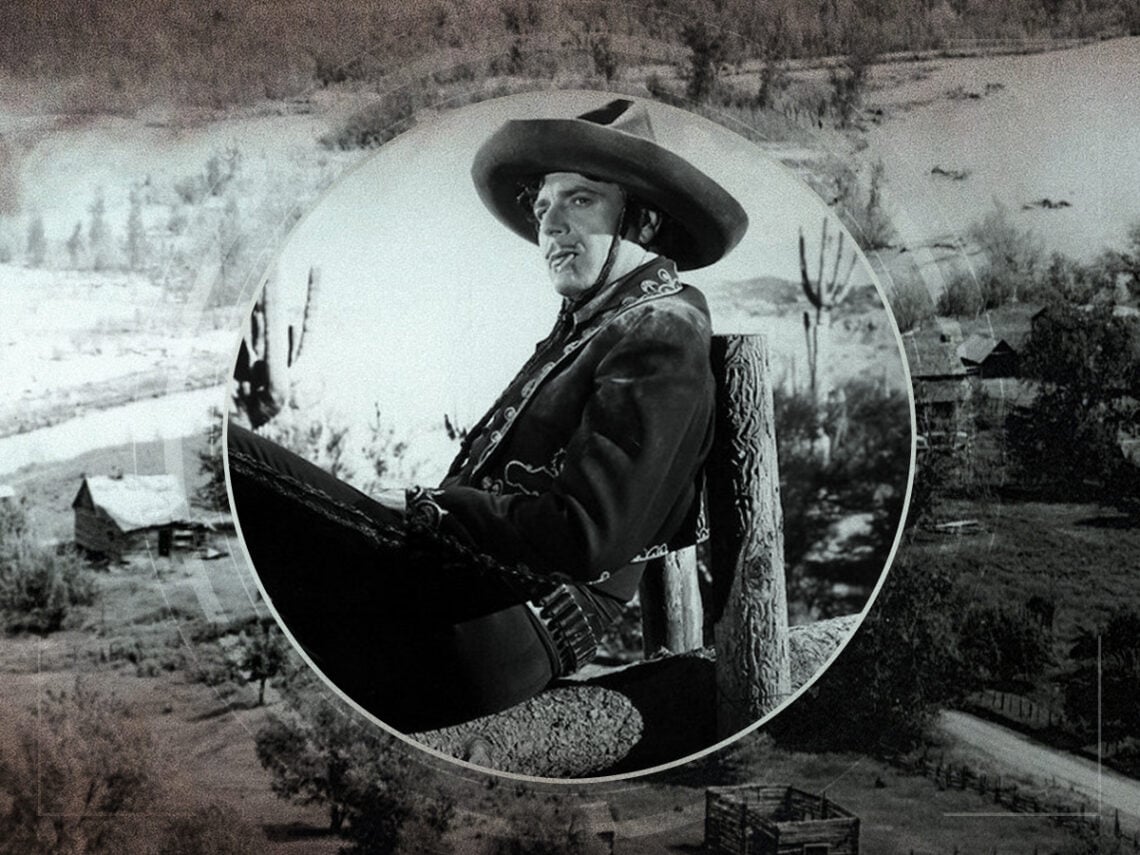
The Utah ghost town that ushered in Hollywood’s most important revolution

Next month sees the release of Undertone from A24, a revolutionary horror movie that places the importance of audio right at the heart of its effectiveness, using a ‘sound-first’ narrative rather than visuals to unsettle the viewer.
It’s a reminder of how far cinema has come in 100 years or so, since the first film with synchronised sound and pictures was released, and not only that, but 1929’s In Old Arizona was also the first Hollywood movie to feature dialogue, or a ‘talkie’ to be filmed entirely on location rather than in a studio, made possible thanks to technological innovations and the permission of not only several national parks in California, but also a historic ‘ghost town’, named Grafton in Utah.
Grafton had been founded by Mormons in the mid-1850s before decades of flooding and conflicts in the town led to it being abandoned, and it has been used as a filming location ever since, featuring in movies as famous as Robert Redford’s Butch Cassidy and the Sundance Kid in 1969.
40 years before that, however, it hosted the crew of In Old Arizona, including its director Raoul Walsh, who was also going to star in the western as the famous ‘Cisco Kid’, but whose involvement in the film was cut short when driving to the set he hit a jackrabbit which came through the windscreen of his car and blinded him in one eye. It was a tragic development as Walsh was excited about the potential such a groundbreaking movie would have; never before had a western featured the atmospheric sounds of galloping hooves, of cattle or a bar scene.
He told producers, “I want a good newsreel truck and a western script. Let me have the sound truck, and I’ll give you a sound and the old action. We’ll knock the public dead.”
The movie told the story of a charming, occasionally singing, bandit being hunted by a local sheriff as he tries to romance a local beauty despite a $5,000 bounty being placed on his head. None of the scenes in the movie was actually filmed in Arizona, despite the movie’s title, and although the studio was delighted by the rushes they saw, additional scenes were still filmed on a backlot.
Directing duties were picked up by Irving Cummings, who would go on to make famed Technicolor musicals with Betty Grable and Shirley Temple, and it was he who gave instructions to the stars, including Warner Baxter, who ended up taking home ‘Best Actor’ for the movie at just the second ever Academy Awards.
Audiences were enthralled by the experience of not just seeing a film in which real life was represented, but also by hearing the natural sounds of the outdoors as well as the voices of the actors they saw on the big screen, a revelatory experience that was reflected in the fact that although the film cost just thousands to make, it brought in well over $1million at the box office, a fortune at the time.
The film was also nominated for ‘Best Picture’ at those Oscars but lost out, despite also being nominated for ‘Best Writing’ and ‘Best Cinematography’. Baxter would return for three sequels to the movie, of which the best known is 1931’s The Cisco Kid, which would much later be developed into a TV series. Now in the public domain, you can watch In Old Arizona in full.
