


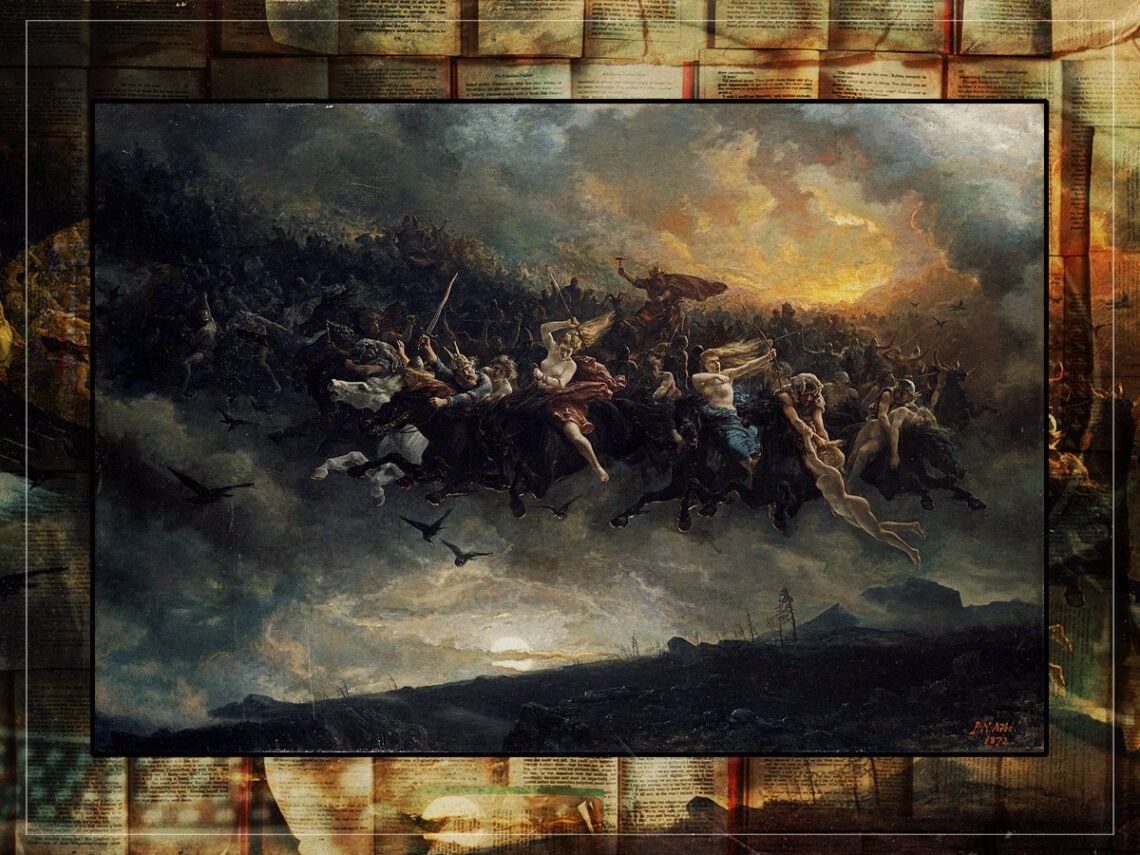
‘(Ghost) Riders in the Sky’: The tragedic folk tale that inspired a country classic

A lot of legends and folk tales find their way into music, and Nick Cave often wears them like a coat of armour.
For the most part, the appeal is the mystique and the way it makes us reevaluate what it means to be human. But what about those that cross a little too intentionally into real territory, like there could be some underlying hidden truth behind the smoky façade?
There’s a point of contention with mythology, especially the stories that lurk in the darker corners of our minds, where it somehow stops being so imbued with the conspiracy of it all and starts reflecting human nature, shaping emotions and infiltrating how the mind works. Cave’s gorgeously dark, fantastical worlds thrive not only because they’re often dripping in folklorish elements but because they comment on the human psyche in ways that are often uncomfortable but charmingly revealing.
It’s also the reason why tracks like ‘Red Right Hand’ are perfect for texts like Peaky Blinders—there’s an insidious undertone there. Something that sounds and feels like the ideal accompaniment to an underground operation, where its leader could be just as much an evil spiritual entity as an everyday man, seamlessly conning his way through high-stakes situations like an elusive figure who knows how to be conniving to get what he wants.
But as much as these examples feel harmless to a point, because of the familiar safety of make-believe, some legend-inspired songs get a little hazier. The 1948 country standard, ‘(Ghost) Riders in the Sky: A Cowboy Legend’, for instance, was initially dreamt up by songwriter Stan Jones, who’d heard stories when he was younger of people whose spirits rode through the sky, influenced by demons, like ghost riders.
Jones had first heard the legend growing up in Arizona, where a Native American man had told him about spirits who haunt the skies. A few other elements connect the story to other events that make it seem as though it might not entirely be a legend. However, these remain mystified details barely caught by loose-lipped passersby who’d heard the stories of cattlemen passing through Texas killed when their cattle started stampeding out of nowhere.
It turned into folklore when people started saying it was the ghost riders wreaking havoc, distracting the cattle and unsettling them to their deaths, leading the cattlemen and other animals to the same fate. But when the 12-year-old Jones heard the story, something about it stayed with him. It came to his mind more intentionally some time later, when he was watching the clouds with his childhood friend. They noticed how the clouds looked like ghost riders, which eventually inspired him to turn the sentiment into a song.
Though a story of tragedy, the song represented something more akin to a warning with a sense of foreboding, like if someone wasn’t to change the direction of their path, or more literally, see the error of their ways, they’d be resigned to the same fate as the cattlemen. “When all at once a mighty herd / Of red eyed cows he saw / Plowin’ through the ragged skies / And up the cloudy draw”, the story warns, later clarifying its core message: “Then, cowboy, change your ways today / Or with us you will ride / Trying to catch the devil’s herd / Across these endless skies”.
When Johnny Cash later made it a country and western staple, he gave it that quintessential folklorish edge that keeps the mystery alive. Though obviously embellished with all the elements that push it further into that well-established, Cash-esque smoky country haze, there’s no telling where the legend originally came from, or if those mysterious fatalities could ever really be explained away by demonic ghost riders storming the sky with the intent to taunt and murder.
