


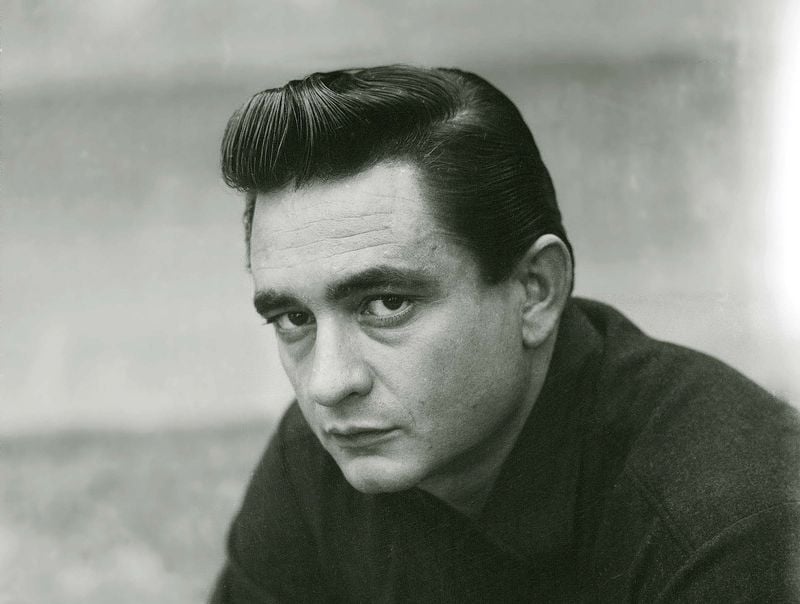
Johnny Cash’s 20 greatest songs of all time

“How well I have learned that there is no fence to sit on between heaven and hell. There is a deep, wide gulf, a chasm, and in that chasm is no place for any man” — Johnny Cash
Few artists in the world are comparable with the late, great Man in Black, Johnny Cash. Not only is the singer regarded as one of the most potent voices in musical history, but as a songwriter, he was second to none. Below, we’re picking out 20 of the great man’s best songs in celebration of his wild and esteemed talent.
The Man in Black is one of the most influential country music stars of all time. Although Cash was never happy to stick to one side of the road, once appropriately stating: “Sometimes I am two people. Johnny is the nice one. Cash causes all the trouble. They fight,” the singer has used his iconic vocal to sing songs from across the musical spectrum. He has always managed to make the music sound exactly like his own character’s beating heart but thud with the same intensity of his soul.
Starting his career with only a hope and the guitar on his back, the singer went on to release an astounding 67 studio albums, 14 live albums, over 100 compilation albums and has even been given 14 tribute albums too. It’s a career in the studio that has rarely been matched and will likely not be topped by any modern artists. That’s because, above all else, Johnny Cash loved his art.
Though he found fame and comparative fortune, it feels certain that Cash would be writing and singing his songs no matter if he was paid for it or not. The truth is, Cash just let his heart beat to find the rhythm, his soul grab the pen to write his lyrics and his spirit sing whenever he was under the spotlight. Below, we’re bringing you 20 of the best songs he ever released.
20 best Johnny Cash songs:
20. ‘Hey, Porter’
We are kicking off this list with one of Johnny Cash’s railroad songs, ‘Hey, Porter’ at number 20. In the song, Cash tells the story of a passenger on a train who is excited to go back home and keeps asking the porter, relentlessly, for updates.
Released in 1955 as a single, it was the first recording of Johnny Cash and the Tennessee Two. It was a song that Cash re-recorded plenty of times later on in his career. Set at a fast rhythm, Cash’s deep baritone voice fit wonderfully in the country-rockabilly sound of the song.
19. ‘Big River’
This 1958 song was penned by Cash during a touring break being inspired by a newspaper article with the heading ‘Johnny Cash Has The Big River Blues In His Voice.’ However, he had a different arrangement in mind when Sam Philips, the founder of the Sun Records persuaded him to record the song: “When I wrote ‘Big River,’ I wrote it [to be sung] real slow, not up-tempo as I did it on record…There was a guitar player named Roy Nichols, who later worked with Merle Haggard, and he used to play that song with me, and he played some really black blues on it. It sounded like a real blues song. Sam Phillips wanted it upbeat, and he made it sound like a rockabilly song.”
Considered to be one of Cash’s best pieces of writing by the likes of Bob Dylan and Tom Petty, the song is about a man, who smitten by a woman’s droning Southern vowels, pursues her down the Mississippi river, unable to catch up with her. The lovesick country melody was delivered effortlessly by Cash and backed by Luther Perkins’ electrifying guitar solo and Marshall Grant’s bass.
18. ‘(Ghost) Riders in the Sky’
Originally composed by American actor Stan Jones, ‘(Ghost) Riders in the Sky’ was a song that was covered by many artists over time, Cash being one of the best. Cash’s take on this cowboy-style country/western song had a perfect blend of instruments and vocals that could transport you back to the pages of a dusty old book on myths and folklore.
The song, as Jones wrote it, told the story of a cowboy who had a vision where he saw spirits of damned cowboys chasing after him, eerie paraphernalia of the event being portrayed just as prominently. It’s an old tale, often compared to the European myths of the Wild Hunt. The song was released on Cash’s album Silver in 1979.
17. ‘San Quentin’
The album At San Quentin was the successor of At Folsom Prison, both of which were conceptual live prison albums, a theme that occupied Cash’s imagination for quite some time. Recorded live at San Quentin State Prison in 1969, this unique performance was also filmed by Granada Television under the direction of Michael Darlow.
The title song was a new addition to Cash’s set and was performed for the first time during the live show. Cash planned to perform the song twice beforehand, but made it look like an encore due to public demand. However, both the versions ended up in the recorded album giving it a natural and free-flowing vibe.
16. ‘One Piece at a Time’
‘One Piece at a Time’ followed Cash’s beautifully rhythmic narration of the lyrics, only breaking into melody in the choruses of the song. The track was a country novelty song, taking motifs from popular culture and telling the story of how the raconteur built his car (a Cadillac), which he couldn’t afford to buy. Each day he would go into the Cadillac factory where he worked and steal parts of the machine and carries them back in his lunchbox. In the end, he made a unique, albeit bizarre-looking Cadillac, that was a one-of-a-kind masterpiece.
Charting at number one on the Billboard’s Hot Country Songs, the song’s spoken-word format with its easy progression was something that Cash carried out flawlessly. Cash released the song on his album One Piece at a Time in 1976.
15. ‘The One on the Right is on the Left’
Written by Jack Clement, the country song was featured in Cash’s 1966 album Everybody Loves A Nut. Although the third single of the album, it became the most successful song reaching number two in the U.S Billboard Country Singles Chart.
The lyrics of the song explores how individual differences, especially political ones, adversely affects the unifying nature of music. It indulges in a humorous criticism of a folk music group who though are “long on musical ability”, prioritises their individual political stand and finally breaks up to go separate ways. Cash’s bass-baritone voice beautifully conveys the message of the song without sounding overly sarcastic.
14. ‘Flesh and Blood’
‘Flesh and Blood’ was a ballad by Cash which was featured in the film I Walk the Line starring Gregory Peck. The song was a part of the film’s soundtrack album, which was also credited as a Cash album considering all the songs on it were composed by him, including the title track for the film.
The lyrics of the song, if one could compare, were reminiscent of a very William Wordsworth-ish vibe. It described a man staring at nature and relishing it. But, at the end of the day, nature couldn’t fill the hole in his heart. As he said, “flesh and blood needs flesh and blood”, so he wished to be with the one he loved, who was not there with him.
13. ‘Understand Your Man’
Released as the first single of Cash’s album I Walk The Line, this 1964 song was also penned by Cash. The song was majorly influenced by Bob Dylan’s 1962 single ‘Don’t Think Twice, It’s All Right’ both in terms of lyrics and melody. Dylan’s song was in turn inspired by Paul Clayton’s country song ‘Who’s Gonna Buy You Ribbons When I’m Gone?’, engaging Cash’s track into a web of allusions.
The song became an instant hit because of its catchy tune and riveting lyrics. A duet version of Cash and Dylan was recorded on Feb 17, 1969, during the Nashville session which took the form of a medley with the addition of Dylan’s song ‘Don’t Think Twice.’ However, it was never released. ‘Understand Your Man’ was also the last song to be performed by Cash in front of the audience at the Carter Family Fold in Hiltons, Virginia, on 5 July 2003.
12. ‘Ballad of a Teenage Queen’
For number 12 on our list, we go back to Cash’s 1958 track ‘Ballad of a Teenage Queen’. The song was written by Jack Clement and recorded by Cash with the background vocals by The Tennessee Two. The song featured on Cash’s album Sings the Songs That Made Him Famous (1958).
Working with a more blues-incorporated country sound, the song’s lyrics follow the recurring theme of a small-town girl who made her way into the spotlight, only for her to leave it all and come back to her hometown to reunite with her lover. Cash re-recorded the song with his daughter Rosanne Cash and The Everly Brothers, which was released on his 1987 duets album Water from the Wells of Home. This version remains one of the very few recordings of the father-daughter duo performing together.
11. ‘Get Rhythm’
This upbeat rockabilly is a feel-good track written by Cash himself. It was originally released on the B-side of the single ‘I Walk The Line’ in 1956. After more than a decade, it was overdubbed with live effects and re-released in 1969, becoming more popular than before.
The song centres on a shoeshine boy who’s got “the dirtiest job in town” and thus gets rhythm to cope up with his sad reality: “I asked him while he shined my shoes/ How’d he keep from getting the blues/ He grinned as he raised his little head/ He popped a shoeshine rag and then he said/ Get rhythm when you get the blues.” However, Alice Randall questioned the song’s content in the book My Country Roots: The Ultimate MP3 Guide to America’s Original Outsider Music, stating “racist, racialist, or race appreciating? You decide. Maybe the grinning ‘boy’ hides something worth knowing in his mask as well as behind his mask.”
10. ‘Cocaine Blues’
In the 1960s, Cash held a concert at the Folsom State Prison in California where he performed ‘Cocaine Blues’, among many other songs, to an audience mostly comprised of inmates. The song featured on his live album Johnny Cash at Folsom Prison alongside 16 other tracks. A reworking of the original T. J. Arnall song ‘Little Sadie’, Cash altered the lyrics to make a somewhat less-provocative version of the song for his initial performance.
The story behind the song, as it went, was of a man who, under the influence of whiskey and cocaine, murdered his girlfriend, who had been unfaithful to him. This man, Willy Lee, was later sentenced to prison, and the song ended with Willy imploring his listeners to “drink all you want to, but let that cocaine be”. Cash, however, changed “drink all you want” to “lay off the whiskey”. Cash later re-recorded the song for his 1979 album Silver, but named it ‘Transfusion Blues’.
Although Cash developed a certain romantic outlaw image for himself through his song, the drugs and the alcohol often got the better of him. In the late 1950s, Cash’s addiction got pretty severe, causing him to become jittery and erratic. A long and arduous road of mishaps and an epiphany later, Cash managed to dig himself out of the deep, dark pit of addiction that had consumed and controlled him for the longest time.
9. ‘I’ve Been Everywhere’
The song was written by Australian country singer Geoff Mack back in 1959. Naturally, the original version contained the names of Australian towns. Later Australian singer Rolf Harris adapted it with English and Scottish toponyms to be followed by John Hore with New Zealand toponyms.
The US version was first attempted by Hank Snow, which went on to become a number one country song. Among the artists who followed Snow’s footsteps was Cash, who covered the song in 1996.
The North American version, the one that Cash covered, starts with the line: “I was totin’ my pack along the dusty Winnemucca road”. Most of the towns that the song refers to are in North America, barring a few that drift towards central and South America like Panama, Salvador, Costa Rica and Argentina.
Although many have sung this version, Cash’s unique deep voice gave it a characteristic charm that remains to be a standout.
8. ‘A Boy Named Sue’
The 1960s were a period of transition in Cash’s life. He was at some of the lowest points in his life and was able to recover himself and work on his artistic explorations and experimentations. He was at the height of his career when he performed ‘A Boy Named Sue’ at the San Quentin Prison in California in 1969.
Originally written by singer-songwriter, poet and cartoonist Shel Silverstein, ‘A Boy Named Sue’ followed a rather dramatic descent in the narrative, with a boy narrating the story of how he grew up without a father. His father had left him but not before naming him “Sue”.
For his entire life, he cursed that man for embarrassing him. So, he sought revenge on him, and at the climax of the story, when both had pulled their guns out and aimed at the other, Sue’s father justifies his selection, “It’s that name that helped to make you strong”. At that moment, Sue choked up and embraced his father for igniting the “gravel in your gut and the spit in the eye”. The song, however, hilariously ended on a note of humour with Sue saying, “If I ever have a boy, I’ll name him Bill or George or Frank”, anything but Sue – “I hate that name”.
The song followed Cash’s style of talking-blues, where he used the spoken word format with the basic accompaniment of a string and a percussion instrument. Cash carried out the moderations in his voice perfectly to fit the song’s mood – going deep to fit the rage in his voice and ending with a bang to show how much he despised the name. The song later became popular for its scope of including a gender-bending interpretation to address the various LGBTQ+ identities, especially the transgender and genderfluid individuals.
7. ‘Man in Black’
Cash got the nickname ‘Man in Black’ for his trademark all-black stage outfit. While people saw it as a style statement, Cash reminded them that black was also the colour of protest. The song was written by Cash and released in his 1971 album of the same name. Cash was inspired to write this protest song after interacting with a few members of the audience at Vanderbilt University. He wrote and revised the song a few times and performed it in his concert, receiving a standing ovation at the end.
The song begins with the line ‘why I always dress in black’ — A common question that his fans shared. Cash uses the rest of the song to answer this question. He begins this section by boldly stating “I wear the black for the poor and the beaten down” and then goes on to show his solidarity with “the prisoner who has long paid for his crime” as well.
Cash, who believed in corrections, used to frequently visit state prisons and was famous for his free prison concerts. The song however doesn’t only sympathise with the marginal sections of the community, it also critiques the people in power.
Cash differentiates the ‘haves’ and the ‘have nots’ to highlight how the one section oppresses the other: “we’re doing mighty fine, I do suppose/ In our streak of lightning cars and fancy clothes…” He ends by stating that he’d “love to wear a rainbow every day”, but until the world finds a balance, he would prefer to “carry off a little darkness” on his back to remind everyone of the disparity that exists. The song captures Cash’s raw emotions on a subject that he deeply believed in.
6. ‘Jackson’
‘Jackson’ was a song that saw both Johnny Cash and his wife June Carter come together in a heart-warming performance.
Carter and her entire family had been associated and performed with Cash on multiple occasions before their marriage. ‘Jackson’, which was originally a pop hit by Nancy Sinatra and Lee Hazlewood, saw a country-style rendition at the Cash-Carter duo’s hands. With Cash’s flourishing popularity, the song became a country hit even amongst the non-country audiences.
‘Jackson’ was released on Cash-Carter’s album Carryin’ On with Johnny Cash & June Carter in 1967. It was a melodious and harmonic country sound that championed both Cash and Carter’s powerful voices. It was a song that had the ability to transport the audience to a world of all things Country. Cash and Carter’s version of Jackson also earned them a Grammy for Best Country & Western Performance Duet, Trio or Group, in 1968.
5. ‘Sunday Morning Coming Down’
This song was originally written by the American singer-songwriter Kris Kristofferson and first recorded by the ‘Everything Is Beautiful’ singer Ray Stevens. The song was included in the lyricist’s own album Kristofferson and entered the Billboard Hot Country Singles chart with Stevens’ version. However, none of the previous versions could compete with the popularity that Cash’s enjoyed upon its release in 1970.
Cash’s performance was taped live at the Ryman Auditorium as a part of The Johnny Cash Show for the Ride This Train segment. It filmed visuals that showed a wanderer exploring the Public Square area of Shelbyville, Tennessee.
Cash’s monologue before the song is worth a revisit: “You know, not everyone who has been on ‘the bum’ wanted it that way. The Great Depression of the 30s set the feet of thousands of people—farmers, city workers—it set ’em to ridin’ the rails. My Daddy was one of those who hopped a freight train a couple of times to go and look for work. He wasn’t a bum. He was a hobo but he wasn’t a bum. I suppose we’ve all….all of us ‘been at one time or another ‘drifter at heart’, and today like yesterday there’s many that are on that road headin’ out. Not searchin’ maybe for work, as much as for self-fulfilment, or understanding of their life…trying to find a meaning for their life. And they’re not hoppin’ freights much anymore. Instead they’re thumbin’ cars and diesel trucks along the highways from Maine to Mexico. And many who have drifted…including myself…have found themselves no closer to peace of mind than a dingy backroom, on some lonely Sunday morning, with it comin’ down all around you.”
The monologue was however edited out in the record.
4. ‘Folsom Prison Blues’
Now here is a song that almost became synonymous with Johnny Cash’s career as a singer-songwriter. ‘Folsom Prison Blues’ was the incorporation of prison song and train song – two dominant themes which would be found in many of his later tracks.
Cash was inspired to write the song after watching the movie Inside the Walls of Folsom Prison while serving in the US Air Force in West Germany. For the story of the song, Cash recalled, “I sat with my pen in my hand, trying to think up the worst reason a person could have for killing another person, and that’s what came to mind” – referring to the lines “I shot a man in Reno, just to watch him die”
Cash took much of the melody for the song from Gordon Jenkins’ ‘Crescent City Blues’ but did not credit him on the original record, which led Cash to pay a settlement of a considerable sum of money following a lawsuit. However, for the recording of this song, Cash had no drummers at his disposal.
So, he tactfully imitated the sound of a snare drum by putting a piece of paper under the guitar strings and strumming the rhythm on his guitar. ‘Folsom Prison Blues’ became one of his signature songs, and the live performance of the song at the Folsom Prison earned him a Grammy Award for the Best Country Vocal Performance (Male) in 1969.
3. ‘I Walk The Line’
The song marked Cash’s first number-one single on the Billboard Charts. A self-composed song, it was released in 1956. The track was conceived by Cash when he was in the Air Force, stationed in Germany. The melody was inspired by a recording of a backwards guitar run that Cash had in his tape recorder. Much later Cash recalled, “I wrote the song backstage one night in 1956 in Gladewater, Texas. I was newly married at the time, and I suppose I was laying out my pledge of devotion.”
At first, Cash imagined the song as a slow ballad but became more interested in the up-tempo version that Sam Phillips suggested. The track talks about marital fidelity and personal responsibility to avoid temptations. The song tells a story in a simple and unadorned manner, a style that was synonymous with Cash.
‘I Walk The Line’ was recorded and released thrice with the aim of conquering the charts. In the original recording, Cash hums a tune before moving on to the next stanza. Explaining the technical reason behind it, Cash once said in a TV show, “People ask me why I always hum whenever I sing this song. It’s to get my pitch.” The track is based on the freight train rhythm which, though typical to many of Cash’s songs, never bores listeners.
Often Cash was seen placing a piece of paper under the guitar strings towards the end of the song. During his appearance in the Nashville Network in 1990, he elucidated the matter by stating that it helped him to produce the sound of a snare drum that he wanted to add in the recording but couldn’t.
The song is among one of the most frequently covered. Artists like Dolly Parton, Burl Ives, Dean Martin, Rodney Crowell, Glen Campbell and many others came up with their own versions from time to time. The track was also used as the title song of the 1970 film of the same name and in Cash’s 2005 biopic starring Joaquin Phoenix.
2. ‘Hurt’
In many ways, ‘Hurt’ was Johnny Cash’s swan song. In spite of it being a cover, this song remained one of Cash’s most influential releases of all time. In 2002, Cash’s cover of Nine Inch Nails’ industrial-rock styled song ‘Hurt’. His version saw a shift from the original, the singer ensuring the melody was more compact and Cash’s voice more poignant – so much so that Trent Reznor, vocalist for the Nine Inch Nails, said that he was flattered when he was approached with the question of whether Cash could cover his song, albeit a little apprehensive. But Cash’s vocals and the music video soon won him over, and he went so far as saying, “That song isn’t mine anymore”.
Cash’s rendition was heartfelt and impactful, often resonating with his own life and reflecting on it as the finality of death awaited him.
Recording the song at over 70 years old, the signs of age were visible in his voice. But in no way did it dampen the passion with which he sang the song. ‘Hurt’ was a song that told the story of the protagonist, battling depression and self-harm. In many ways, the lyrics of the song were particularly meaningful for Cash’s life, too. Himself a victim of depression, addiction as well as suicidal thoughts, the song often reminded the listeners of Cash’s personal struggles and where he was coming from.
Cash’s version of ‘Hurt’ was released in 2002 in the album American IV: The Man Comes Around. It earned him critical acclaim and remained with his fans as one of the final songs to remember him by.
1. ‘Ring of Fire’
Co-written by the Grammy award-winning American singer-songwriter June Carter and the very talented Merle Kilgore, ‘Ring of Fire’ remains the greatest track Cash ever had a hand in, it defines his legacy and adds fuel to the fires of his greatness. The song featured in Cash’s 1963 album Ring Of Fire: The Best Of Johnny Cash and has been a smash ever since. Originally, though, the song recorded by June’s sister Anita Carter for her album Folk Songs Old And New.
Very few have the calibre to turn a cover into a signature song, and Cash was one of them. He popularised the folk melody with his rendition overshadowing Anita’s recording.
Although the phrase “ring of fire” sounds dangerous, it actually refers to the feeling of falling in love. June Carter, who was having an affair with Cash, wrote it from her personal experiences. Carter wrote, “There is no way to be in that kind of hell, no way to extinguish a flame that burns, burns, burns.”
While listening to Anita’s recording Cash re-imagined the song in his own way. It is then that he decided to do a cover version. “”[…] I’ll give you about five or six more months, and if you don’t hit with it, I’m gonna record it the way I feel it” Cash said to Anita. The main part of his re-arrangement was the addition of trumpet or the mariachi style horns. Cash’s version also featured the originator of ‘Carter Scratch’ Mother Maybelle and Carter sisters in the harmony parts. Cash’s daughter Rosanne later said, “The song is about the transformative power of love and that’s what it has always meant to me and that’s what it will always mean to the Cash children.”
