


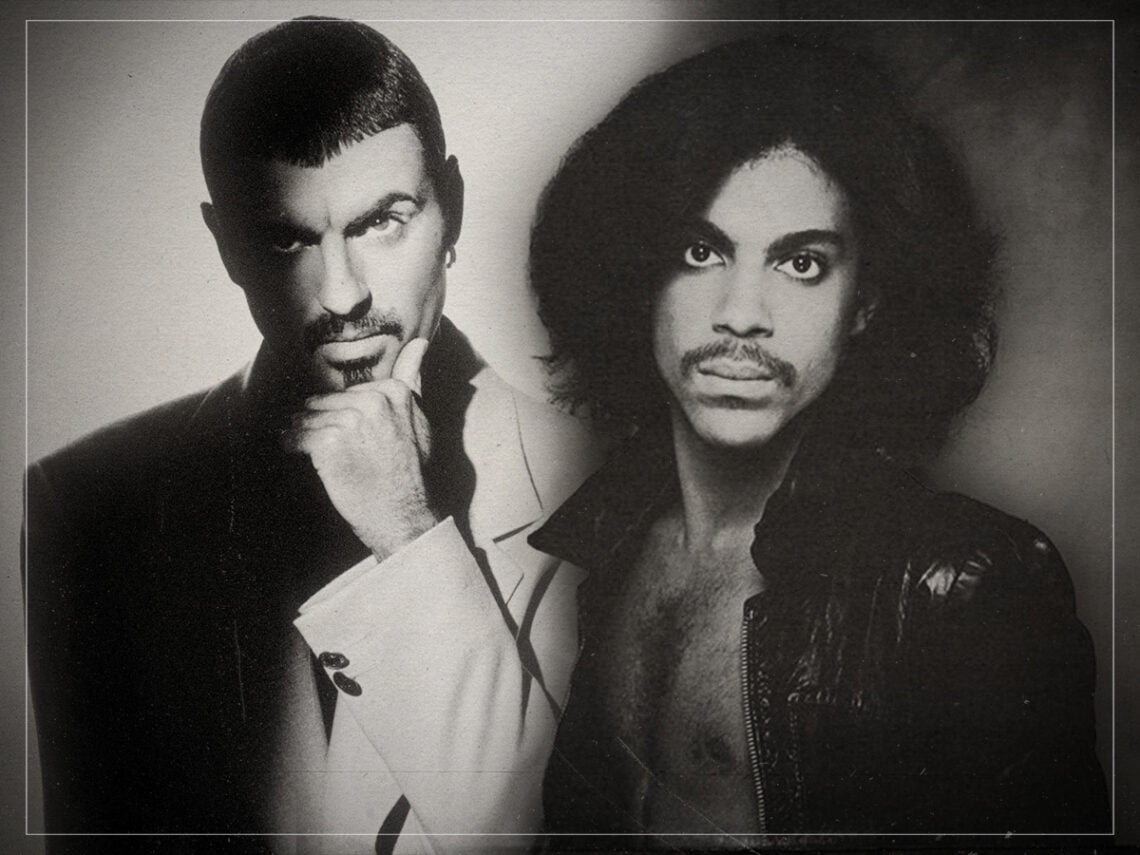
Why George Michael defended “megalomaniacal” Prince

If there’s one thing that George Michael learned during his time in the spotlight, it’s that being authentic comes with a price.
A genius songwriter who saw virtually every single side to the music industry there is, Michael was as much a triumphant figure as a tragic one, the ultimate embodiment of the kind of cultural dichotomy that music lovers flocked to and media critics sought to tear down. After all, in the beginning, Wham! was seen as nothing but a gimmick band, a joke to outsiders who saw the demographic and ventured to dismiss it based on that alone.
“I saw something in Wham! that no one else seemed to see,” Michael once told NME, and he did – while he focused on songwriting and storytelling, those who didn’t get it saw it as commercial bubblegum pop, within which, Michael and his musical partner in crime, Andrew Ridgeley, were leaders of a cultural fad that would arrive quickly and disappear just as fast.
However, that wasn’t the case at all, and Michael eventually earned more respect once he finally left to become a solo artist with the release of his debut record, Faith, in 1987. A record topping the UK Charts and Billboard 200 and remaining inside the latter’s top ten for 51 weeks is virtually unheard of in today’s landscape, but Faith was a product not only of Michael’s unmatched talent but his unrelenting ambition to establish himself as a force outside of the pop duo that gave him his name.
At the time, he’d admitted to wanting to be in the same categories as legendary names like Michael Jackson and Prince, the latter of whom didn’t just appear as the perfect embodiment of artistic excellence but also showed Michael what it meant to be graceful and dignified in the spotlight. Given his unexpected outing in 1988, Michael found Prince’s withdrawal from the more trivial aspects of the industry particularly admirable.
To the unsuspecting eye, Prince was a mysterious, shadowy figure who only did what he wanted to do. In many ways, this was a fairly accurate impression, but what others failed to understand was why he was so resistant to the spotlight in the first place, especially when it came to interviews or other parts of the job that others, like Michael, found difficult to avoid.
To Michael, Prince’s aversion to such tactics was one of his defining characteristics. When faced with an interviewer describing these antics as “megalomaniacal”, Michael quickly jumped to his defence, describing this decision as “the most impressive thing” about his career. “That is the most confident statement you can possibly make,” he said, adding that it removes the risk of the press making up their own narratives, “because he never talked to them in the first place”.
He also said it was the “cleverest thing” he’s ever seen a musician do, because he made that decision from “day one” – before he was even a massive name or had made some of his best material. He’d already decided that he’d craft his career on his own terms and leave out all of the unnecessary extras that he didn’t much care about.
Michael knew perhaps better than anybody why this was so tempting – after all, it was the tabloids that launched many ruthless headlines and smear campaigns in the hopes of triggering a complete downfall. If it wasn’t the innate misogyny rooted in all the ways they disregarded his fanbase, it was the homophobia beneath their mocking of his status, not to mention the continued way they corrupted his reputation following the events of 1988.
