


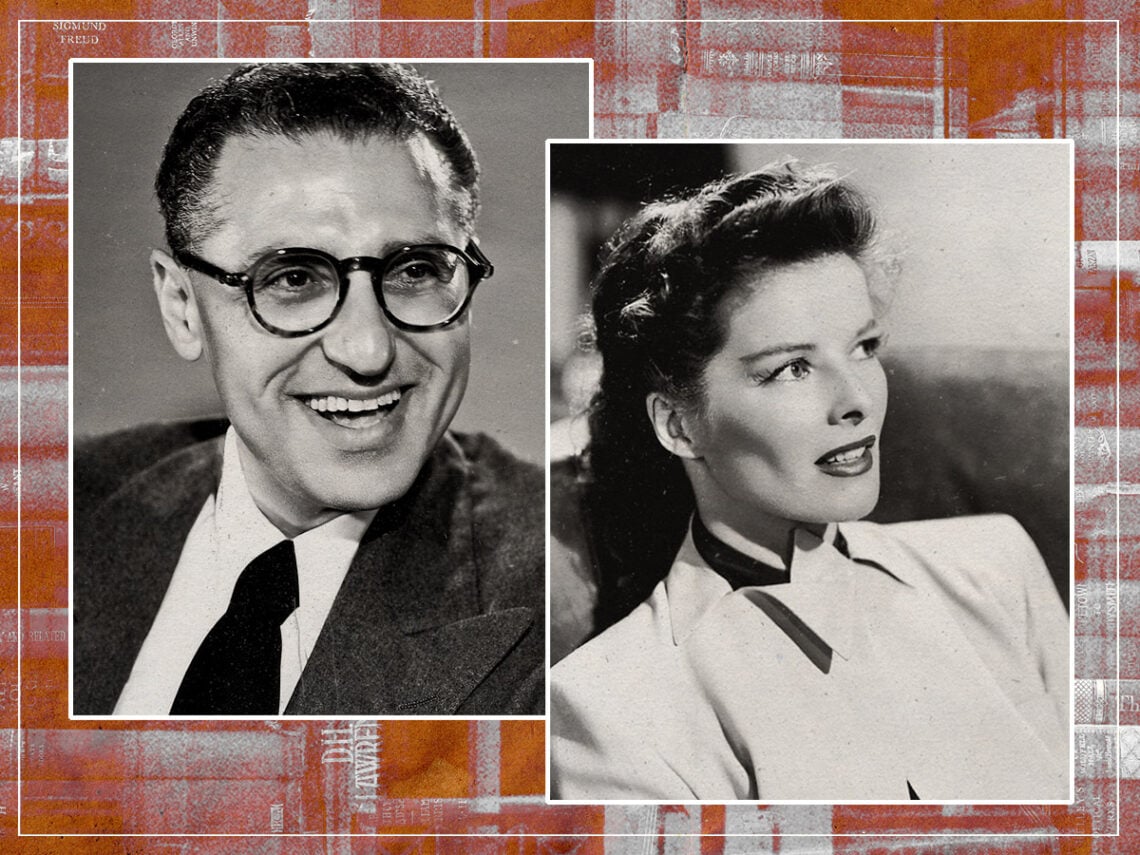
George Cukor’s first impression of Katharine Hepburn: “I was very impressed”

It’s easy for anybody to look back and claim they knew right away they were staring a future great in the face. However, George Cukor wasn’t in the mood to rewrite history when recalling his first encounter with Katharine Hepburn.
She was already a veteran of the stage before even breaking into films, having worked extensively since making her performative debut in a 1928 production of The Czarina. Still, it would be another four years before Hepburn was handed her first silver screen role.
When she was, it was Cukor at the helm of 1932’s A Bill of Divorcement, and he had to fight to place her in the lead. Fellow ‘Golden Age’ icon David O. Selznick didn’t think Hepburn was the right fit for the part, believing that she wasn’t aesthetically pleasing enough to be placed front and centre in a major motion picture.
It’s madness in retrospect, but Cukor sticking to his guns led to a long and fruitful professional relationship. He would go on to direct Hepburn in Little Women, Sylvia Scarlett, Holiday, The Philadelphia Story, Keeper of the Flame, Adam’s Rib, and Pat and Mike between 1934 and 1952, vindicating his decision to pluck her from the theatre and transform her into a star-in-waiting.
With a history-making four Academy Award wins from 12 nominations and a status as one of the best actors of all time, Cukor would be entirely within his rights to take a smug approach to uncovering Hepburn as a viable cinematic entity when Selznick was in firm disagreement. However, as he admitted in the 1981 TV movie Starring Katharine Hepburn, he wasn’t completely bowled over from the start.
“Kate was the understudy in New York for the play Holiday, and when she made a test for a contract at RKO she did a scene from Holiday,” he said. “She struck me as being slightly stagey. Spencer Tracy was very funny. He used to accuse them of singing their lines.” All she had to do was lift a beverage, though, and Cukor was sold.
“What really clinched it was she reached down behind the chair and she picked up a drink,” he continued. “And she did that with such deep feeling and such power that I was very impressed by that. And I thought, ‘This girl has possibilities.'” That would be understating things, looking at what Hepburn went on to achieve, but at least the filmmaker who gave her that big break in the first place wasn’t interested in revisionist history.
It boggles the mind to think that Selznick – himself one of the industry’s most storied producers – was ready to turn his nose up at a talent of Hepburn’s calibre simply for the way she looked, but it was Cukor who got the last laugh in the end.
