


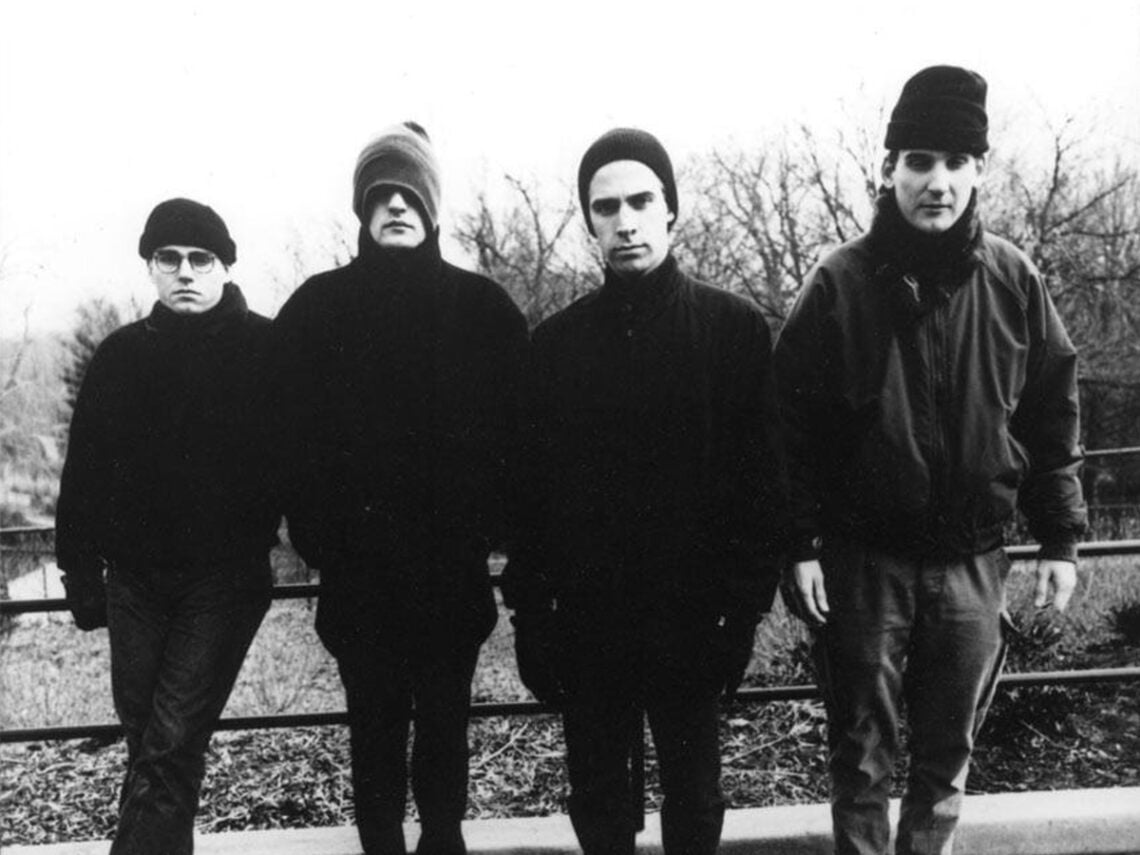
Fugazi: The band with over 800 live albums

The greatest music is that which barely exists. Well, at least that’s the opinion of the brain behind Spiritualized and Spacemen 3, Jason Pierce.
When I interviewed him for Far Out a while ago, we spoke about one of the first albums that he ever put out, called Dreamweapon. The album was done in the spur of the moment, as the band were playing an improvised set in a tiny venue at the end of the world, while a budding recording engineer sat there with the necessary tapes and captured the moment.
While the record is hardly as groundbreaking as the other work that Pierce has gone on to put out, Dreamweapon remains one of the musician’s favourites, purely because of how one of a kind it is. The album wouldn’t exist were it not for that night, those notes and that person recording. It sits on the cusp of existence, and he adores it as a result.
“So much music is like that. Most of what’s considered the start of rock ‘n’ roll and the whole recorded history of Western music is just somebody with an interest in recording folk music,” explained Pierce, “Like, all of the early Muddy Water’s recordings, all of it, it relied on somebody’s love of the medium of recording, more so than the music itself,” he said, “It’s the randomness that allows it, almost outside of the commercial realm of music, where people are making records specifically to make money.”
Not only is this kind of music not aiming to be commercial, but it also has an energy and rawness that better-produced albums simply don’t match. We love live albums because they’re transportive in how well they can effectively take you, the listener, into a very specific moment in time. Those songs exist in the grander scheme of things, but they only exist in that specific moment once. Only once are they played in that way, once to that crowd, and it makes for a completely unique listening experience when compared to other pieces of music.
The band Fugazi seemed to understand the value in capturing these specific moments in which music occupies a very specific state. When they first started playing music, they decided to try and capture that unique live sound, and so asked their friend, who was a sound engineer, if he would be interested in lending a hand.
“It just so happened that a friend of ours, Joey Picuri, who did sound and mixed bands here in D.C., was doing sound for the first Fugazi show,” recalled the band’s lead singer Ian MacKaye, “He just ran a tape of the show. Starting there, whenever he would do sound, he would run a tape and give it to us afterwards.”

Their approach to these recordings started off quite casual, as they decided they would only record local gigs and start trying to sell them; however, things escalated, and the band accumulated so many live recordings that they couldn’t keep on top of them all. They racked up a collection of over 800 live albums, but the idea of selling them to people on an individual basis was so daunting that the band hardly even considered it. It wasn’t until technology moved far enough forward that they realised they were able to put everything online, and people could download whatever show they wanted.
“All we wanted to do was to make it all available,” said MacKaye, “For us, the idea is to make it all available and let people decide which ones they like better. It’s not for us to decide. We don’t care about that. What we’re interested in is the idea that we made these recordings, and they’re not doing anybody a damn bit of good sitting in a closet.”
Step aside, Grateful Dead, there’s a new live band in town.
