


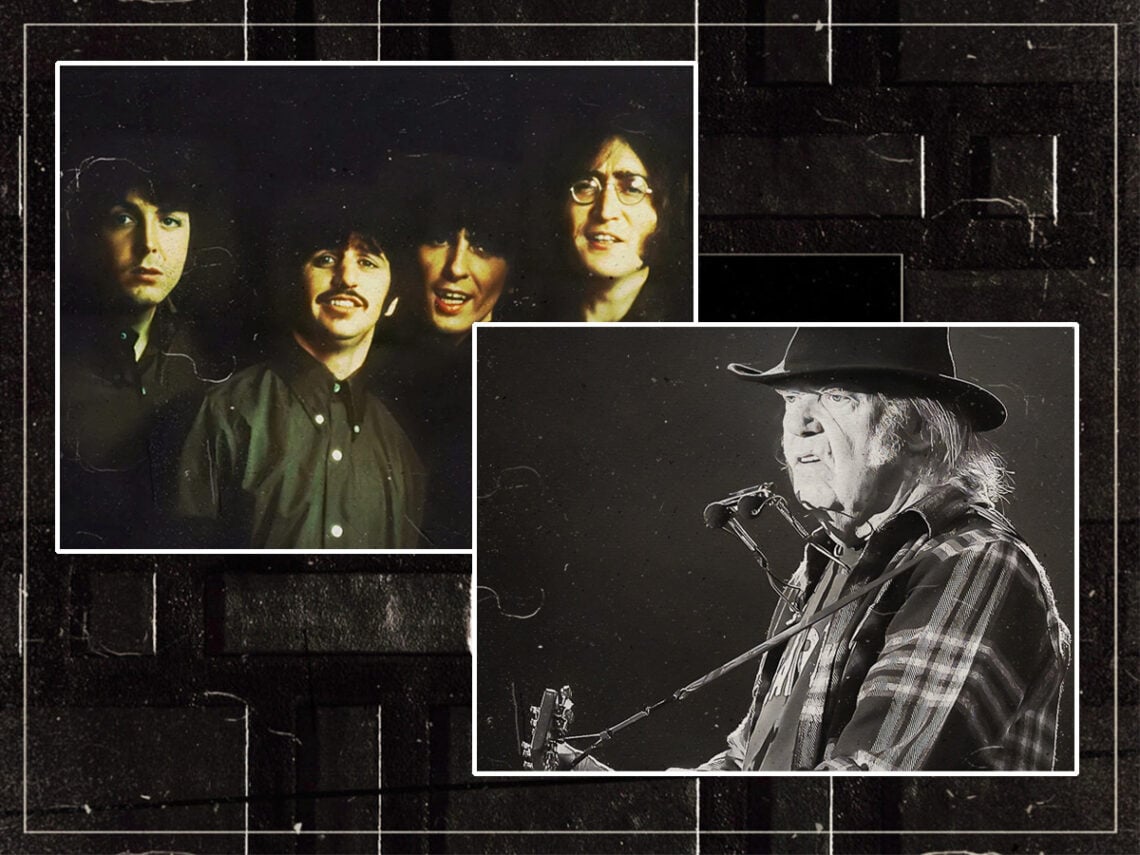
From The Beatles to Neil Young: 10 musicians pick their worst album

There has never been a meticulous science to forging the greatest records in history. For all of the outstanding music that bands might be able to churn out, the stars only align now and then to turn decent songs into works of musical brilliance, often coming down to being in the right place at the right time. While bands like The Beatles and The Rolling Stones may have great albums to their name, the artists who made them have something to say about the worst in their catalogue.
Then again, it’s almost inevitable that every artist has those few albums they never truly connected with. Even though they may have been responsible for coming up with the songs or putting in the performances, they haven’t looked back on the final product fondly, thinking that the performances were uninspired or not what they had initially envisioned.
While many of the problems with these albums could have been remedied, a handful should never have been made in the first place in the artist’s mind. Rather than thinking that they needed to be tweaked, some albums are beyond repair according to the band, wanting nothing more than to erase them from existence than play a song from them again.
That hasn’t stopped the fans from praising the albums, though, either showering them with praise from the moment they came out or looking back on them as an underrated gem in their discography. Regardless of how the fans have treated these albums, that hasn’t stopped the band members from airing their grievances with their work every time it’s brought up.
10 musicians pick their worst album:
10. Uno, Dos, Tre – Billie Joe Armstrong
It was nearly impossible to stop the momentum Green Day had gained following American Idiot. Reigniting their career with a concept album condemning the Bush administration, Billie Joe Armstrong wanted to aim bigger on every subsequent album, making 21st Century Breakdown one of the most grandiose albums they had ever made. Even though the idea of having a trilogy for the next album seemed like a good idea, Armstrong admitted to reaching beyond his capabilities throughout the project.
While many of the songs on the album feature decent fragments, there are also a handful of tracks that should have been relegated to B-sides. By trying to give each album its own unique identity, Armstrong shot himself in the foot by writing on assignment half the time, including some songs that should have never been released in the first place, like the rap-rock hybrid, ‘Nightlife’.
Looking back on the project, Armstrong blamed most of his judgement on his problems with addiction during the album’s recording, thinking that most of the songs were grandiose just for the sake of it rather than saying anything genuine. Although Green Day may have had a solid track record for making great pop-punk music in the past, releasing these consecutive albums right next to each other is the epitome of the phrase “too much too soon”.
9. Echo – Tom Petty
Tom Petty has always been able to write songs as if they were second nature. From the first time he started the Heartbreakers, Petty’s romantic way of writing about America’s heartland remained unrivalled in his field, even garnering the attention of fellow rock legends like Bob Dylan and George Harrison. While Petty was coming off a high with 1994’s Wildflowers, Echo was the sound of him returning to Earth.
After a tumultuous marriage breakup, much of the album reflects Petty’s frail state when recording. Of all the albums he made, Petty would say that he didn’t want to revisit this record, thinking he didn’t grasp what he wanted to do throughout the project.
While there are a handful of earnest moments on the album, like the title track and ‘Room at the Top’, the album also has a sad undercurrent after the death of longtime bassist Howie Epstein, who would lose his battle with heroin addiction shortly after his work on the project. Rather than the sounds of rock and roll liberation from Petty’s greatest work, Echo is the sound of the heartland rocker at his weakest begging for some kind of relief.
8. One By One – Dave Grohl
By the start of the 2000s, Foo Fighters had gone through enough members to form an entirely different band behind them. As much as Dave Grohl may have been able to make amazing music on his own, his idea to bring together a cast of musicians around him led to many clashing egos, leading to the band being reduced to a trio for the album There is Nothing Left to Lose. Once they licked their wounds, though, Grohl almost saw the band crumble when making the album One By One.
After escalating tensions between Grohl and drummer Taylor Hawkins, many of the album sessions were a chore for the band to sit through, with newcomer Chris Shiflett recalling many days when he would sit around and drink coffee before heading home for the day. Once the band refocused and made an album they could be proud of, though, Grohl didn’t have the same love for the project as he remembered.
While songs like ‘All My Life’ and ‘Times Like These’ would remain a staple of the band’s live shows for the rest of their career, Grohl said that he was never a fan of what they made, recalling that he couldn’t even remember how many of the songs sounded. Grohl may be able to turn a lot of songs into gold, but something has definitely gone awry when even the songwriter has a hard time grasping what he wrote.
7. Leather Jackets – Elton John
There was a certain period in the 1970s when it felt like Elton John could do no wrong. Until the release of Goodbye Yellow Brick Road, John was on a hot streak with Bernie Taupin, working off each other to create landmark pieces of art with the same emotional heft as most Broadway shows. By the time the duo decided to take a break from each other, though, John admitted that his substance abuse got the better of him when putting together the album Leather Jackets.
Being one of the few albums he made without Taupin, John felt that most songs lacked coherent direction throughout the runtime. Even when talking about the lead single ‘Heartache All Over the World’, John was merciless about how lightweight it was, considering the entire album a trainwreck from start to finish.
However, sometimes it takes a trainwreck to help someone refocus on where they want their career to go. After the album’s release, John would start his road to recovery by attempting to get sober, eventually embracing his roots as a songwriter on the next few albums and finding time to reunite with Taupin. For all of the excellent material that John could pump out in the 1970s, Leather Jackets is practically a stain on his career for him.
6. Time Fades Away – Neil Young
From day one, Neil Young has never made music that wasn’t 100% his vision. Throughout his time with Crosby, Stills, and Nash and in his solo career, Young always marched to the beat of his own drum, going so far as to leave some of his bandmates in the dust as he tried his hand at different genre experiments. While many of Young’s experiments have fallen on deaf ears to the public, he thought Time Fades Away was one of the lowest points of his career.
Coming off a string of albums like Harvest, this live album would feature all-new material with a new version of Crazy Horse. Although delivering new material on the live stage is just the kind of crazy idea that Young could pull off, he felt that most of the material salvaged for the record was the worst he had ever put out.
Rather than look at the merits of the performance, Young thought that the album documents the sad state of affairs that he found himself in, with the band lacking any chemistry and featuring some of the most lacklustre ideas that he had at that point. While many of the songs on Time Fades Away could have been salvaged into something great in a studio environment, it’s easy to hear the disconnect between the band and audience as they try to put these tunes together.
5. Atom Heart Mother – Pink Floyd
There was a good chance that no member of Pink Floyd had a clear division after the departure of Syd Barrett. After losing his mind in the group’s early days, Barrett would depart on the album A Saucerful of Secrets, leading the rest of the band to carry on without their lead songwriter. Even though the group would get on the right track in the next few years, Atom Heart Mother would remain one of the least favourite projects that the members had worked on.
Even though making one drawn-out piece may have seemed sensible, David Gilmour and Roger Waters thought that the elongated title track was one of the worst songs they had ever made. Despite the crass words from the band’s two leaders, the rest of the album did have a handful of decent tracks, including the breezy sounds of Gilmour’s acoustic song ‘Fat Old Sun’.
Then again, maybe one of the reasons why Atom Heart Mother didn’t work in practice for them is because of how much it paled in comparison to the song ‘Echoes’ from the album Meddle, which would go on to set the stage for the album Dark Side of the Moon. While many might see Atom Heart Mother as the bridge between both eras of Pink Floyd, the members will always see it as a decent idea that never fully came together.
4. Their Satanic Majesties Request – Mick Jagger
One of the most common complaints lobbied towards The Rolling Stones is their reliance on chasing trends. Although the band have always been able to fall back on their bluesy roots when they wanted to, the comparisons between them and The Beatles during their 1960s prime couldn’t be overstated, with Mick Jagger and Keith Richards moulding themselves into their own version of John Lennon and Paul McCartney. While the Fab Four may have had their first great dive into psychedelia in 1967, Their Satanic Majesties Request never resonated the way Jagger thought it would.
Sculpting their version of Sgt Peppers, much of the album relies on the band making songs with a spaced-out theme behind them, including the romp ‘2000 Man’ and the baroque-pop stylings of ‘She’s A Rainbow’. Even though the songs from the album have held up as perfect time capsules from the time, Jagger thought that most of the songs amounted to rubbish compared to their other works.
Considering where the band would go from here, though, it’s easy to see where Jagger’s head was, wanting to get back in touch with songs that were more bluesy on albums like Let It Bleed and Sticky Fingers. While The Rolling Stones may have been to warp their sound into whatever suited the song, Their Satanic Majesties Request is the sound of them trying to shapeshift from blues troubadours into a psychedelic jam band, often with varying degrees of success.
3. Be Here Now – Noel Gallagher
By the time Oasis reached the late 1990s, there was a good chance that nothing could stop their momentum. After proving all of their critics wrong on the album What’s the Story Morning Glory, the next phase of their career would surely put them on the same level as acts like The Beatles, with Noel Gallagher writing the 1990s answer to his idol’s masterpieces. While things were looking up, the bubble was about to burst when the band finally released the album Be Here Now.
Featuring some of the most overblown production to grace an Oasis record, the press would later ridicule much of the album for being overly indulgent and turning what could have been great songs into elongated exercises. While Liam Gallagher has stood by the record as a phenomenal piece of work, Noel has not been nearly as kind to the album in retrospect.
Agreeing with the common consensus, Noel blamed much of the album’s pitfalls on him losing his better judgement throughout the recording, leading to songs being overproduced to hell and having far too many guitar overdubs than any sane person would use. While the heart of Be Here Now is a great record, there’s a good chance Noel sees it as the moment where the band pissed away all of their goodwill with the public.
2. Never Let Me Down – David Bowie
There’s a good argument to be made that David Bowie has never made a bad album. While there have surely been peaks and valleys in his career, ‘The Starman’ has always been restructuring his sound into new shapes that no one had ever heard. Even though Bowie always rolls with the punches to create the best album he can at the moment, he admitted that something went horribly wrong when putting together the album Never Let Me Down.
Still riding the massive success of Let’s Dance, the next few years saw Bowie working to his strengths as a pop performer, including the slick sounds of the album Tonight. By the time he got to Never Let Me Down, much of the sleek sounds of the time tended to fall into dated territory, including a lacklustre production job that made the whole sound like it was drowning in reverb.
The songs weren’t exactly the best that Bowie had ever made, either, including various songs written for Iggy Pop and a bizarre cameo from Mickey Rourke midway through the album. While the album may have gotten a makeover in recent years with the remix of the final product, Bowie ended up turning in a project that played the exact opposite of its title.
1. Let It Be – Paul McCartney
Considering the tension between The Beatles during The White Album, getting them back on the same page would be a big job. After undergoing a meditation retreat in India, the band would be at each other’s throats through most of the next album, leading to Paul McCartney having the idea to bring everyone back to their roots. While Let It Be would be their unintended swan song after Abbey Road, McCartney was livid when he heard the album’s final mix.
Despite the band’s wishes to make a stripped-back album, producer Phil Spector was brought in to finetune most of the songs, leading to many orchestral flourishes brought in against the band’s wishes. Although John Lennon was famously complimentary of what Spector did with the tapes, McCartney was not impressed, writing a strongly-worded letter to EMI’s offices expressing his grief with how songs like ‘The Long and Winding Road’ came out.
Even years after the fact, McCartney still wasn’t satisfied with the final product, creating the album Let It Be…Naked to reflect the album that he would have preferred to have heard back in the 1960s. While Abbey Road may have left the band’s career off on a high note, Let It Be remains a sad epitaph of what the band’s tension-fueled sessions sounded like.
