


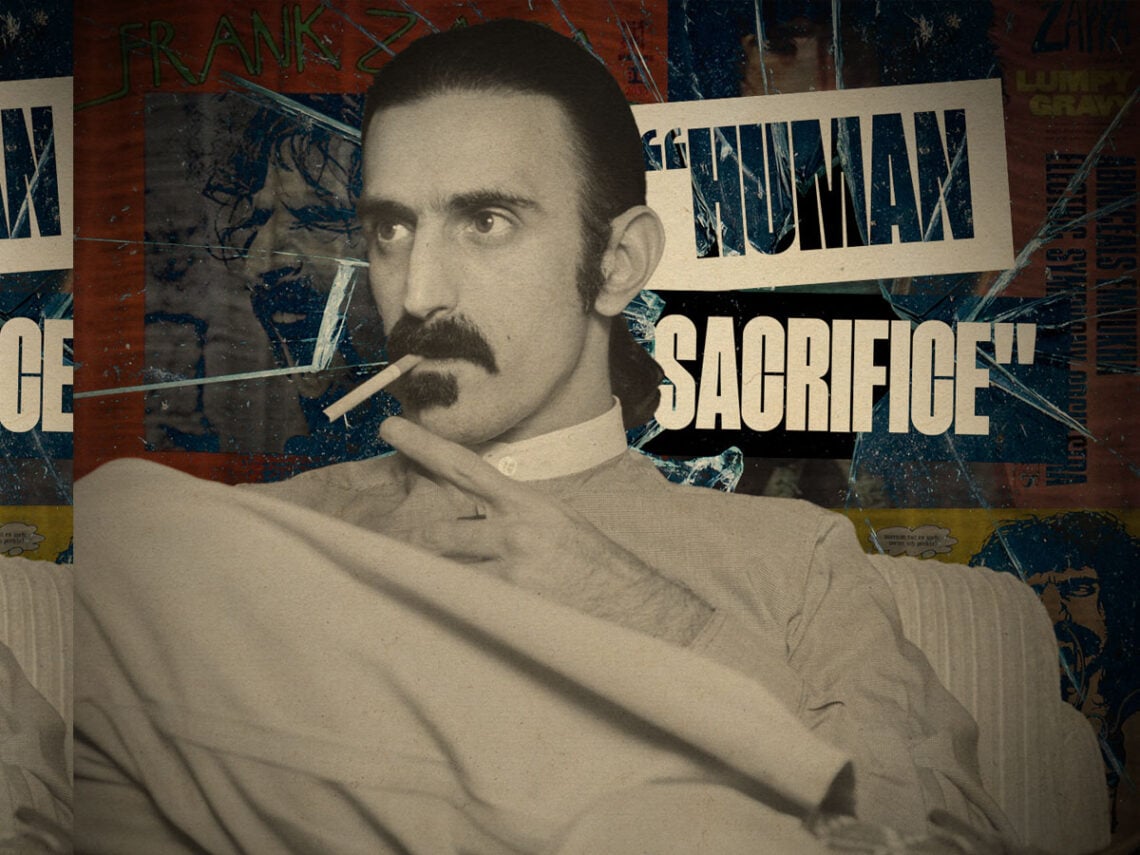
“Human sacrifice”: Frank Zappa’s uncomfortable comments on the groupie phenomenon

Frank Zappa could be a surly character under the best of conditions, so it’s no surprise that he was properly fuming when the Royal Albert Hall cancelled his scheduled appearance at the esteemed London venue in 1971, on “grounds of obscenity”.
Zappa and his boundary-pushing band the Mothers of Invention had already played two previous shows at the Albert Hall in 1967 and 1969, but this third appearance was intended to be something far grander in scope and ambition: a live extension of Zappa’s new surrealist musical film project 200 Motels, with the Mothers joined on stage by Ringo Starr, Keith Moon, and the Royal Philharmonic Orchestra.
With no way to recoup a lot of his financial investment in the cancelled concert, Zappa chose to challenge the obscenity ruling in court, citing breach of contract. This led to a predictably cringey trial (four years later!) at the Old Bailey, presided over by an elderly “cartoon of a judge”, as Zappa later described him, ”perfect, except he didn’t have an ear trumpet. During the proceedings, one of the lawyers attempted to introduce the 200 Motels record album into evidence. Upon seeing it, Justice Mocatta asked, ‘What is that?’ The reply: ‘It is a phonograph record, your lordship’”.
Once Zappa was on the witness stand, the inevitable circus ensued, as the counsel for the defence peppered the singer with questions about various songs from 200 Motels, trying to corner him into acknowledging that the lyrical content wasn’t appropriate for public consumption.
“I would be grateful,” the barrister condescendingly remarked during an analysis of the song ‘Lonesome Cowboy Burt’, “if you would tell us what this phrase means: ‘and I will buy you a taste, and you can sit on my face’”.
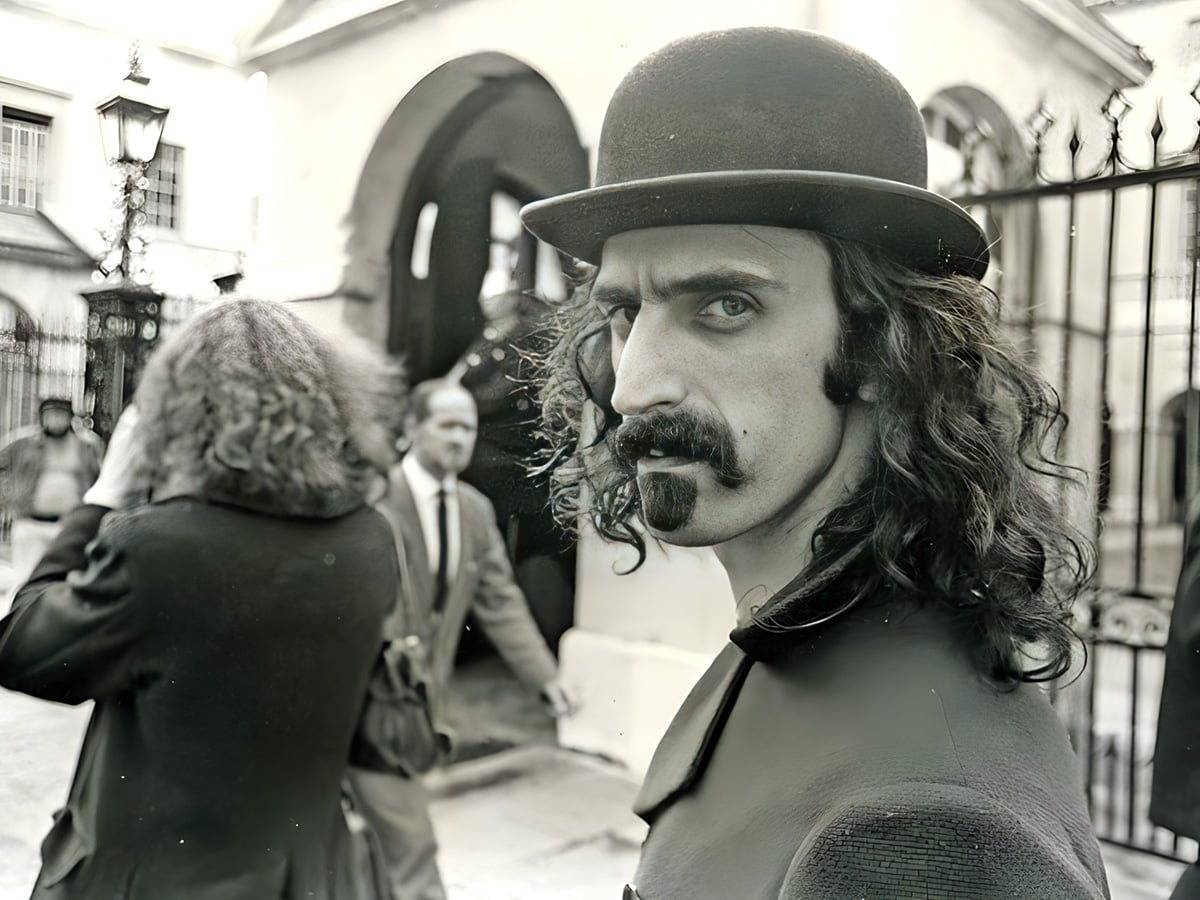
“’I will buy you a taste’ is a reference to purchasing an alcoholic beverage on behalf of the waitress,” Zappa calmly replied, “and sitting on his face is a reference to the girl sitting on his face”.
At another point, when challenged about whether a description of “two newts in a nightclub” was intended to be suggestive, Zappa fired back, “Anyone who is disturbed by the idea of newts in a nightclub is potentially dangerous”.
Probably the most famous, or infamous, interaction during Zappa’s cross-examination involved the topic of groupies, a concept that had been fairly well understood in the mainstream for the better part of a decade, but that Zappa was nonetheless asked to define for the benefit of the court.
“A groupie is a girl who likes people in a rock-and-roll band,” Zappa deadpanned, “She likes them very much”, to which, when the elderly cartoon judge queried, “She likes what very much?”, he explained, “She likes the members of the band very much,” leaning into the double-entendre of the ‘m’ word.
In the end, Zappa didn’t win his case, something he blamed more on the unwritten law that a Yankee shall never prevail over a royal institution in Britain. His testimony during the trial, however, along with subsequent remarks to Congress during the 1985 hearings on parental advisory warnings, made him a respected champion for free speech, able to spar intellectually with his opponents in a way that many of his fellow rock and rollers could not.
Part of what made him so uniquely equipped for these sorts of confrontations is that he was never a dyed-in-the-wool believer of any specific ideology, as his satirical lens was aimed critically at his dope-smoking, flower-power friends just as often as it was at the square, conservative Capitalists on the other side of the fence. One thing he did feel passionately about, though, was sexual freedom; specifically, a rejection of America’s puritanical fear of sex, which had been a prime factor (along with racism) in the fierce pushback against rock and roll in the 1950s.
In 1968, when he was 28 and working on his fifth studio album (the weirdo doo-wop experiment Cruising with Ruben and the Jets), Zappa wrote a lengthy essay about the social and psychological history of rock music up to that point, titled ‘The Oracle Has It All Psyched Out’. Shockingly, it was printed in the uber-mainstream Life magazine of all places, challenging the conservative moms and dads of America right there at their breakfast tables, albeit by essentially accusing them of the same ignorance that the Fresh Prince and Jazzy Jeff would eviscerate them for 20 years later.
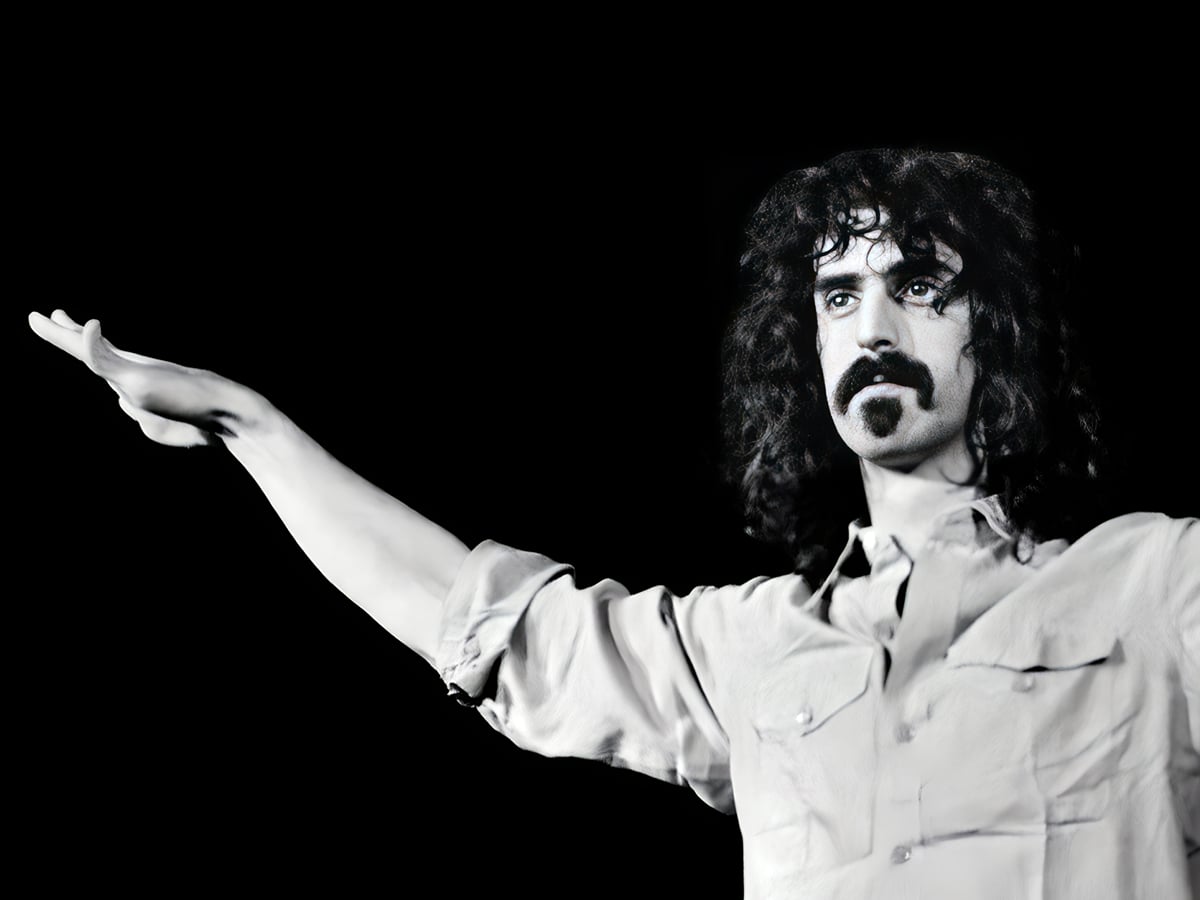
“Parents, unfortunately, have a tendency to misunderstand, misinterpret, and, worst of all, ridicule patterns of behaviour which seem foreign to them,” Zappa wrote, “When they noticed a growing interest among teenagers in matters pertaining to the pleasure-giving functions of the body, they felt threatened. Mom and Dad were sexually uninformed and inhibited (a lot of things wrong with society today are directly attributable to the fact that the people who make the laws are sexually maladjusted), and they saw no reason why their kids should be raised differently. (Why should all these dirty teenagers have all the fun?) Sex is for making babies, and it makes your body grow misshapen and ugly afterward, and let’s not talk about it, shall we?”
Most of Zappa’s progressive views on sex in the late 1960s, including the perfectly natural connection between rock music and teen hormones, were in line with the talking points of the hippie movement at the time. 60 years later, they’re arguably the prevailing mainstream views as well, as even the majority of Christian conservatives have long since given up the hopeless fight against highly sexualised pop music. It wasn’t really the hippies that won, though, it was the yuppies, who finally realised that teenage sexual urges and frustrations were massively bankable commodities, and that denying or repressing them was bad for business.
Zappa already saw that development coming when he was writing his essay. The one topic he was decidedly less prescient on, and embarrassingly insensitive to, was that of the aforementioned “groupie”: the young girls who turned the sexual liberation they got from rock music into a compulsive, sometimes obsessive allegiance to the people, usually men, who made that music.
“The level of involvement with today’s music is quite amazing,” Zappa wrote, “One example: Groupies. These girls, who devote their lives to pop music, feel they owe something personal to it, so they make the ultimate gesture of worship, human sacrifice. They offer their bodies to the music or its nearest personal representative, the pop musician. These girls are everywhere. It is one of the most amazingly beautiful products of the sexual revolution.”
The debate over the free will and autonomy of rock groupies has been going on for decades, and many former groupies still make a viable case that they chose their lifestyle, enjoyed it, and have no regrets about it. Culturally, it’s safe to say that Western society has a much more sympathetic perspective on groupies than it did 50 years ago, and as girls who would have been admonished and shamed with all forms of ridicule and insulting words are now understood with far more nuance and understanding, on the whole.

The reverse has been true of the rock stars themselves, however, as what was once widely accepted as one of the forgivable excesses of ‘life on the road’, selecting a girl backstage, whisking her off to the hotel, leaving her with an autograph and a morning-after pill, is now seen, by many, as exploitative or potentially criminal behaviour, carried out by men in positions of great power over young women who’d been falsely liberated into just another form of capitulation.
Zappa’s personal past with groupies is particularly complex. One of his earliest fans, a self-proclaimed “experienced groupie” named Gail, met him in 1966 and eventually became his wife and mother to their four kids. In the 1986 book Rock Wives, Gail Zappa recalls her first impressions of Frank: “He had every social disease I think that’s possible… He was infested, and so was his hair. He hadn’t taken a bath for a month.”
Nonetheless, they were married within a few months, and Gail took on the role of Frank’s life manager, raising the kids and navigating through her husband’s selfishness and ongoing fondness for groupies, some of whom turned into full-on mistresses. Gail’s main job, as she saw it, was to see that “everything runs smoothly for Frank, from day to day”.
It seems wrong for an outsider to suggest that Frank’s wife was stuck in the groupie mindset, or that she wasn’t living the life she wanted. But Zappa’s early description of groupies as women as products who “sacrifice” themselves and “worship” musicians certainly leaves room for uncomfortable psychoanalysis. It’s an aspect of the sexual revolution and rock and roll history that has not aged well, as Zappa’s own views on the subject would now land more in the zone of an Andrew Tate rather than a forward-thinking artist.

Never Miss A Tale
The Far Out Classic Rock Newsletter
All the latest Classic Rock content from the independent voice of culture.
Straight to your inbox.