


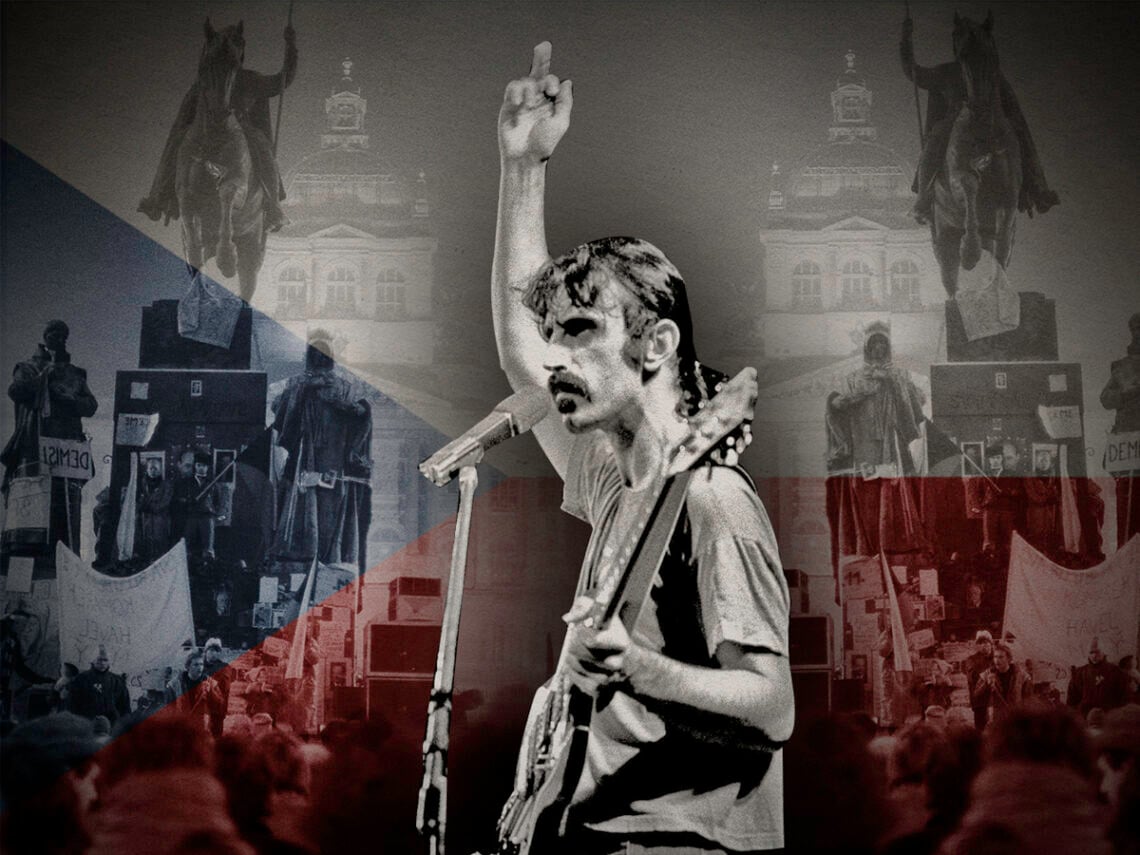
How did Frank Zappa become a hero of Czech democracy?

In the decades since Frank Zappa began making music in the 1960s, his voice has remained one that defines the so-called ‘underground’, a voice that spoke to the eccentric and the unknown.
While his music came to be a defining sound of the counterculture in America, Zappa found audiences worldwide, as did his advocating for freedom of expression. His music even found its way to listeners otherwise forbidden from hearing it, including in what was then-Czechoslovakia, where he found a devoted audience of dissidents who identified with his work, and later, asked him to join them, all thanks to one Václav Havel.
Havel was an author, poet, playwright and the final Czechoslovakian president in 1989 before its dissolution into the Czech Republic, of which he was the first democratically elected president until 2003, but his immersion in the arts preceded his political career and had a longstanding reputation as a political dissident, starting in the late 1960s, in the aftermath of the Warsaw Pact invasion of Czechoslovakia and the suppression of the Prague Spring.
It saw Havel banned from the theatre, so he became increasingly politically active, taking part in the underground distribution of his plays, following which came the Charter 77 manifesto, a publication from the civic initiative of the same name. It included Havel and was partially motivated by the arrest of members of The Plastic People of the Universe, a psychedelic rock band from Prague, in March 1976.
Havel attended their trial, while the Charter 77 manifesto advocated for their, and the other musicians who were arrested (18 in total), freedom. As he wrote, the trial of the so-called musical underground “was something that aroused me, a challenge that was all the more urgent for being unintentional. It was the challenge of example”.
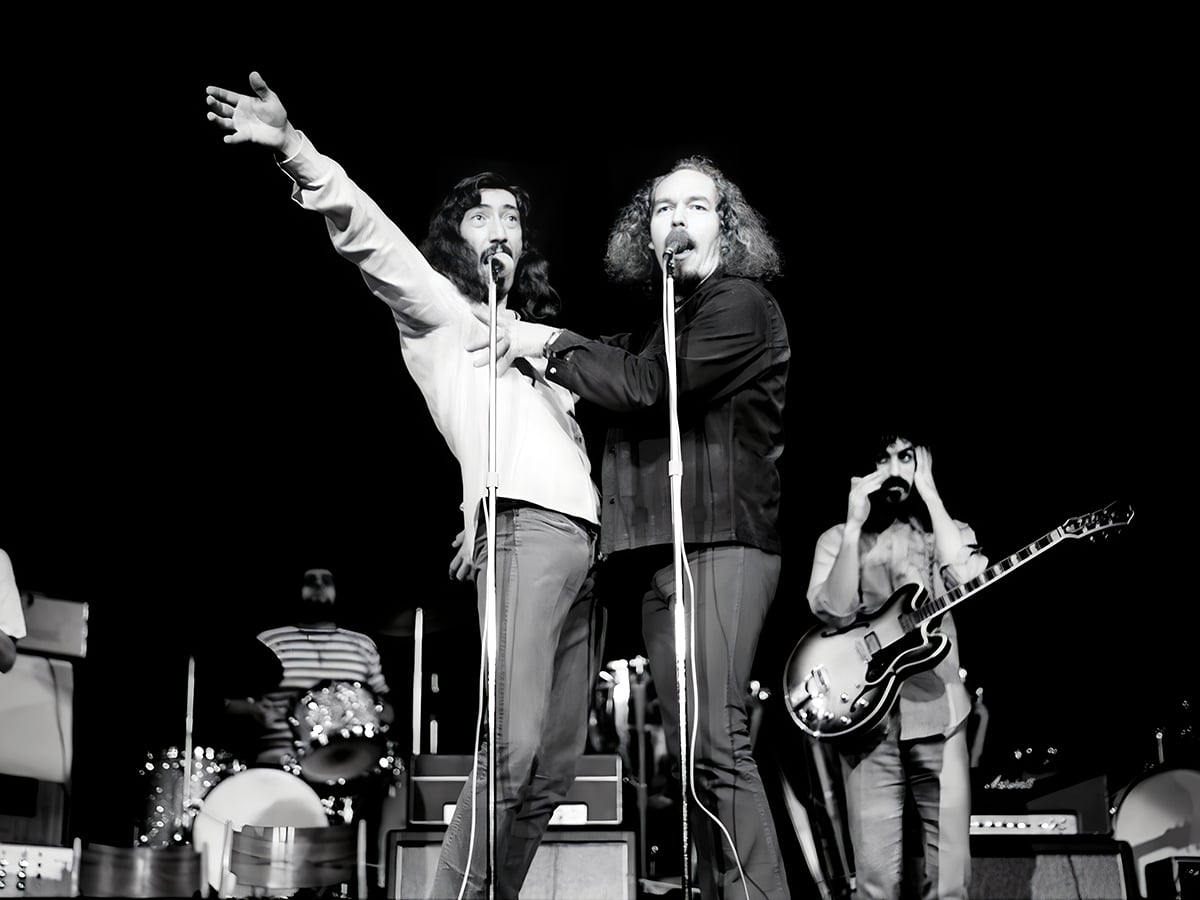
Those involved in Charter 77 were arrested, imprisoned and assaulted, while The Plastic People of the Universe remained in jail for eight months, before finally being released. Havel, who was living under house arrest, hosted the band at his home, one of the few places they could play, but he would later be jailed, as well; however, by December of 1989, he had assumed the presidency, and a new regime took shape.
When Havel was elected, he made the curious choice of inviting Frank Zappa to visit Czechoslovakia. The musician had made quite the impact on the underground music scene in Central Europe, and his records were often smuggled into the country. His song with his Mothers of Invention, 1967’s ‘Plastic People’, became an anthem of the dissident movement, and evidently, The Plastic People of the Universe took their name from it.
“I had no idea that song made the impact it did there,” Zappa reflected to Pulse! in 1993, “We were touring heavily in Europe at the time, and a few Czechs had come across the Austrian border to hear our concert in Vienna. I talked with them after the show, and they told me that ‘Plastic People’ was responsible for a whole movement of dissidents within Czechoslovakia.”
Havel was a lifelong fan of Zappa’s work, and planned to invite the then 49 years old to travel to Prague to meet with him. When Zappa arrived, he was confronted at the airport with a massive crowd awaiting him, up to 5,000 people. “Never before, in 25 years in rock ‘n’ roll, have I gotten off of an airplane and seen anything like that,” he later expressed.
He continued, speaking with reporters at the airport, “I feel so tired but so happy to be in Prague… I’ll bet I don’t feel as happy as you do to have a brand new country. And I give you my congratulations on your political success, and hope that everything remains calm and prosperous here.”
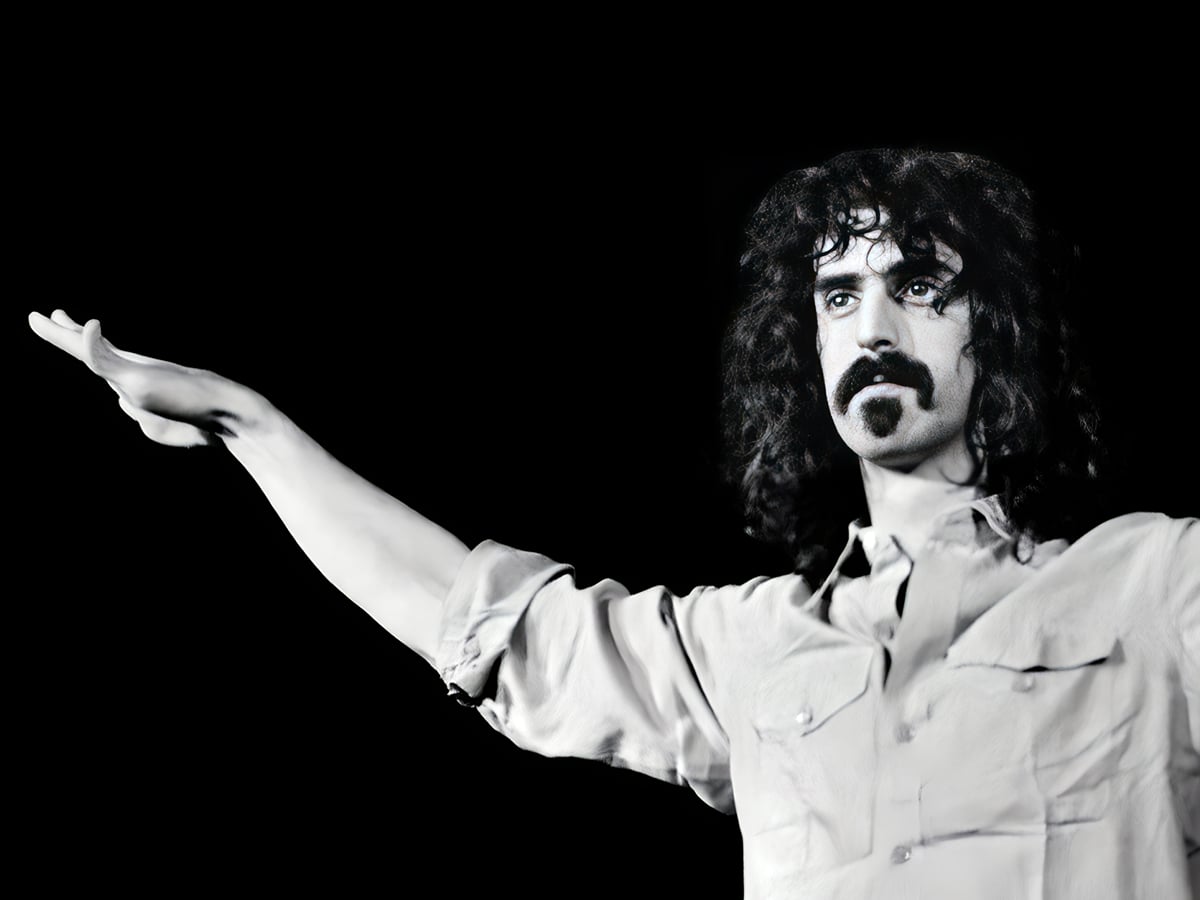
Amidst Zappa’s plans to meet with members of the Frank Zappa Society in Prague, his meeting with Havel was orchestrated by Michael Kocáb, the keyboardist for Prague Selection. Kocáb had become a leader of Havel’s Civic Forum party and adviser to the president, and was the one to extend Zappa’s invitation to Prague. The president and the musician would meet at Prague Castle, where Havel offered him an invitation to join his government, expressing his wish to name the rocker as Czechoslovakia’s Special Ambassador to the West on Trade, Culture and Tourism, wherein he would essentially be a consultant. He accepted Havel’s offer and signed a letter in agreement.
In the coming weeks, however, Zappa’s position within Havel’s government was thwarted by the then-US Secretary of State James Baker III, who shared a contentious history with Zappa. Baker’s wife, Susan, was one of the four ‘Washington Wives’ who had founded the Parents Music Resource Centre (PMRC), a bipartisan US government committee that advocated for increased parental control and overarching censorship over children’s access to music deemed explicit, and Zappa had vocally campaigned against it,
Baker ensured that Zappa’s role was withdrawn, and Havel’s press secretary, Michael Zantovsky, issued a statement, saying, “We like Frank Zappa, but he is not authorised to arrange any trade agreements with our government”. Still, Zappa and Havel’s friendship remained, wherein the former had shared ideas that he believed would increase tourism to Czechoslovakia, and his music remained essential listening for his loyal audiences.
“I have a large and devoted audience overseas, but a lot of people in this country don’t know that I still exist,” Zappa expressed to Pulse. “I think that might have something to do with the Republicans, who have never been too thrilled about my existence.”
