


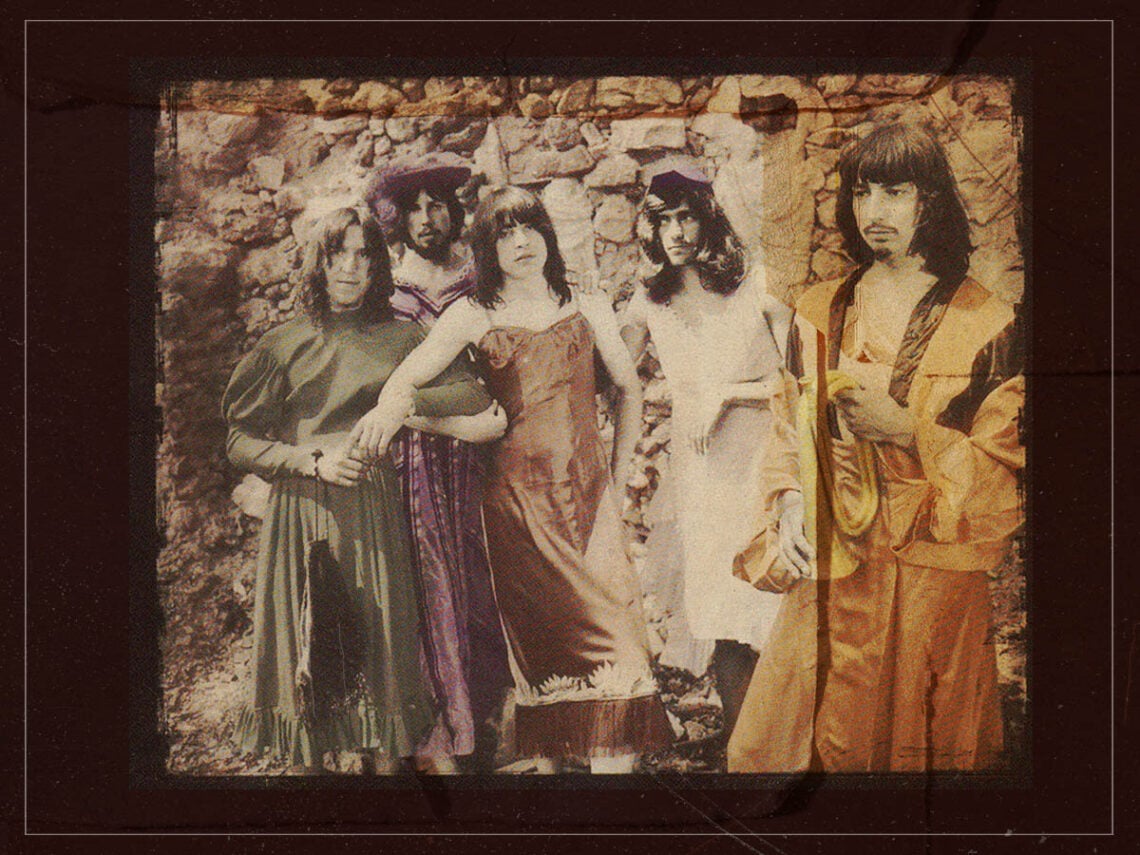
The Plastic People of the Universe: the band who fought Soviet law and lost

When faced with our current political issues, it’s worth reminding ourselves that music is so much more than a medium of entertainment—it is oftentimes a bigger political vehicle than we imagine and, to that end, a huge voice to the otherwise voiceless. In a drastically stark landscape like the former Soviet Union, that became more important than ever—and The Plastic People of the Universe could tell you all about it.
The band – primarily comprised of Josef Janíček, Vratislav Brabenec, Jaroslav Kvasnička, Johnny Judl Jr, and David Babka – became a blazing rock beacon among the Eastern Bloc, railing against the Czechoslovakian communist regime when they formed in their native Prague during the late 1960s. But the ironic thing was, the five-piece never intended to be martyrs – they just wanted to play their tunes.
Of course, that vision was far easier to imagine than to achieve, but nevertheless, the heights of rock and roll rapture from overseas created an irresistible magnetism. Inspired by Frank Zappa’s nonconformity and the ambiguous allure of The Velvet Underground, The Plastics—as they became known—set out to bring a version of the American scene to the Soviet stage.
However, this wasn’t without its challenges or controversies. In 1974, the band were responsible for an uprising, of sorts, as fans descended en masse to the small city of České Budějovice in the South Bohemian Region of the country to see them perform, and police arrested several students as a result. Then, in 1976, The Plastics – alongside a slew of their fellow underground musical cronies – were also arrested and put on trial by the government as a means of instilling population fear and control.
But if you believe this would keep these unintentional rebels down for long, you better think again. Upon their release from prison after serving sentences spanning between eight and 18 months, respectively, the band continued to create music—but by then, the Communist tides had also turned. Galvanised by their trial, protests erupted all over the country, fighting for The Plastics’ freedom, and the movement became a cornerstone for the uprising against the regime.
Ultimately, as the last throes of the dictatorship met their end and the Velvet Revolution brought the underground up to the light of day of the mainstream, The Plastics’ previously mysterious allure couldn’t stand the test of time. Faced with the starkness of fame, the band only got back together for sporadic reunions over the years and, owing to the rising tensions of artistic differences, split into two camps in 2016, from which they separately continue to perform.
In some ways, this might seem like the shackles of Soviet law finally got their way as the band could keep their momentum going. But consider this – The Plastic People of the Universe were formed under the heaviness of hostile secrecy, all of which became part of their rapture, so doesn’t it defeat the point of having them glaringly out in the open? It’s true that some things are better kept as secrets.
