


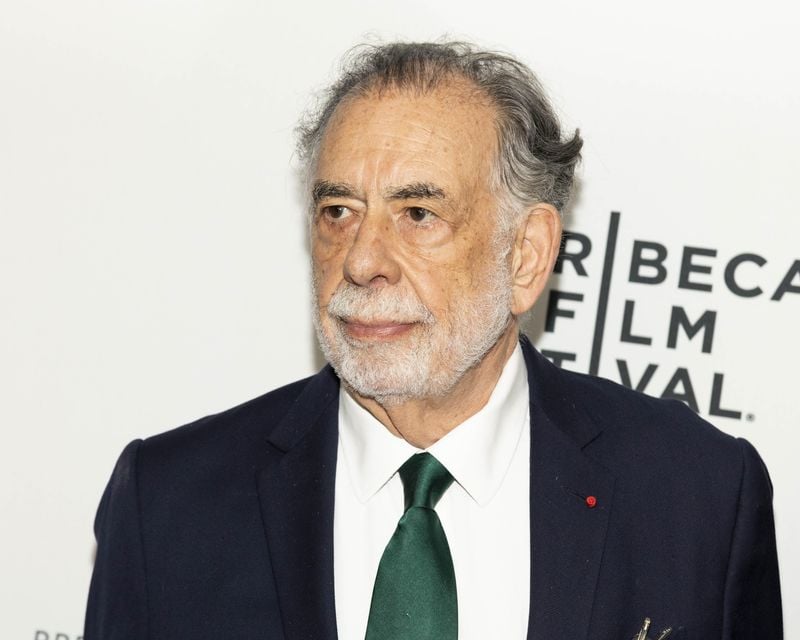
Francis Ford Coppola discusses making his three best films

If you bring to your mind the greatest film directors of all time, then nine times out of ten, you are likely to feature Francis Ford Coppola amongst the group. Coppola’s oeuvre is truly envious, and he has made some of the most highly-celebrated films ever put to reel. Earlier this year, Coppola opened up on what it was like making some of his iconic films, beginning with The Godfather.
“I was about 29 when I began preparing The Godfather, and in the course of making it and editing it, I was in my very early 30s,” Coppola said. “Certainly, that film changed everything for me. I could easily be described as penniless before I made the film [but] it was a terrible experience; I was always on the verge of getting fired, and a lot of my choices were immediately discarded. Then suddenly, I became this famous person”.
He added: “That was where I learned to deal with studios and to try to figure out how, even with no power, that I could still bluff and misdirect to get my way. I got Pacino to be in it; I got the look I wanted. It was more expensive to make The Godfather as a period picture [rather than] what they had wanted, which was to have it in 1973. I credit those victories to the tremendous talent of the people I was working with”.
The success of The Godfather led to Coppola being offered the chance to make a sequel/prequel. However, he was reluctant as the first film had been a personal nightmare. As such, he suggested that Martin Scorsese direct the film, but the studio rejected the notion. Coppola eventually came round to the idea of handling The Godfather Part II on the proviso that he would have complete control.
“When the time came for a second Godfather, I thought it was an absurd idea; The Godfather was complete after The Godfather,” Coppola said. “I didn’t want to do it again; I wanted to do something else. If you make films you don’t know how to make, you learn a lot. If you make films you do know how to make, you make a lot of money, but you don’t learn a lot. So I was more curious about going on into different forms”.
“They made me an offer I couldn’t refuse,” he quipped. “When they said I could do anything I want and I wouldn’t have to kowtow to their structure and listen to their notes, I got to make [Part II], and I used the story that I was interested in. You can always understand the story of the son by the story of his father. Part II was far more complex than Part I, and yet the production went as smooth as can be”.
As Coppola said, he had wanted to turn his attention and efforts to films that required more than he was used to. He got his wish when he adapted Joseph Conrad’s novella, Heart of Darkness, into a movie about the Vietnam War. However, throwing himself into the deep end almost proved to be more than the legendary director could handle.
“As I would have expected, I had no idea how to make this kind of film, and because of that, I had to learn on the job pretty fast,” Coppola said. “I made Apocalypse Now after I had won five Oscars and was the hottest young director in Hollywood, and absolutely nobody wanted to be in the movie, and nobody wanted it. So I made Apocalypse Now by basically agreeing to guarantee its cost, which was stupid because making a film like that involves coordinating a lot of elements”.
He added, “Clearly, we did not know what we were doing. I was learning as I was going. As we were going over budget, it was all on my shoulder. I had gone from the frying pan into the fire. Godfather was a tough shoot because they didn’t like what I was doing, and I had no power. Apocalypse Now was a difficult shoot for a whole bunch of other reasons. [But] all this nightmare of not knowing what I was doing, being against outrageous odds, having changed the style of the movie to be more surrealistic, it contributed to making itself”.
