


Rich and full of secrets: The formula of ‘Sirens’ and our obsession with the downfall of rich white women

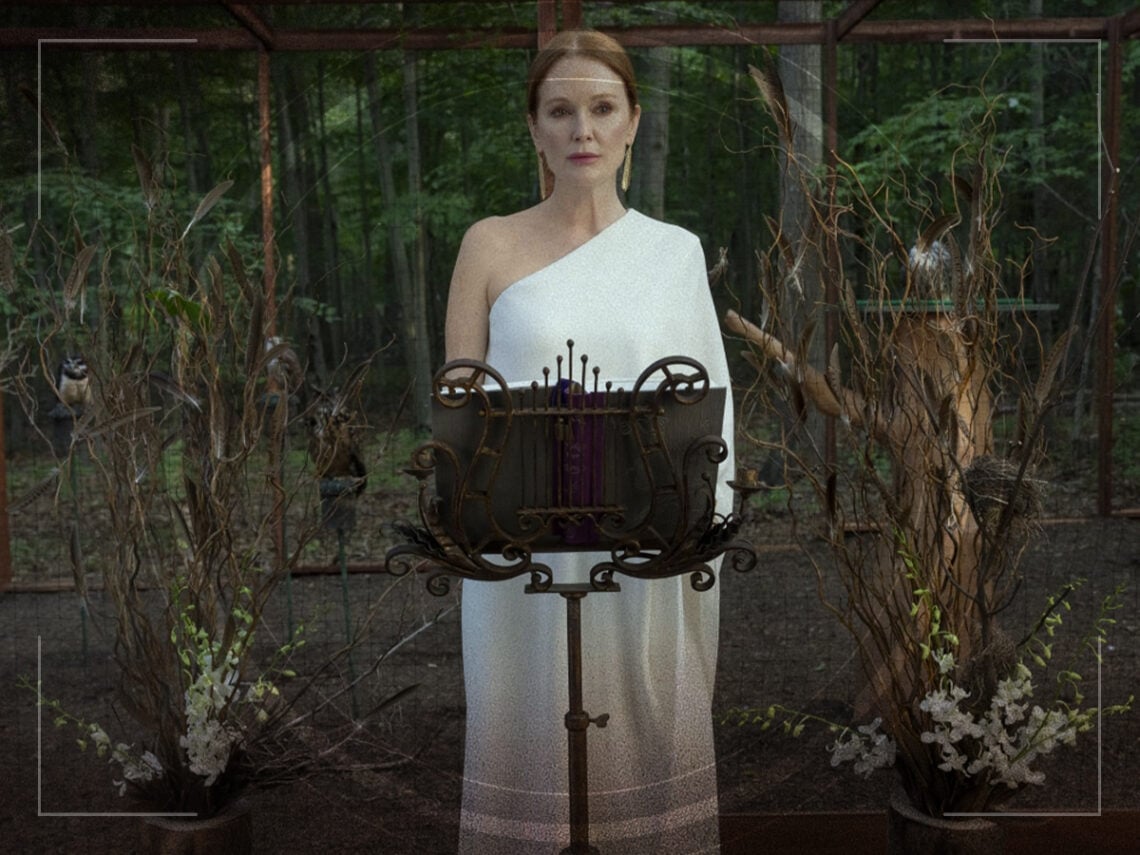
There’s a familiar scent wafting through the sea breeze in Sirens, Netflix’s latest foray into the glossy lives of ultra-rich women. Julianne Moore plays Michaela Kell or ‘Kiki’, as she is known in her close circle, a New England ex-lawyer socialite turned rare-bird rescuer now married to a tech billionaire, played by Kevin Bacon.
Her world is tightly curated: an oceanfront mansion perched on the cliffs of Cape Cod, a small army of attentive staff, and the ever-present Simone, played by Milly Alcock, her personal assistant and emotional valet. That is, until Simone’s semi-functioning alcoholic older sister Devon, played by Meghann Fahy, rocks up, threatening to wreak havoc on the carefully organised world Simone has created for herself.
If it all sounds oddly familiar, that’s because it is. Sirens is the latest addition to an expanding canon of high-production entertainment dedicated to the aesthetic dissection of rich white women and their haunted interior lives. It follows a now well-established formula of decadent homes, slow-burn mysteries, and a strong female lead cloaked in cashmere and intoxicating mystery.
But why have these shows become so popular? Critics have suggested the recession era has something to do with it, but do these shows also feed our appetite for watching rich people, especially rich women, fall from grace? Or is there something eerily cleansing and calming about tuning into the whitewashed lives of the affluent, real or fake, a lifestyle which 95% of people cannot afford? Whatever the cause, shows like Sirens offer a dizzying blueprint by way of which consumers can switch off, disengage, and indulge in light escapism—a twisted antidote to the chaos and cruelty that is becoming the norm for the world.
This blueprint was cemented by The Perfect Couple, Netflix’s 2023 coastal murder mystery, fronted by none other than a perfectly put-together Nicole Kidman, solidifying her role as the high-powered, enigmatic matriarch. While The White Lotus explored its characters’ privilege with acid wit and satirical edge shrouded in exotic mystique, The Perfect Couple served up pure fantasy with a pristine family (also in a make-believe Cape Cod setting) alongside plenty of drama and luxury. It became Netflix’s most-watched show during its first week, racking up 3.4billion views and remaining at the top of the streaming service’s most-watched list well into the following week.

Nicole Kidman, of course, has become the genre’s unofficial mascot. From the trauma-soaked domesticity of Big Little Lies to the guru-glam weirdness of Nine Perfect Strangers (both the brainchild of the hugely successful Australian writer Liane Moriarty), Kidman has perfected the role of the haunted, beautiful, elite, wealthy woman with each iteration, continuing with last year’s Babygirl and 2025’s Holland.
Sirens follows naturally from this televisual lineage, a luscious and knowing entrant into the ‘rich woman in crisis’ genre. It’s the perfect package: There’s the enigmatic lead, Michaela; the Michaela wannabe, Simone; the background tech billionaire husband who, to add fuel to fire, is represented as kinder and more forgiving to the staff and hence is more respected; and then there’s Devon, Simone’s trainwreck of a sister, who represents the traumatic, messy, poverty-stricken past Simone is running away from.
The show’s success, racking up 16 million views in its first week, suggests the appetite is far from waning. The critical response has been warmer than that afforded to The Perfect Couple, perhaps thanks to its tighter writing and more layered characterisation. But thematically, the same chords are struck: wealth as armour and isolation, female power as both a burden and mystique, and American coastal towns as the final frontier of luxury.
While Sirens offers slightly more psychological heft, Moore’s Michaela is less ethereal than Kidman’s matriarchs, and the show’s female dynamics add complexity to the otherwise polished narrative—its appeal remains rooted in the same voyeuristic pleasure of watching beautiful people in beautiful homes quietly self-destruct. While this time, it’s Moore who dips her toes in Narcissus’ pool of water, Kidman’s expensive flowing chiffon dresses and almost spiritual-esque presence remain a steadfast feature.
The formula may be familiar, but that’s because it works. Despite airing as a limited series and receiving lukewarm reviews last year, The Perfect Couple was recently greenlit for a second season. So as long as there are cliffside mansions to stage existential breakdowns in, the siren song of these women who are impervious, impenetrable, and always impeccably dressed will keep calling us back.
