


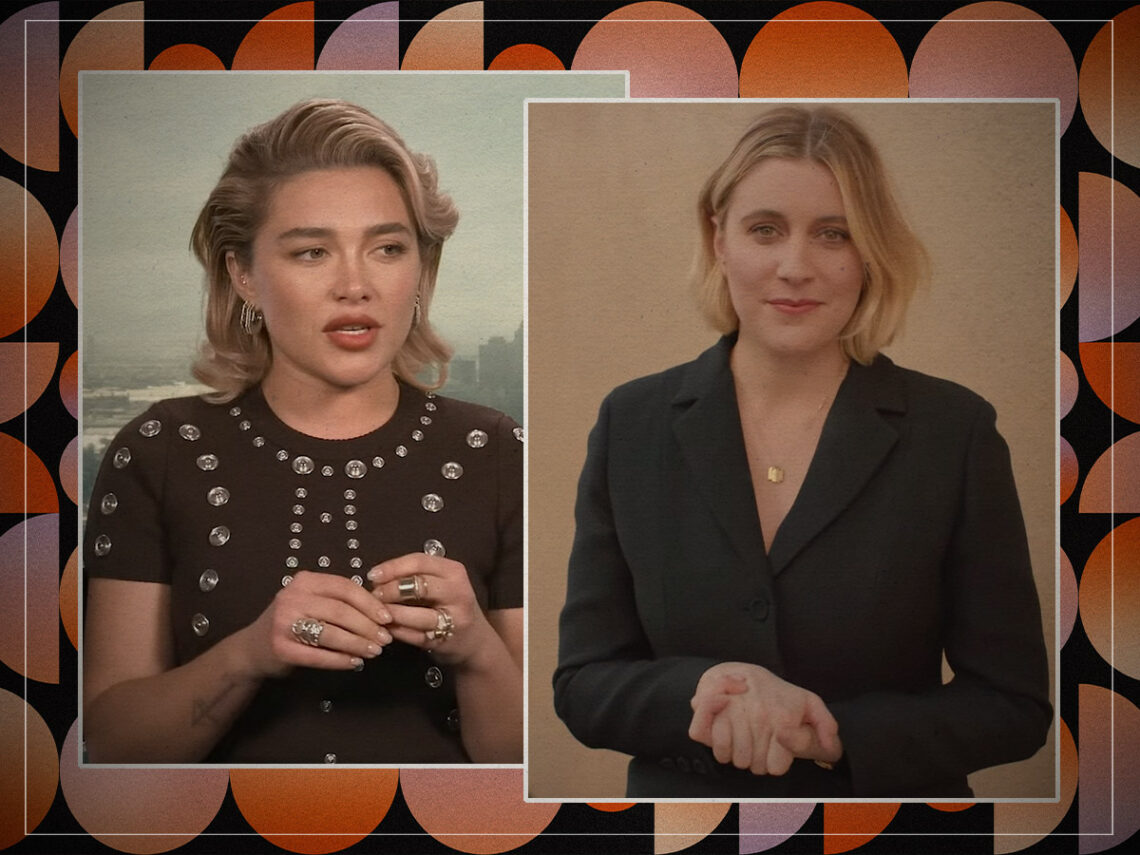
Florence Pugh on the genius of Greta Gerwig’s dialogue style: “A cacophony of noise”

Ever since her early involvement with the mumblecore movement, Greta Gerwig has proved herself to be a master wordsmith, creating fast-paced and lived-in dialogue that reflected the core of each character she conjured.
After applying to be a playwright at Yale, Juilliard and NYU and being rejected from each one, Gerwig went on to hone her talents through creating low-budget films with fellow aspiring filmmakers and writers, often starring in them and developing her love for writing through penning them with her collaborators.
From this point onwards, her talents went from strength to strength. She eventually worked with long-time partner Noah Baumbach on cult classic films like Barbie and Frances Ha while also penning solo stories like Lady Bird. But perhaps one of her greatest triumphs yet was the adaptation of Louisa May Alcott’s beloved novel Little Women, assembling a perfect cast and breathing new life into a tale that has been tried and tested many times.
However, this wasn’t without its challenges, with Florence Pugh describing the wonderful chaos of Gerwig’s writing style and how much it demands from the actors. Pugh plays Amy in the 2019 screen adaptation, a marmite character that some people love and some people hate. She has sparked endless debates over the years as people argue over her character and the ethics of her marriage to Laurie, one that some fans think is very fitting and others think is borderline blasphemous.
However, there is no debating that Pugh is perfect in the role, beautifully realising the tendencies of the annoying yet lovable little sister who gets on everyone’s nerves. To achieve this, Pugh discussed the unique way that Gerwig had constructed the dialogue in the film, with each line being written to overlap with others and mimic the comfortable dynamic of a family that constantly talks over one another.
When discussing this, Pugh said, “Greta was saying, ‘I want this conversation to be quick. You should never finish your line before someone else has started theirs.’ When I met Saoirse for the first time, I was like, ‘Tell me about Greta, what is she like?’ and she goes, ‘Oh, she’s really big on dialogue. You need to come to work knowing your lines.’”
Adding, “And I remember the first day that I came to work, I realised every single line that Greta had written that was on top of one another, you had to come in on that exact word to create this cacophony of noise. You can imagine what it was like on the big days when there were about eight people in and everybody had a very specific cue. It was like a sport.”
It’s hard to imagine being able to act while also carefully listening to the people around you for the exact cue that you need to speak on. It’s an act of extreme multitasking that not many could muster the talent to achieve, yet all of the people involved in the film managed to do so. It’s one of the greatest adaptations of the novel and a perfect reflection of Gerwig’s true talents.
