


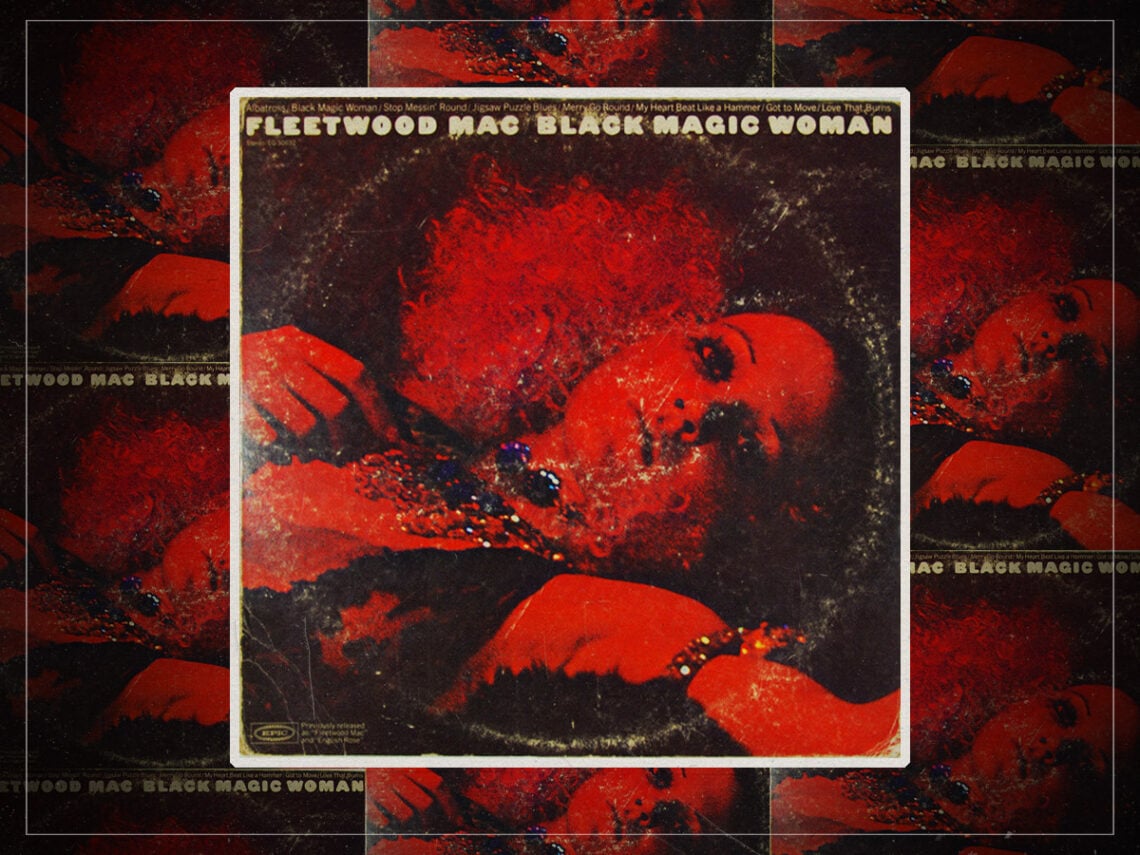
‘Black Magic Woman’: the forgotten Fleetwood Mac song rediscovered as a Latin rock classic

Being ahead of one’s time is a double-edged sword within the world of rock and roll; it might succeed in amassing an artist’s lasting cult status, but it doesn’t often translate into commercial success.
This was a lesson that Peter Green had to learn the hard way during his tenure at the helm of one of rock’s most successful outfits, Fleetwood Mac.
While today, Fleetwood Mac are as ubiquitous with the mainstream rock airwaves of the 1970s as any other colossal outfit, spurred on by the unimaginable success of records like Rumours, the band were relatively obscure during Green’s period of leadership. Worlds apart from the cocaine-heartbreak records that earned them mainstream acclaim, Green led the group deep into the throes of English blues rock during the 1960s, carving out a litany of tracks that, despite now being hailed as classics, went largely unnoticed at the time.
One such track was Green’s 1968 effort ‘Black Magic Woman’, a blues-heavy ode to the songwriter’s ex-girlfriend, with a certain Latin twang that set it apart from the rest of Mac’s output at the time. Like the rest of that output, though, ‘Black Magic Woman’ failed to gain much commercial traction upon its release via Blue Horizon Records.
Luckily, though, the song managed to find its way over to America, where its distinctive rhythm captured the attention of guitar hero and countercultural figurehead Carlos Santana. A titan of Latin rock and harbinger of psychedelic expression during American rock’s most revolutionary period, Santana was still trying to find his breakthrough success when 1970 rolled around, and he found it in the unlikely inspiration of Peter Green’s blues song.
Recording a cover version of ‘Black Magic Woman’ that united Fleetwood Mac with a 1966 instrumental track by Gábor Szabó, Santana transformed the song from a minor English blues rock hit into a bombastic Latin rock masterpiece. Released as the lead single from Santana’s breakout LP, Abraxas, the song quickly eclipsed the modest chart performance of Green’s original version.
Peaking at number four in the US charts but rattling around the listings for a total of 13 weeks, not to mention the fact that it spurred Abraxas on to top the US album charts, ‘Black Magic Woman’ became a defining moment for the Latin rock titans, firmly establishing them not just as psychedelic revolutionaries but also as a band with mainstream appeal.

By the time that Santana released that single in November 1970, though, Peter Green had already left Fleetwood Mac, instead spending his time jamming with fellow appreciators of the blues before stepping away from the music industry entirely.
Tragically, then, Santana’s smash-hit recording of the song failed to translate into much notoriety for Fleetwood Mac themselves, but it would only take a few more years before the group were at the very top of the mainstream rock chain, courtesy of some help from Lindsey Buckingham and Stevie Nicks.
Meanwhile, Santana capitalised on the breakout masterpiece of Abraxas, using it as the basis for one of the most enduring and important careers in the entire history of Latin rock. For a largely forgotten minor hit from 1968, then, ‘Black Magic Woman’ boasts an incredible legacy in rock and roll.
