


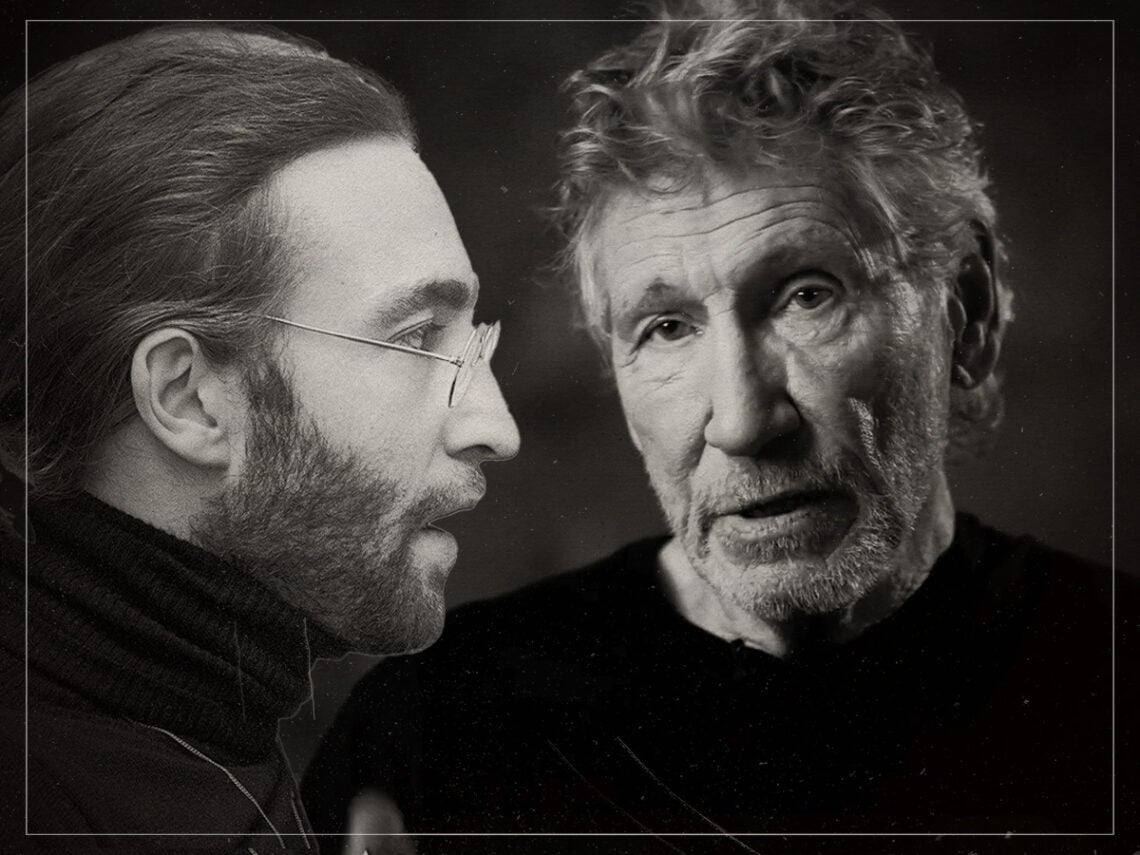
The five-word John Lennon lyric that should’ve saved the world, according to Roger Waters

Roger Waters and John Lennon were cut from the same cloth, albeit in a more convoluted way; simultaneously, both remarkably similar and completely different.
On the face of it, they both came to prominence in a relatively similar time period, with Waters staying the course in Pink Floyd a lot longer than Lennon did in The Beatles, obviously. They were both seen as the main powerhouse musical forces of their respective outfits, and often had the personal temperaments to match it, too.
They might have also found common ground on a philanthropic level, with the pair of them being staunch campaigners and steadfast in their beliefs and visions for a better world. If this were a dating site, you’d probably say they were a pretty compatible match – so why did they still end up so far apart?
Waters described the pair’s one and only interaction as awkward as “snotty”, a fairly ugly vision that he applied to his own attitude as much as he did Lennon’s. Yet underneath, and retrospectively, you could see the ways in which this was the Pink Floyd frontman trying to create a buffer between himself and the reality of the situation.
Because when the old saying says ‘never meet your heroes’, Waters was probably realising that more and more by the second as Lennon stood in front of him. The truth was that the Beatle was everything he wanted to be in the world, both in a musical sense on top of life at large. But in the rush of the moment, that weight became too much to bear.
It was perhaps only looking back on the situation that Waters realised just how much Lennon actually meant to him, with his mantras for peace and lyrical sentiments ringing through his head like proverbs. Subsequently, when he was once asked what his three wishes were in life, his reply was simple.
“That the innocent should be spared, the guilty should be forgiven, and that John Lennon should have been seen as right when he said, ‘all you need is love,’” he declared, eliciting a sense of worship for the man’s words that you’d be hard-pressed to find, even in an actual bona fide religion.
Indeed, when Lennon embarked on his utopian vision for the Summer of Love in 1967, he did it with the sole purpose of simplicity at his heart. It had to be a universal message that could be understood by every man, woman, or child in every corner of the world, without reservation or judgment. Clearly, Waters’ only point of contention was that he hadn’t written it himself.
If that was to be the Liverpudlian musician’s only lasting legacy, even from someone that he didn’t seem that fond of, you’d have to imagine that he’d still be pretty satisfied with it. Where some of his messages could get a little ignorant or too contrived, ‘All You Need is Love’ struck just the right balance. For Waters, even despite his “snotty” experience, it was the one thing that made him realise Lennon could save the world.
