


Five unreleased Bob Dylan songs that deserved better

If you’ve ever taken a look at Bob Dylan’s exhaustive list of studio albums and thought that there’s simply too much of it, you’re probably not ready to have a look at the amount of bootleg recordings and archival material there is to sift through.
Perhaps one of the greatest exponents of recording absolutely everything he wrote and performed and then whittling it down afterwards, there are treasure troves of ‘unreleased’ Dylan songs waiting out there to be discovered by fans, some of which he has willingly released into the world, and plenty of which he’s probably unaware of the existence of. If there’s one thing that you can’t fault Dylan for, it’s his commitment to the craft.
However, because of the sheer amount of material that he used to produce during every album recording session, there have also been plenty of occasions where he appears to have misjudged which songs to include on the record and which to cast aside. While many of these leftovers probably weren’t worth sacrificing for one reason or another, many of them were compiled as part of Dylan’s ongoing The Bootleg Series, whereby he has taken to releasing hefty amounts of archival material on a consistent basis since 1991.
The first three volumes of this contain perhaps some of his finest offcuts, taken from live recordings and studio sessions spanning all the way from the recording of his self-titled debut album back in late 1961, and up until the end of the 1980s, where his career had begun to take something of a nosedive.
Below are five songs from this particular section of the archive that arguably deserved to have a spot on one of Dylan’s studio albums rather than wait for decades to be released, but that have also managed to develop new audiences in the years since, quietly becoming fan favourites in some instances.
Five Bob Dylan songs that should have been on albums:
‘Quit Your Low Down Ways’

What a lot of first-time listeners have a hard time getting beyond is the coarseness of Dylan’s voice, which, while like sandpaper to some, is the most raw and honest part of his style to others. However, if you’ve ever felt yourself thinking you’ve started in the hardest place in terms of accessibility, finding it tough to get past the somewhat rugged vocals on ‘Masters of War’ and their refusal to conventionally find a melody, then ‘Quit Your Low Down Ways’, an outtake from the very same album sessions, is going to either make you fall in love with or completely want to stave off listening to him for eternity.
Perhaps the most unfortunate exclusion from The Freewheelin’ Bob Dylan, ‘Quit Your Low Down Ways’ is Dylan forcing his voice to be as bluesy as possible, and while that might sound cartoonishly gravelly to some, he actually displays plenty of melodic sensibility and a vocal range rarely heard in other material of his. On top of this, given how it was recorded early on in his career, it’s a fine example of how Dylan’s compositions often didn’t need any musical accompaniment other than his voice and his guitar, and he’s certainly putting everything out there in both respects on this track.
‘Paths of Victory’

Granted, there’s only so much you can do with a harmonica, given how they’re all limited to playing in a single key at a time, and so Dylan’s often rudimentary solos on the much maligned instrument are frequently the subject of ridicule from people who don’t understand the stark beauty of what they offer. He’s no Stevie Wonder, but on songs like the reinterpreted hymn, ‘Paths of Victory’, you get the full force of his intuitive improvisation around a simplistic folk structure, with him entering into an emphatic break after every verse.
The song itself may not be the most mindblowing that Dylan has ever performed, both from a musical and lyrical standpoint, but it showcases an uplifting side that is absent from large portions of his often despairing work. ‘Paths of Victory’ is a rare song of hope that stems from his spiritual side, with him emphatically selling a message that things will be alright in spite of whatever hardships you might be facing, and there’s something incredibly endearing about how he belts out this number, no matter how straightforward it might seem.
‘Mama, You Been On My Mind’

It’s well established that Dylan’s songwriting wasn’t just about simple and effective compositions, nor was it about the harsh vocal melodies that he laid out over the top, but the pure poeticism that he used to be able to conjure up in his lyricism. Whether using his songs as a means of telling the stories of characters from the Midwest, where he grew up, or as a platform for protesting against socio-political injustices in the world, he was able to create masterful prose that wrapped itself around his skeletal songs.
However, when he decided to sing from a personal perspective, it always had the potential to be some of the most heart-wrenching material in his catalogue. While ‘Mama, You Been On My Mind’ wasn’t selected for the final tracklist of Another Side of Bob Dylan, the way he bluntly expresses his feelings about ending his relationship with former lover Suze Rotolo is the sort of thing that most songwriters could dream of imagining; this is Dylan at his most sentimental and lyrical best.
‘If You Gotta Go, Go Now’
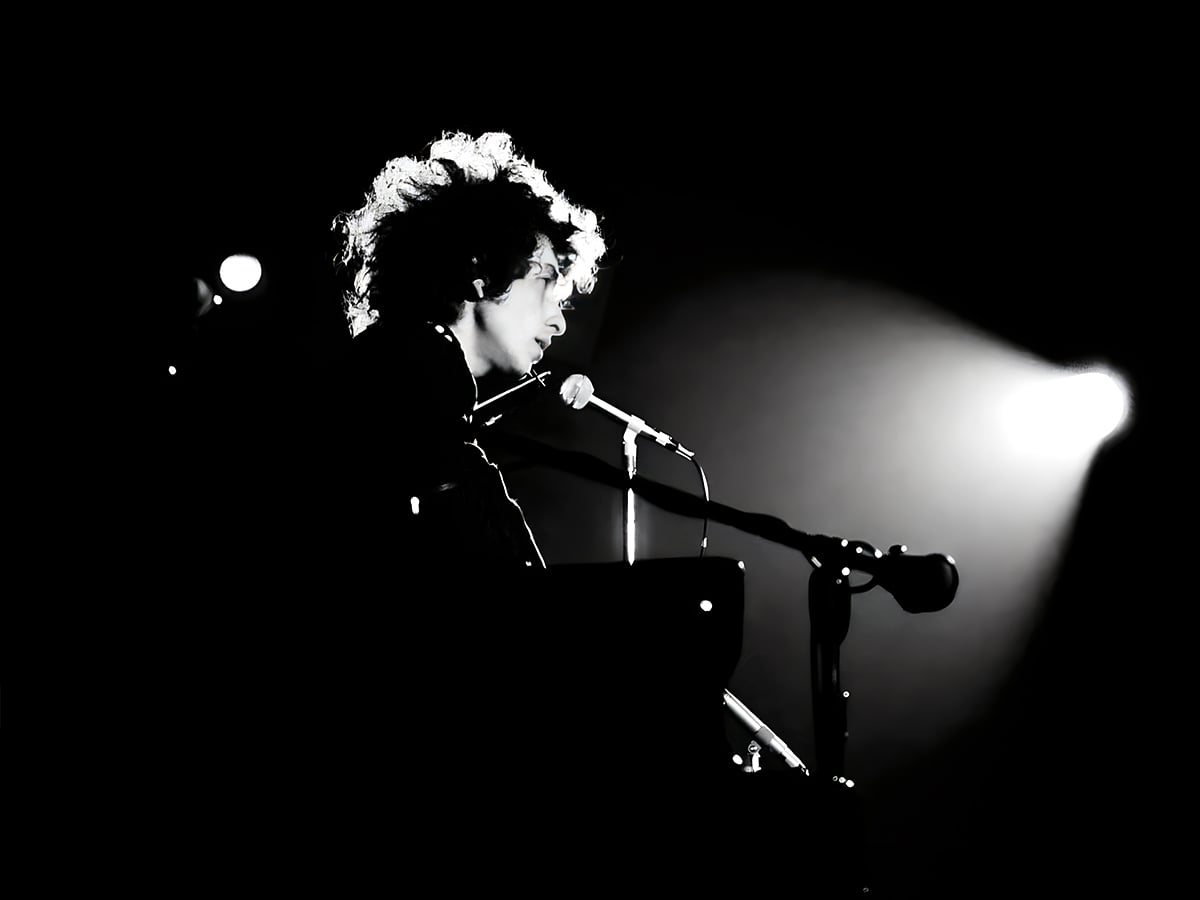
Half of Dylan’s audience chose to throw an almighty strop when he chose to begin embracing rock and roll, performing with a full band and utilising electronic instrumentation for the first time in his career. While those people thought he was outright abandoning his folk roots and selling out in order to sell more records, in reality, it was simply him expanding his horizons and having a complete and utter blast in the process.
An outtake from the offending album that split his acoustic and electric compositions into two halves, ‘If You Gotta Go, Go Now’ is a real embrace of the modern styles that were enjoying success in 1965, taking cues from what The Beatles, The Kinks and The Rolling Stones were peddling at the same time. For anyone who thought that Dylan should know his place and stay in his lane, this is further proof, along with the entire opening half of Bringing It All Back Home, that he ought to have been allowed to do exactly as he pleased.
‘Foot of Pride’

Aside from the opening track ‘Jokerman’, Dylan’s 1983 album Infidels is frequently seen as one of the greatest disappointments from an era of his catalogue where he was stylistically lost. Other than deliberately sabotaging his reputation with Self Portrait in 1970, Dylan hadn’t really experienced a long stretch of time being out of favour, and was seemingly creatively spent as he began to dive into territory that didn’t exactly suit him.
That being said, one of the outtakes from the album, ‘Foot of Pride’, is a raucous rock stomp that sees him let loose and focus more on establishing a vibe rather than on the intricacies of songwriting that usually dominated his work. The track, which went on to develop a second life through Lou Reed choosing to cover it and naming it one of his favourite songs of all time, also sees Dylan employing some of his barbed sense of humour, and while that’s something that’s present throughout large chunks of his catalogue, herein lies one of his best examples.

Never Miss A Tale
The Far Out Bob Dylan Newsletter
All the latest stories about Bob Dylan from the independent voice of culture.
Straight to your inbox.