


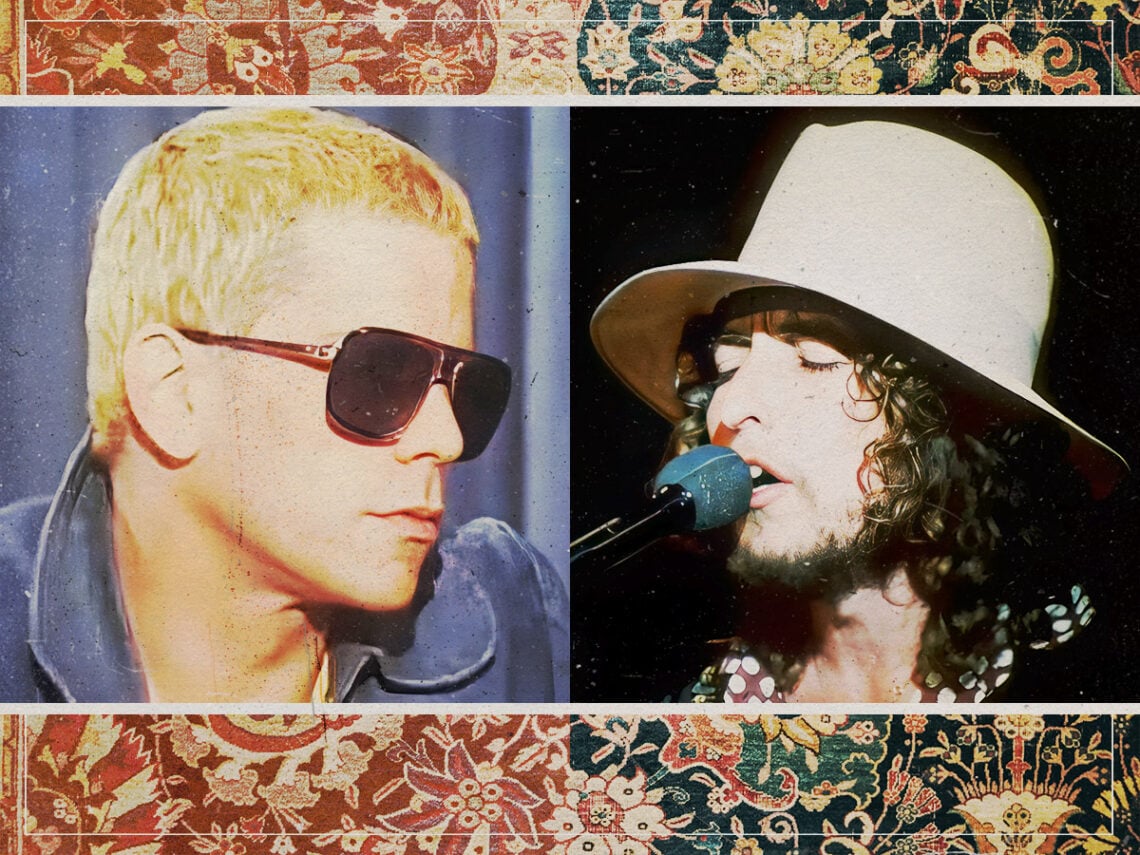
“One after another”: Bob Dylan names the “perfect triple bill” of Lou Reed albums

Throughout the 20th century, New York developed a unique urban identity of subversive decadence, political disaffection and pioneering art. The Velvet Underground co-founder, Lou Reed, embodied his hometown like no other, rising to cult fame in the flower power era.
Though he wasn’t an advocate for the political establishment, Reed often criticised the music associated with the hippie mainstream, instead opting for a more experimental, decadent and sadomasochistic approach.
In a less overtly debauched and more politically charged sense, Bob Dylan enjoyed superlative reverence for his subversive spirit in the 1960s. Like Reed, during this period, he hid derisive, amphetamine riddled eyes behind the shades while holding a middle finger to the critics. By the time Andy Warhol took The Velvet Underground under his wing as the Factory house band in December ‘65, Dylan had released the most culturally significant music of his now seven-decade career, from ‘Blowing in the Wind’ to ‘Like a Rolling Stone’.
By contrast, The Velvet Underground would have to wait many years to realise the full impact of their contributions to ‘60s pop culture. Perhaps that was the issue – the band’s 1967 debut album, The Velvet Underground & Nico, wasn’t a pop record. Songs like ‘Sunday Morning’ and ‘Femme Fatale’ didn’t quite manage to buoy a ship weighted by challenging, if brilliant, tracks like the salacious ‘Venus in Furs’ and the druggy accelerando ‘Heroin’. The band was just too darn edgy for its own good, a quality that would work in its favour over subsequent decades.
Artists like Dylan and The Beatles prospered over The Velvet Underground, regarding immediate appeal, because they set out in familiar, pop-conscious territory. Before Dylan challenged his audience with electronic folk and beatnik lyrics, he served up traditional folk covers and zeitgeisty protest songs; for their part, The Beatles wooed with ‘She Loves You’ before inspiring a generation with Sgt Pepper.

Unperturbed by a lack of popular acclaim for their debut record, The Velvet Underground soldiered on to release an even less commercially viable product, White Light/White Heat. Though they never expected it to soar through the charts, Reed began to grow tired of John Cale’s avant-garde influence and fired the Welsh musician ahead of the third, self-titled album, in a bid for wider recognition. Though this third studio LP and its even more accessible successor, Loaded, reversed the progression from pop to avant-garde documented in Dylan and The Beatles’ careers, they failed to reach the dizzying peaks envisioned by bandleader Reed.
It wasn’t until 1972, when Reed released his second solo album, the David Bowie and Mick Ronson-produced Transformer, that the tides really began to turn. Thanks to hits like ‘Perfect Day’ and ‘Walk on the Wild Side’, this glam-steeped chapter drew attention from around the world to the artist’s earlier work with The Velvets. Now a household name, Reed was primed for an enduring solo career of varied critical and commercial appeal.
While very few fans would place Reed’s solo oeuvre above his catalogue with The Velvet Underground, the former was home to some unavoidable gems. It is easy to take issue with the experimental Metal Machine Music and the unexpected Metallica collaboration, Lulu, which yours truly and David Bowie feel/felt deserves a second chance, but such outlandish releases remind us just how daring and esoteric Reed could be. His career made broad strides in the mainstream and the left field and continues to resonate today.
As a mercurial songwriter who has experimented within the comfy bounds of country, blues and rock music, Bob Dylan has a taste that might surprise some of his unwitting fans. He has a soft spot for modern rap music, listens to The Klaxons and spent many hours in lockdown watching the British soap opera Coronation Street. Less surprising is the folk rocker’s penchant for Reed. Undoubtedly, the folk rock pioneer enjoyed The Velvet Underground in the New York beat scene, but his affections didn’t end there.
In 1987, Rolling Stone asked Dylan whether he was a fan of Reed. “Yes, Lou Reed is great,” he replied. “I always try to purchase any record I can from him whenever they come out.” Reed reciprocated this habit as revealed in a conversation with the same publication two years later. “I always go out and get the latest Dylan album,” he revealed. “Bob Dylan can turn a phrase, man. Like his last album [Down in the Groove], his choice of songs. ‘Going 90 miles an hour down a dead-end street’ — I’d give anything if I could have written that. Or that other one, ‘Rank Strangers to Me’. The keyword there is rank.”
Continuing, Dylan detailed some of Reed’s more recent solo work that he had enjoyed. “I picked up Legendary Hearts from the store as well as, uh, New Sensations and well, also, The Blue Mask. I play them very often; that’s a perfect triple bill if I have ever seen one. One after another.”
Released consecutively between 1982 and ‘84, this triple bill isn’t one most Reed fans would pick out as his finest streak, given the quality of his work a decade prior and the critical and commercial attention garnered in the late ‘80s and early ‘90s by New York, Songs for Drella and Magic and Loss. Though admittedly, these latter works hadn’t surfaced by the time Dylan made his comments.
All the same, these three Reed albums from the early 1980s treated us to some true gems, such as ‘Waves of Fear’, ‘The Last Shot’ and ‘New Sensations’.

Never Miss A Tale
The Far Out Bob Dylan Newsletter
All the latest stories about Bob Dylan from the independent voice of culture.
Straight to your inbox.