


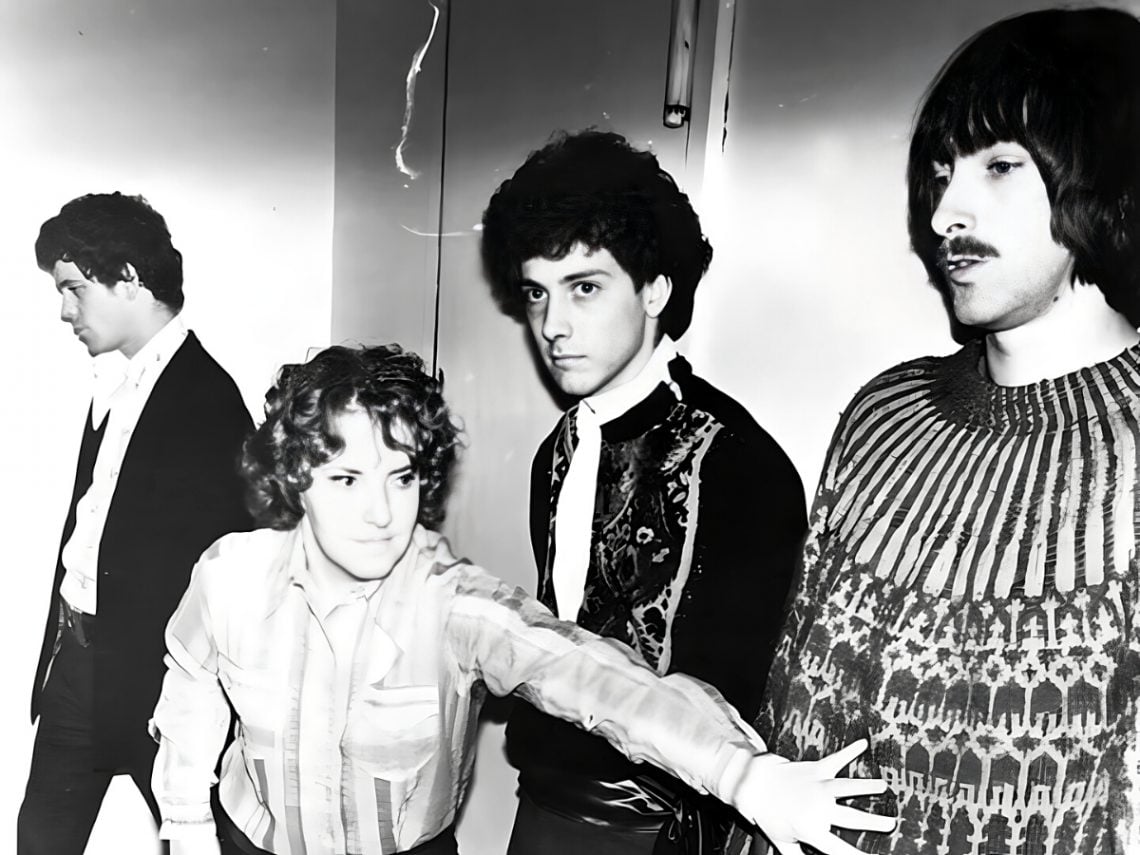
The Velvet Underground burn it all down on the gloriously uncommercial ‘White Light/White Heat’

It wouldn’t have been accurate to call The Velvet Underground a popular band in 1968. They had a lot going for them, of course. They were being managed by Andy Warhol, they had a striking lead singer in German model Nico, and they had blown minds across the country with the Exploding Plastic Inevitable – but that made them notorious, not successful. So what was the solution? How about turning your back on it all and going for broke with the most uncommercial and experimental music of your career?
That was the only plan the Velvets had. First came their break with Warhol. Even though the iconic pop artist had been the band’s primary source of funding, he had also become too heavily associated with the group. Lou Reed became annoyed at the perception that the Velvets were simply Warhol’s pet project, so Reed fired Warhol as the band’s manager.
“He sat down and had a talk with me,” Reed remembered. “‘You gotta decide what you want to do. Do you want to keep just playing museums from now on and the art festivals? Or do you want to start moving into other areas? Lou, don’t you think you should think about it?’ So I thought about it, and I fired him. Because I thought that was one of the things to do if we were going to move away from that…”
The decision wasn’t a popular one within the group. “The way [Reed] handled it and the way he did it was really destructive,” bassist/violist John Cale told the Red Bull Music Academy. “I mean he just like blew up the band and fired Andy without telling anybody, and it was like, ‘What?’”
With Warhol out of the picture, Nico was the next to leave. It wouldn’t be a complete break: Reed, Cale, and guitarist Sterling Morrison would all write songs and perform on Nico’s 1967 debut solo album, Chelsea Girl. But her time in The Velvet Underground was over, leaving the lineup of Reed, Cale, Morrison, and drummer Moe Tucker to record their second album.
Cale, in particular, was interested in exploring the outer reaches of sonic exploration. While bands like the Allman Brothers and the Grateful Dead were pushing the boundaries of traditional rock music at the time, they were still largely keeping within the traditional rock idiom. The Dead’s screeching walls of feedback were the only real competition that the Velvets faced, so they decided to get darker, grittier, funnier, dirtier, more malicious, and more catastrophic than any band had ever been on record.
“The problem with the Velvets was always a conflict between doing revolutionary songs, like ‘Venus in Furs’, and pretty songs,” Cale told Vulture in 2013. Even though there was an even balance of light and shade on their debut, The Velvet Underground and Nico, it was decided that there was no longer room for the pretty songs on their next album, White Light/White Heat. Instead, proto-punk gutter scrawl would meet drug use, sordid humour, free jazz, and debauched sex.
Kicking off with the album’s uncompromising title track, White Light/White Heat is nearly 40 minutes of uninterrupted noise. Apart from the two-minute ballad that closes side one, ‘Here She Comes Now’, nothing on White Light/White Heat could possibly appeal to anyone who needed a bit of sugar to make the medicine go down. There was no sugar here, and the medicine consisted of amphetamines, nitrous oxide, and box cutters plunged straight into the skull.
The boundary-smashing elements of White Light/White Heat are well documented. There’s Cale’s brain-thumping bass line in ‘White Light/White Heat’ that was supposed to simulate a speed rush. Cale appears again on ‘The Gift’, not to sing but to narrate the tale of young love that ends with a gruesome death. Morrison simulates the terrifying sounds of medical equipment on ‘Lady Godiva’s Operation’. Reed’s lead guitar playing on ‘I Heard Her Call My Name’ blows past frenetic and into unhinged territory.
Perhaps the best-known story of the Velvets’ desire to push the envelope, and the subsequent pushback from the outside world, came while recording the album’s closing track, ‘Sister Ray’. The band agreed to improvise the song in one take, with each member blasting out distinct rhythms that only sometimes line up with each other.
Engineer Gary Kellgren had been dealing with the band’s antics all throughout the album’s production, but ‘Sister Ray’ was a step too far. “The engineer said, ‘I don’t have to listen to this,'” Reed recalled in the documentary Lou Reed: Rock & Roll Heart. “‘I’ll put it in record, and then I’m leaving. When you’re done, come get me.'”
‘Sister Ray’ was expansive and mind-blowing during the band’s concerts, but in studio, it was a cacophony of noise. That’s how the band wanted it. In fact, nearly all of White Light/White Heat is pure pandemonium. There are parts of the album that are virtually unlistenable in any state of mind, altered or otherwise. Those moments are intentional, and they still have the power to irritate and fascinate in equal measure more than 50 years later.
Verve Records barely knew how to promote The Velvet Underground and Nico, but they still managed to pull out some singles and plug into the band’s connection with Warhol. White Light/White Heat left them dumbstruck. Verve ran full-age ads in music papers, some of which continued to lean into the Warhol connection, but it was all for not: White Light/White Heat sold less than the band’s modest-selling debut, barely scraping into the Billboard album charts at number 199.
Reed began to turn his ire toward Cale, his immediate creative competition within the band. Even though Reed was the band’s primary songwriter, Cale’s influence dominated the aggressive experimental style of White Light/White Heat. The Velvets were broke, struggling to achieve the success that some of their peers had been achieving. Reed called Morrison and Tucker to a meeting and laid out the situation in plain terms: either Cale was out, or The Velvet Underground would disband.
“Lou made an ultimatum that either he or John would have to go,” Tucker recalled in Todd Haynes’ documentary The Velvet Underground. “He called Sterling and I, and we met at a coffee shop or something, and he told us this. You know, he just couldn’t work with John anymore, and we could either stay with him or go with John.”
“I got a visit from Sterling, and he said, ‘I’ve just come from Lou,'” Cale remembers in the documentary. “And I said, ‘Yeah we gotta start rehearsing. We’re going to Cleveland on the weekend.’ He said, ‘Well, no.’ He said, ‘We are, yes. You’re not.’ And I said, ‘What are you talking about?’ He said, ‘Well, Lou’s sent me over here to tell you that he told the rest of us that if John goes, I don’t go.’ And that was it.”
Tucker states in the documentary that Reed’s primary focus going forward was to see The Velvet Underground become a successful rock band. For the next three years, Reed would lead Tucker, Morrison, and new bassist/singer Doug Yule through two more albums, both of which contained more commercially viable material than White Light/White Heat. Reed left the band following the release of 1971’s Loaded, leaving Yule to record the band’s final album, 1972’s Squeeze, by himself before disbanding The Velvet Underground in 1973.
As time went on, a reputation began to surround the group’s debut album. Critical praise and even commercial success was beginning to fall at the feet of The Velvet Underground and Nico, starting in the late 1970s. But around that time, a new generation of bands influenced by White Light/White Heat began to pop up around the band’s native New York. Combining the influence of the album with elements of lo-fi recording and punk rock live performance, the no wave movement began to take shape around acts like Sonic Youth and Swans.
For casual listeners interested in the full Velvet Underground experience, White Light/White Heat remains the most difficult hurdle to overcome. Its piercing tones, endless drones, ear-ripping feedback, and complete ignorance of anything resembling traditional rock and roll (and, at times, traditional music of any genre) make it a tough sell. But for those who thrive on noise and the avant-garde, White Light/White Heat might as well be Sgt. Pepper’s Lonely Hearts Club Band. It’s an album without precedent: an entity so unique that it created a whole new genre of music and destroyed the band who dared to make it. It takes a steady mind and a hearty stomach to get through White Light/White Heat, but the doors that it opened helped shape the next 55 years of music that followed.
