


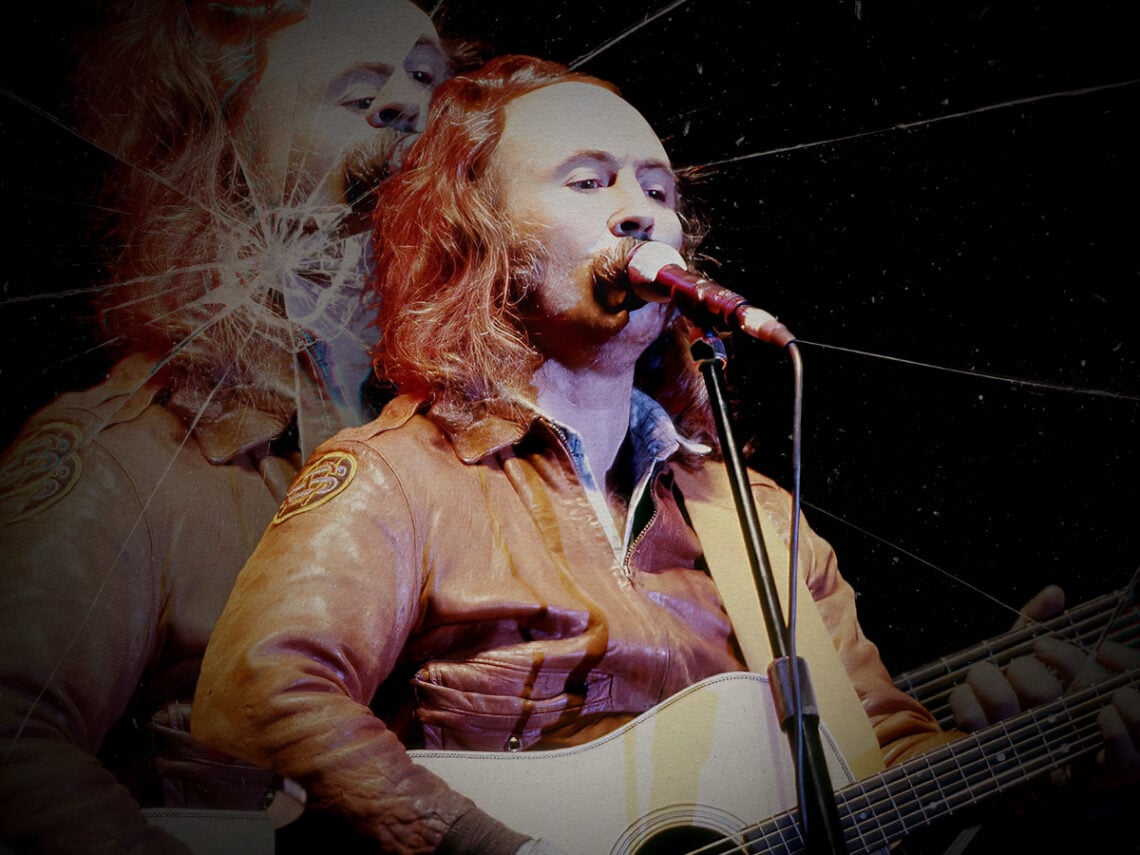
Five times David Crosby attacked his bandmates

At one point in the 2019 documentary David Crosby: Remember My Name, the film’s director, Cameron Crowe, a former music journalist himself, plays a cassette for his subject, David Crosby, of an interview the two had conducted way back in 1974.
On that tape, a younger Crosby had recounted advice his father had given him, saying that all the fame, money, and women wouldn’t matter; it was all about how many friends you had at the end.
Hearing the recording back 40 years later, the older Crosby shakes his head, telling Crowe, “I think I made that up. The reason I think I made it up is my dad didn’t have any friends”.
David Crosby died in 2023 at 81, and as the obituaries rolled in for one of the great voices of his generation, just about all of them included at least some mention of his less glamorous legacy: his well-documented drug problems and series of arrests, and most especially his feuds and fallouts with many of his closest collaborators from The Byrds and Crosby, Stills, Nash & Young, most of which were never properly reconciled.
The 2019 documentary helped frame Crosby in a more vulnerable and forgivable light, but at a certain stage in his life, he simply wasn’t equipped with the social tools or physical energy to rebuild the various bridges he’d spent a lifetime gradually burning down.
Here’s a closer look at five occasions in which he went on the offensive against his own rock colleagues.
Five rounds of David Crosby versus his bandmates:
A knuckle sandwich for Jim Dickson
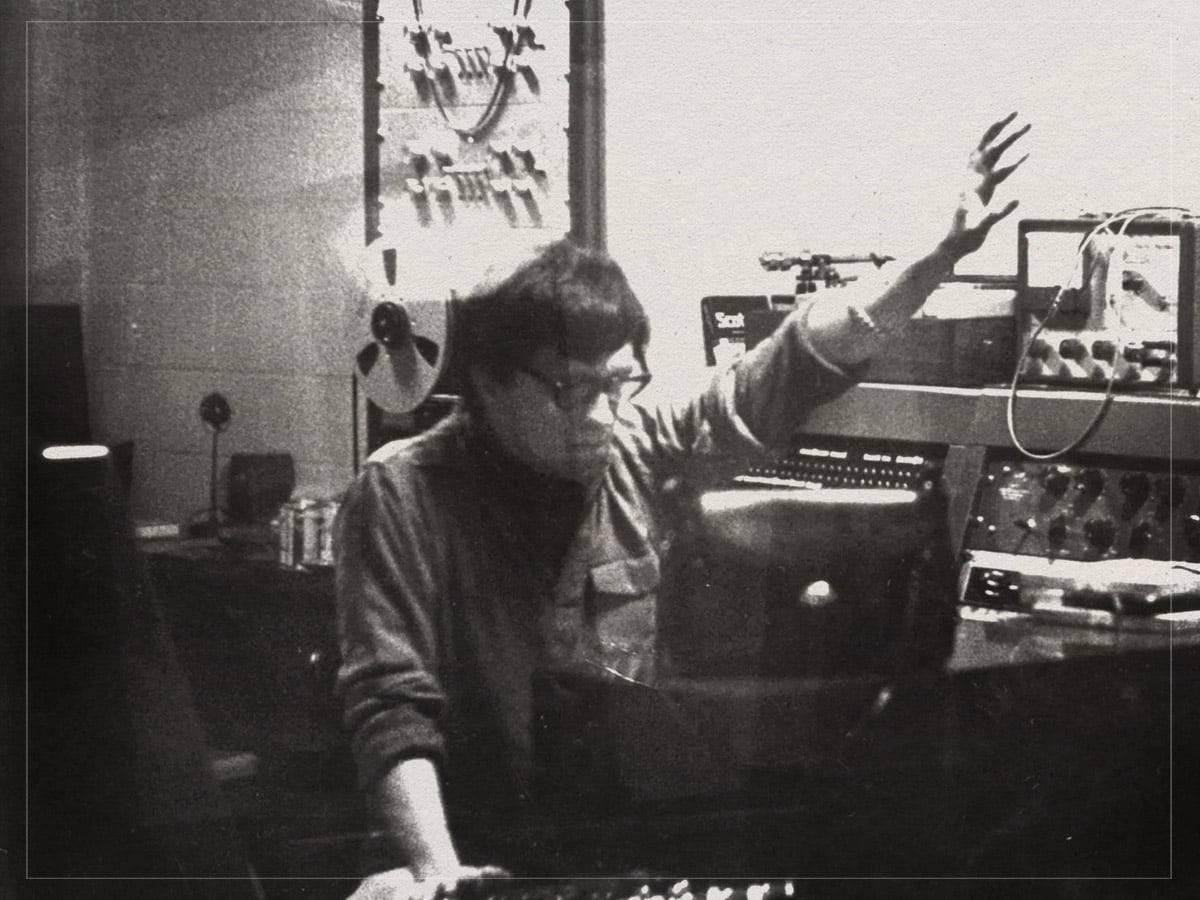
Jim Dickson was a respected music producer and an early manager of The Byrds, often credited as the one who encouraged the band to cover Bob Dylan’s ‘Mr Tambourine Man’, the song that made them stars. Crosby respected him, but also revealed pretty early on that he wasn’t great at following orders.
During an early Byrds recording session, a frustrated Dickson shouted at Crosby to stay on point. “He just got mad and said, ‘You goddamn do it or else!’” Crosby recalled in his 1988 memoir Long Time Gone, “And I said, ‘Hey, fuck you’. We already had lots of little disagreements and maybe even a fight or two before that, so I stood up on a little ice plant bank and punched him right in the mouth. Didn’t even slow him down; he was so mad, he was going to take me apart. It was no big deal. I love the guy. But it happened.”
The fisticuffs took place in front of several stunned record label execs who were hoping to see their new hitmakers hard at work on more jangly gems. “All those front-office types never saw anything like me and Crosby fighting in the studio,” Dickson said, “with me on top of him on the floor, threatening his life… We were not at all self-conscious about it. We were organically living out our differences.”
Ruffling The Byrds’ feathers

While Crosby was still a member of the Byrds, he started up a friendship with new SoCal arrival Graham Nash, who immediately picked up on the bad vibes going on around the time of the band’s fourth record, Younger Than Yesterday.
“Crosby wasn’t happy with The Byrds,” Nash wrote in his own memoir, 2013’s Wild Tales, “They were refusing to put his songs on the albums, and in return, David was behaving badly. He was being a dick, refusing to show for rehearsals, staging hissy fits, and acting out. Little did I know, David had a PhD in acting out.” Crosby fully acknowledged all this, writing in 1988, “I had a large ego, and Roger [McGuinn] and I started having conflicts with each other over material, business, expenses, everything we did was a potential source of disagreement.”
Crosby was also short-tempered with Gene Clark, repeatedly telling him to hand over his guitar parts because he didn’t have the chops, ultimately leading Gene to quit the band shortly before David himself was fired. Crosby, who was already on both coke and heroin at this point, knew his sacking was warranted, but he still insulted McGuinn in subsequent interviews. The latter responded more coolly, telling a reporter in 1970. “David threw some low punches, evidently. He always has the right point, but his motives for saying it and the way he says it are not always right… No matter what you say about me, David,” McGuinn added sarcastically, “still love you”.
Standoffs with Stephen Stills

Most CSNY fans are at least somewhat aware of how one of the most popular and promising groups at the dawn of the 1970s managed to implode in the span of a few years. Rampant drug use was probably the biggest factor, but these were also still very young men, suddenly thrust into a position of not just stunning wealth, but cultural responsibility, writing songs that would now help speak for young people much as Dylan’s songs had spoken for them.
The group was named after each of its members, with the idea that no one man was the leader. But as Crosby later wrote in his autobiography, “I think that Stephen [Stills] has trouble being overly generous to other people about their contributions, and Graham and I had a natural competitive problem with him because he’s a lead player and he was always a dominant force… I always felt that Stephen was overbearing. I felt that he didn’t really give us credit where it was due.”
Drug-fueled arguments became the norm, and following the debaucherous Doom Tour of 1974, Crosby and Stills couldn’t work together anymore, leading to the split of the group and separate albums by Crosby and Nash and the Stills-Young Band.
Gripes with Graham Nash

Against all odds, CSNY managed to come back together not just after the dark days of the mid ‘70s, but again after the far darker period of the mid-1980s, when Crosby’s severe drug problem and arrest on weapons charges saw him sent to prison for nearly a year. The reformed group, occasionally with Neil Young involved, toured sporadically into the ‘90s and 2000s, managing to co-exist far better than they had as coked-up youths. Unfortunately, after the release of Graham Nash’s 2013 autobiography, Wild Tales, some of the old wounds of the past began to open back up, as Nash’s frank discussion of Crosby’s behaviour went to print before David had the chance to review it or properly discuss it.
In response, Crosby eventually took some shots at the book and Nash himself. “Graham’s book is full of inaccuracies and chock-full of misinformation,” he told the San Diego Union-Tribune in 2016, “When he handed (an advance copy) to me, he said: ‘It’s too late to change anything, but here it is’. I was very unhappy about it. It’s a very shallow, very self-serving book, and full of BS. Chock-full.”
CSN had still been playing together as late as 2015, but never regrouped following those comments. In 2021, Crosby further lamented to The Guardian that “Graham just changed from the guy I thought was my best friend to being a guy that is definitely my enemy… He gave the impression of looking after me, but apparently that was all just trying to keep the money coming.”
Old beefs with Neil Young

If Crosby blamed Nash for stirring the pot in 2013, he could only blame himself for speaking off the cuff a year later about Young’s then girlfriend, the actress Daryl Hannah, calling her a “poisonous predator” on social media. Neil, somewhat understandably, was displeased. Like most of Crosby’s old bandmates, Young had been through the full love/hate gamut with David many times and wasn’t eager to patch things up after this latest misstep. The two never shared a stage again after the last CSNY show at Young’s Bridge School Benefit in 2013.
Crosby tried to apologise for his comments in 2015 during an appearance on the Howard Stern Show. “Where do I get off criticising her?” he said of Hannah, “She’s making Neil happy. I love Neil, and I want him happy”. When that olive branch proved unsuccessful, however, Crosby angrily spoke out again in the aforementioned 2021 Guardian feature, reframing Young as the “most self-centred, self-obsessed, selfish person I know”.
It was only after Crosby’s death, sadly, that some of these tiffs were put in a proper perspective. As the news broke, Young made a statement calling Crosby the “soul of CSNY”, and when Stills and Nash spoke to the LA Times together a couple of years later, Stills admitted, “I don’t think we realised how badly we would miss David”.
