


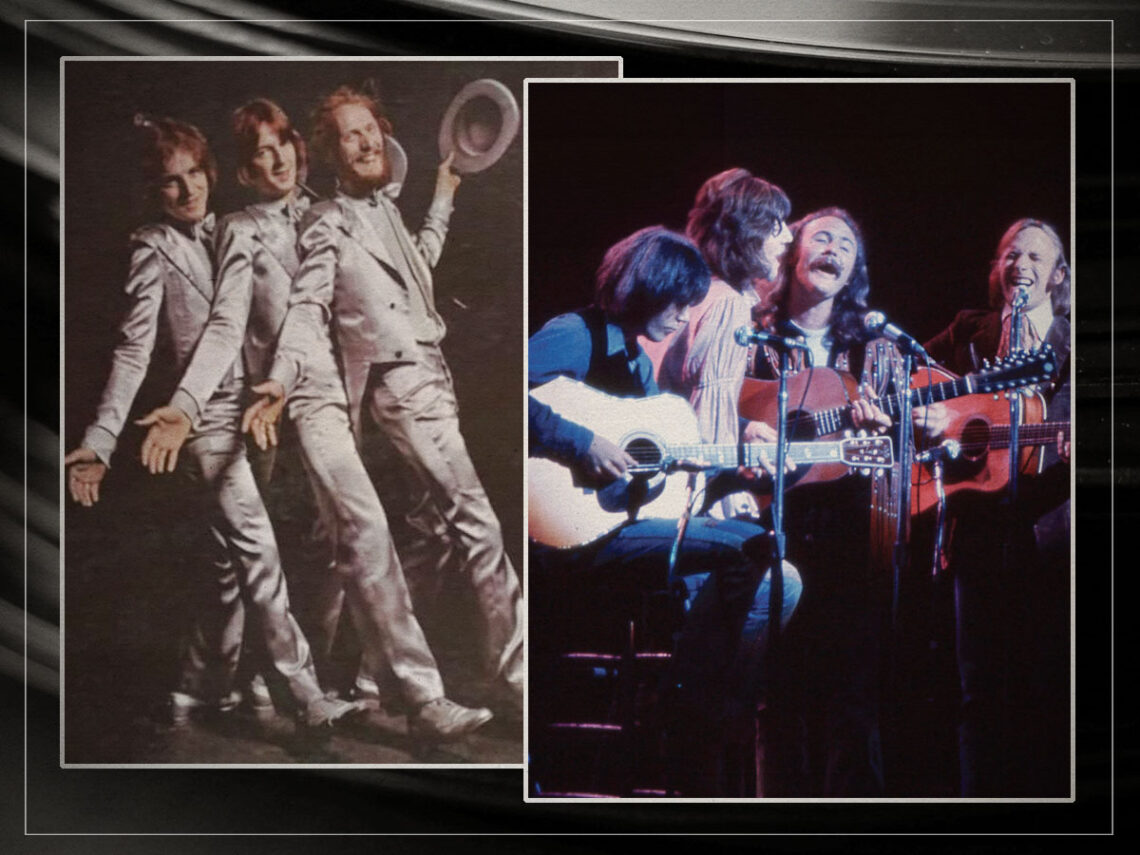
How did Cream and CSNY define the supergroup?

Supergroups are a tricky beast to pin down, aren’t they? They’re like a dream match in pro wrestling or a long-awaited sequel to a beloved film. When the news breaks, excitement is inevitable—but a strange thing happens once they actually start releasing music. Only the bad ones remain supergroups—that is, bands defined solely by who’s in them. Them Crooked Vultures? Audioslave? Atoms for Peace? Supergroups. The good ones, like Boygenius, Cream, and Crosby, Stills, Nash & Young? They’re just bands. Great ones at that.
Cream and CSNY are often credited as the first two proper supergroups. Of course, established artists had collaborated before, but only for one-off albums or concerts. Cream and CSNY were the first to present themselves as actual bands—ones that would tour, release albums together, and develop organically, just like any other group. The only difference? They just so happened to be made up of already famous musicians.
The irony is that Cream and CSNY had completely contrasting approaches to making music—ones that reflected the reputations of their respective members. Cream were instrumentalists, first and foremost. Jack Bruce and Ginger Baker had served as the rhythm section for both Blues Incorporated and the Graham Bond Organisation—when they weren’t trying their absolute damnedest to kill each other, that is.
Eric Clapton, of course, was the premier blues guitarist of his generation—a legitimate prodigy who had lit up The Yardbirds and John Mayall’s Bluesbreakers before growing tired of the sideman tag. That frustration led him to pitch the idea of a new band to Ginger Baker, who had seen Clapton play with the Bluesbreakers and shared a car ride home with him.
But why did Clapton want to form the first supergroup?
Clapton wanted to form a real band with two musicians he felt were at his level, sharing songwriting duties by each contributing ideas for both music and lyrics. After all, when it came to musicianship, he, Baker, and Jack Bruce were the “cream of the crop”. Despite nearly crashing the car at the thought of playing in another band with his mortal enemy, Baker agreed, and Cream made their debut in July 1966.
For the rest of their time as a band, Cream were a surprisingly democratic band when it came to songwriting. Despite the absolutely titanic egos on display, the music was always a product of Bruce, Clapton, and Baker jamming together. With the occasional lyrical contribution from poet and frequent collaborator of Bruce’s Peter Brown, if the logophobic Cream were really stuck. It wasn’t a struggle for creative control that kneecapped the band; it was the ongoing bad blood between Baker and Bruce.
If you want to talk about struggles for creative control, let’s look at Crosby, Stills, Nash & Young. While Cream were revered for their instrumental prowess, CSNY were defined by their songwriting—making their formation an even harder sell than Cream’s. Bruce, Clapton, and Baker were accustomed to playing and collaborating with others, whereas each member of CSNY had already been kicked out of their previous bands for throwing a mard over not getting their own way.

David Crosby had been ousted from The Byrds after clashing with Roger McGuinn over creative control. Stills and Young emerged from the wreckage of Buffalo Springfield with a point to prove about their artistic abilities. Graham Nash had quit The Hollies when they refused to follow his lead. Clearly, the most logical path for each of them would have been solo albums—but when Crosby, Stills, and Nash sang together, something magical happened. If you’ve heard those harmonies, you know exactly what I mean.
So, Crosby, Stills and Nash were the initial incarnation of the band, and they started as they meant to go on. The only collaboration was in the arrangement of the songs, with each individual member writing them alone before bringing them to the rest of the band. The only collaboration on their debut album was on Crosby’s side two opener ‘Wooden Ships’, which Stills and friend of the band, Jefferson Airplane’s Paul Kantner, helped finish. The band managed to get through making their first album with a minimum of ego-fuelled tantrums. Clearly, they wanted more because why else would you add Neil Young to a band?
I’m only half joking about that, too. While adding Young did lead to the album Déjà Vu, one of the high points of each band member’s whole careers, it was also probably the worst option for the band as a whole. The addition of Canada’s least polite human being exacerbated the pre-existing intra-band tensions. It became clear that what all these songwriters really wanted was to make their own records which, after the band dissolved, they did to much critical and commercial acclaim.
There’s a degree to which every band you could call a “supergroup” have been following the same blueprint set by Cream and CSNY ever since. They’re either a full-on partnership between recognised artists, like Cream were, or a CSNY-style collection of disparate voices brought together in one band. Both of these bands made great art, no doubt about that. However, there’s only one of them with a sense of what might have been.
The best thing for CSNY to do was split and go solo. That was always the case; anyone watching them could see they were on borrowed time. Whereas if Baker and Bruce could have just buried whatever hatched there was between them, and not in each other’s skull the way they would have liked, who knows how far they could have gone together?
