


Never Mind the Bollocks: Five straight-talking artists you need in your life

I think it’s safe to say that fans got sick of artists ramming their opinions down their throats a long time ago. Gone are the days when middle-class artists sloganeering about the woes of politics and society – they’ve been sussed out. We’re in a different era now, where the world has moved ever closer to the brink, and there is no time for bearded hipsters rehashing and undervaluing experiences and issues that have little to do with their lives.
Societies are at a breaking point across the world. The rich get richer, and, well, the rest of us struggle to survive, with the working class more under the cosh than they have ever been in the past 30 years. Due to the rising cost of living, deepening political divides, the looming environmental collapse, and the real threat of a world war. At least at the height of the Cold War, the environmental collapse was years off, and people still spoke to each other; the digital age hadn’t yet come into force.
There has never been a better time for artists to emerge who are righteously motivated. There’s a new crop on the rise that not only crafts potent tunes musically but also loads them with significant messaging delivered authentically, as opposed to the array of poseurs that made a living by appropriating the everyday struggle last decade. Now, just a few years later, things are much bleaker across the board, and this wave of artists understands it. They use their music to highlight systemic failures and, crucially, offer hope for how we emerge out the other side of the mire, championing togetherness and community spirit at a time when society has never been so fractured.
From calling out the establishment’s past and present to tearing into the pitfalls of the music community – which is largely only in name and contributes to the malaise – we’ve listed five essential straight-talking acts that are vital to the present. This is art of a different essence than we’ve been used to this century.
Five straight-talking artists you need in your life:
Bob Vylan
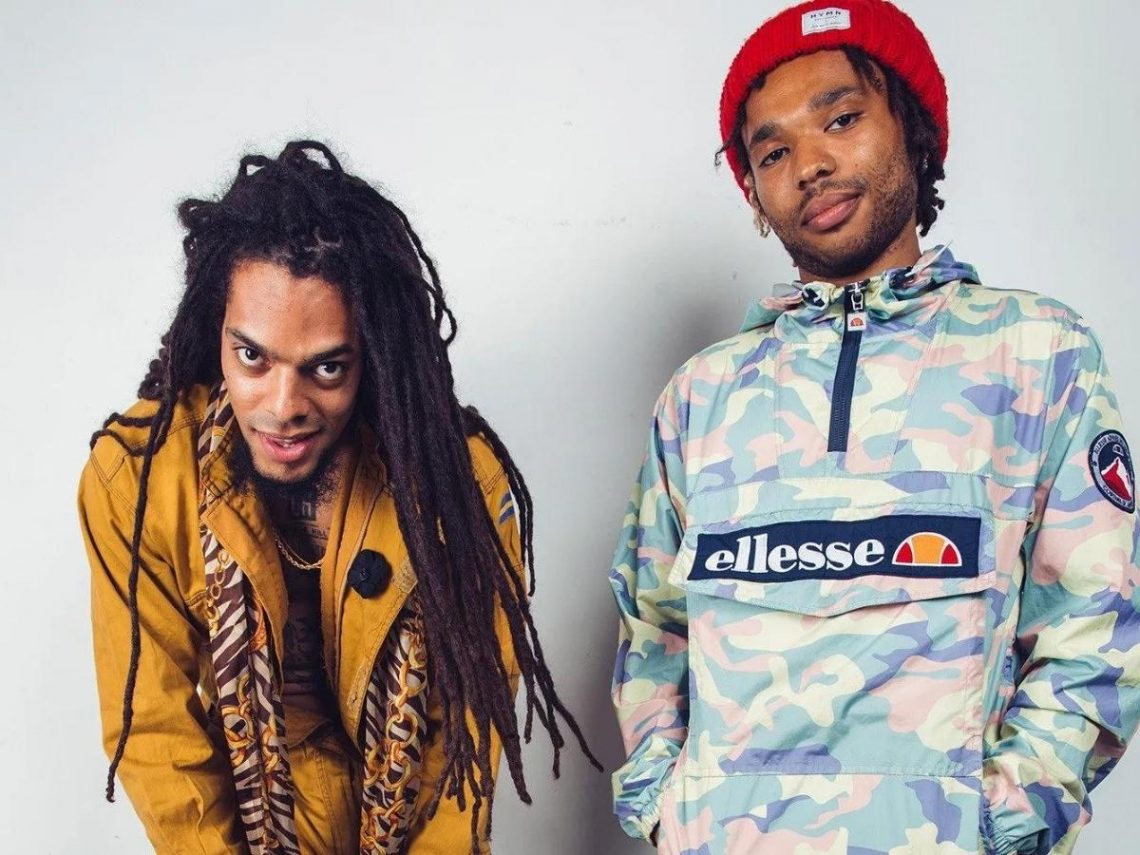
London duo Bob Vylan have been one of the most refreshing acts in Britain for some time now. They fuse punk, grime, and hip-hop into a scintillating blend that manages to be righteously furious and humorously razor-sharp, with frontman Bobby Vylan being an excellent wordsmith. ‘The Bobs’ are incredibly effective, as they adroitly solder their various influences into a distinctive sonic character, yet more importantly, the topics they analyse are paramount.
The pair’s music explores the struggles of being a Black man in modern Britain, which includes shining a light on connected mental health issues, institutional racism, and being a parent to Black children. Bobby’s words are essential in the era of George Floyd, Chris Kaba, Grenfell and widespread institutionalised racism, and they don’t stop there either.
There’s a Rage Against the Machine-esque social justice element present in most of their work, with the band investigating police brutality, unequal income distribution, gentrification, toxic masculinity and homophobia with such a sheer force that you have to think about it. Just take ‘He’s a Man’ from this year’s Humble as the Sun, it expertly describes the very worst form of British man, many of whom would take to the streets in the horrific race riots we saw in August.
Bob Vylan unapologetically represents everyday working-class Britons, regardless of background, and their music contains many vital lessons.
Meryl Streek
You might not have heard of Meryl Streek, but now you have. After this, you should listen to his latest album, Songs for the Deceased. It’s an absolute masterclass in fusing punk and glitchy electronics, and the messaging is as searing as anything you’re likely to hear this decade.
While the mysterious Dubliner made his stance clear on his 2022 debut, 796, with cuts such as ‘Death to the Landlord’, on his expansive follow-up, he refines his cross-examination of Ireland and broader humanity’s failures. Using the prism of various real-life stories concerning death—some of which still need answers from those in power—he is able to clearly shine a light on them, keep the memory of those lost alive, and delve into other negligences, political, economic, and social.
With delivery as vitriolic as anything out there, characterised by his thick Dublin accent and a unique sound underpinning his brutally frank orations, Streek is essential listening. His work applies to ordinary people outside of Ireland, too.
Explaining his full-frontal approach and Songs for the Deceased, Streek told Far Out in a recent interview: “I just want the younger generation in Ireland and the UK and fucking wherever else around the world to realise that we’ve been snookered here. Do you know what I mean? And if that album can just give you a little fucking thinking on some of these situations, then that’s all I’ve ever wanted to do.”
Adding: “I just wish people would see that there is no left and right. We’re all fighting for the same fucking thing, and we should be in the same place, doing that together. You know?”
Benefits
It makes sense that we should move on to his British counterparts and spiritual brothers in arms, Teeside trio, Benefits after Streek. If frontman Kingsley Hall’s moment of poetic majesty on ‘Interlude’ on Songs for the Deceased isn’t enough to win you over, the band’s raw fusion of electronic music, punk and experimental will. A lazy commentator might state that the band resembles a heavier version of The Streets. Still, their content is much more politically charged, fully enraged and mightily socially aware in a different way.
Like Streek, the band’s formula comprises Hall sharply debating the present state of a country that has been broken for years and is influenced by the very real everyday horrors of the post-industrial region his band are native to. Although they’re capable of being immensely punishing and jarring – echoing the discombobulating nature of the digital age – the group aren’t strangers to melody either, and they know how to weaponise it in moments of transcendental, philosophical rumination.
Their 2023 debut album, Nails, is the most thought-provoking and effective walkthrough modern Britain released in music lately, with the closer ‘Council Rust’ exhibiting the wide scope of their artistic reach. Ethereal textures envelop poetry that immerses the listener in seconds. “Raise your glass, forget it, be free,” Hall says, imploring us to move past the dilapidated country that surrounds us: “Food banked, debted, in fear…”
High Vis
Featuring former members of Dirty Money, High Vis are one of the most celebrated acts in the UK hardcore scene, rising fast over the past couple of years. They’re not just a hardcore band, though, and appeal to listeners outside of their direct community with their experiments with post-punk, goth, baggy and, most recently, house, as heard on ‘Mind’s a Lie’ from their October 2024 album, Guided Tour.
Along with mastering rousing anthems, frontman Graham Sayle’s spirited Scouse delivery and lyrics set the band apart. In the fan favourite ‘Trauma Bonds’ from Blending, he sings, “We’re not driven by hate; we’re just slaves to fear.”
Accurate lines like these are just the tip of the iceberg. From expressing deep empathy for the struggles of fellow citizens to pure wrath at the state of the world, High Vis is a band whose messaging is purely virtuous. No wonder they appeal to so many and have risen so quickly.
One of their most essential tracks is ‘Mob DLA’ from Guided Tour. A harder number featuring Sayle’s fierce delivery, searing guitars, and a big chorus, lines such as “The DSS back at your door / Forced to beg, to fight, to pray / A burden that you can’t escape / Is the price of life too much to bear?” clearly outline the group’s substance, and importance.
Sayle said after the track was released: “The years upon years of public service cuts have had a devastating human effect on communities in the UK. People are forced to justify their need for assistance, made to endure dehumanising tests in order to monitor their eligibility for support for often lifelong disabilities. Marginalised communities are left to fend for themselves then vilified in targeted media smear campaigns”.
While that paints a dismal picture of the world, particularly as the political and industrial elite get richer, he offered a bold glimmer of hope: “And through it all, I’ve seen the power of community action in the face of sustained neglect.” Changing the world won’t be achieved just through anger.
Uncle Daddy
A change of pace from the punk-leaning artists listed above. Uncle Daddy is the new project from Fat White Family member Nathan Saoudi, IDM master Richard Wilson and Joseph Pancucci. They released their debut single ‘Blood’ at the beginning of October, a heady blend of electronic textures, and are on a mission to create music that transcends our era with universal appeal. They’re looking to the future, wanting to traverse the current artistic impasse the UK seems to be locked in.
Alongside striving to create something refreshing, the band have the present environment of London’s music scene in their crosshairs. They are looking to undo its endemic, bitter competition in favour of something much more positive. Comparing his extensive and successful time in the US with London, Wilson told Far Out: “London’s just the toughest, just because of people’s behaviour. Everyone in America was always really influential or accepting of your talents, and wanting to grow with you, but here they get nasty.”
He continued: “It becomes like hard competition when you’re all trying to do the same thing. You’re all trying to go up, but you could do events together, you could support each other online and other stuff.” Saoudi added: “Everyone wants to be the star here.”
The pair believe this is holding broader cultural development and evolution back, leaving Britain, which the world has long looked to for inspiration, straggling behind other countries. So, as well as starting their new outfit, the band have launched the label Dash the Henge, which they will use to help other artists.
Regarding this egalitarian approach, Wilson explained: “If there’s a band that we like or artists, we would go as far as helping them produce their whole album. Let’s step you up to the level you need to be.” The future looks majorly exciting for Uncle Daddy and their label; their attitude is majorly refreshing.
