


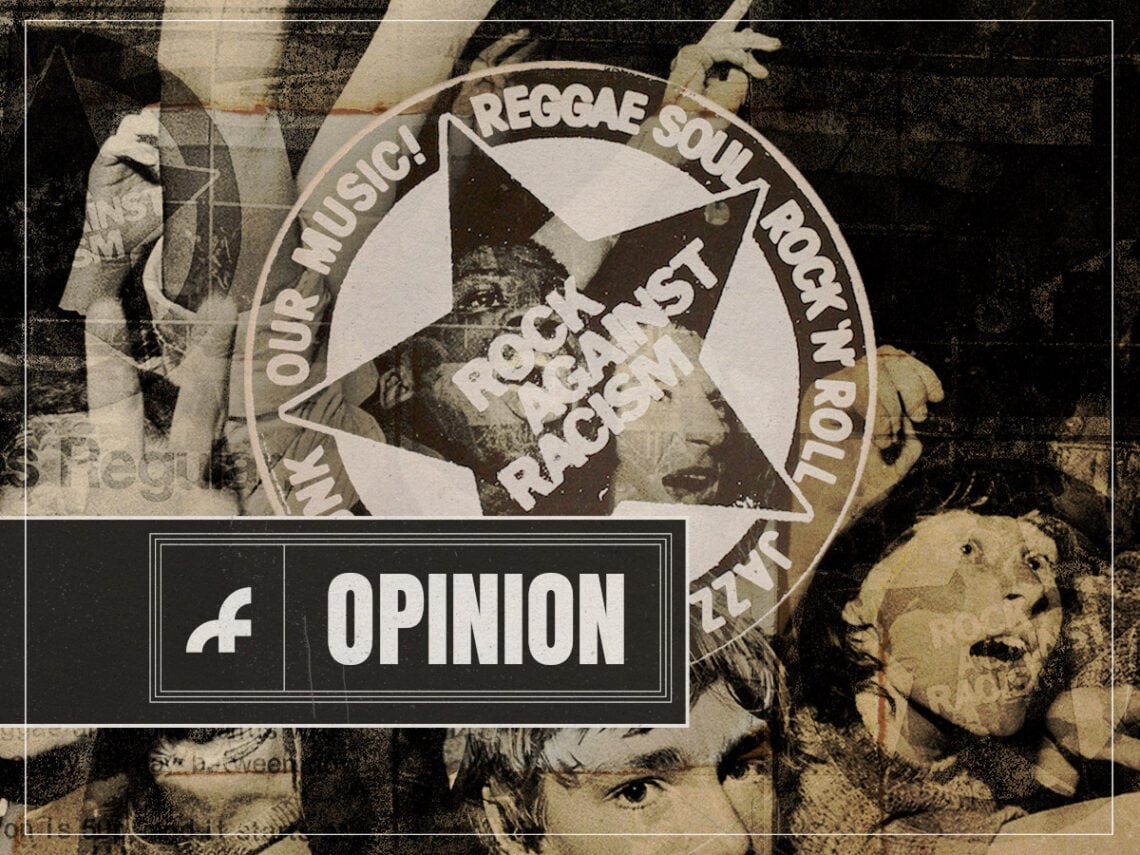
We need ‘Rock Against Racism 2’: The time for talking is over, the UK music scene must unite

Britain has seen harrowing far-right racist violence erupting over the past week in cities up and down the country. This is not just distressing for me, a mixed-race man with Muslim family members and grandparents who came to this country fleeing religious and racial persecution all in the hope of having a shot at a better life, but for the nation as a whole. Like most, my family members were honest, hard-working people who gave their minds, bodies, and souls to join their new society. The entire country has been left aghast by the hateful menace pervading our streets, masquerading as some kind of destructive protest.
What we’ve witnessed unfurl this week has destroyed livelihoods and left communities with scars that will never heal. For those targeted by the violence, it’s a startling reminder that, for many people, we are not welcome. Let’s be clear: the brutality we have seen this week is nothing more than bold, vicious far-right thugs and other gullible knuckle draggers co-opting what should have been a period of mourning for three girls who were wickedly targeted and killed in Southport.
When we should be honouring the lost lives, decrying the brutal femicide, and setting about tackling the increasing rise of anti-women violence once and for all, that significant conversation has now been overshadowed and even forgotten. The country’s tender cultural faultlines have again been brought to the fore. Those suffering dismal socio-economic realities, blinkered by the media babble that continues to point fingers away from the government, met with a more flagrantly racist faction of hooligans and, driven into a frenzy by the pipe pipers of online social media hate campaigns, set about destroying their own communities in an attempt to target a minority they were told were the cause of all their issues.
Instead of quiet reflection for those tragically lost in Southport, the fire of racism has erupted, with its tar-black clouds enveloping the nation in an eerily grim reflection of the present’s cultural landscape.
While the humble residents of the cities and towns stricken with such wanton hate have been quick to condemn these marauding thugs attacking people based on the colour of their skin and have united in response, clearing up the destruction and maintaining their ardent opposition to such Orcish louts, the music community has, in any formal capacity, been eerily quiet. As communities attempt to brush away the broken glass of a hellish weekend they will never forget, their voices, both political and within the arts, feel weaker than ever.

Why is it that artists – who often distil the contemporary technology-rapt malaise – can sit in their online echo chambers from the comfort of their homes or local conceptual coffee houses and rightfully condemn the ongoing genocide and nightmarish atrocities in Gaza and voice their support for the people of Ukraine, and not speak up when the violence is on their doorstep?
It’s gravely ironic. To be a true supporter of just causes, you must defend them all, not just as and when it suits. It’s all well and good sloganeering from the comfort of Worthy Farm in full view of the BBC cameras and legions of Radio 6 listening, IPA-drinking pseudo-lefties, but what about when reality comes a-knocking at your front door? There’s a stark difference between words and actions. It’s time to smash through the echo chamber or shut the fuck up.
Only a few acts have spoken up, and surprise, surprise, they’re either of BAME and immigrant backgrounds or hail from similar socio-economic strata to many of those looking to quash immigrants and asylum seekers violently.
It would be lazy to assert that the parallels between today and the late 1970s are essentially the same, but it is difficult to ignore the similar beats making up this cacophony of chaos. Britain in a sclerotic economic state? Check. Are people pitted against each other by political ideologues? Check. A bleak future? Check. The list goes on.
Due to the rollout of the internet’s loneliest parts and the ostensible death of scenes and a general sense of belonging, collective action has never been so difficult to organise. However, people have confirmed in their masses that it was achievable with their frequent marches in support of Palestine throughout the major cities over the past year, which were a tremendous success and a display of solidarity. As a side note, the police’s response to them and the so-called “rioters” of the past week have also been grimly distinct.
This is where British music, which has been politically performative for too long now, needs to wake up. We need a Rock Against Racism 2.

The original movement emerged in 1976 as a response to the increased stature of the murderously racist National Front on the streets and in the ballot box, as well as criminally overlooked racism from two of the day’s biggest stars, Eric Clapton and David Bowie. Rock Against Racism [RAR] was a consolidated collective action using music as its conduit for enacting change and ensuring culture did not splinter entirely for the young folk. They stood as the crystal clear embodiment of the emergent Britain: whites standing side by side with their friends whose ethnic contexts arrived from the Empire or other regions far from this sceptred isle.
It was a natural end for the flow between core and periphery. People were stupid if they thought the incoming flow of “exotic” goods would be limited to foodstuffs, materials, and wares. This was its very physical manifestation, and it has enriched this country beyond words.
Between 1976 and 1982, RAR activists organised gigs, tours, carnivals and other conduits for resistance throughout the country, discouraging young people from the attractive clutches of racism and supporting unity all through the power of music, supported by the era’s best: The Clash, X-Ray Spex, Buzzcocks, The Fall, Tom Robinson, The Specials, and more. It preached total harmony to the point that it promoted all genres, as displayed in the slogan “Reggae, soul, rock ‘n’ roll, jazz, funk and punk”. It remains one of history’s most emphatic examples of music and collective action converging to substantial effect.
As the times changed, the need for RAR waned. Yet, in 2002, it was brought back in tandem with Unite Against Fascism, with people concerned about a resurgence of nationalism and racism in the UK, typified by Nick Griffin’s evil eye. Under the name Love Music Hate Racism, a concert was held at The Astoria in London, featuring longtime supporters, The Clash’s Mick Jones, Buzzcocks and their most recent disciples, The Libertines. Admittedly, it was a much less concerted effort than the original movement. It has since cropped up in other forms.
As we teeter dangerously on the precipice once more, with the ghosts of the past rearing their head with a vengeance, exacerbating an already tense situation, music must wake up. The time for action is now. As an unlikely source, the sagacious Stan Collymore wrote on X: “Gen Z, it’s your turn”.
Rock Against Racism 2 must happen. Locally and nationally, we must put creative and social differences aside to deliver a robust symbolic and physical blow to the terrorists threatening the peace of our nation. That being said, just as every racist loves a good kebab, they deserve a bloody good beating. A two-pronged riposte, perhaps.
