


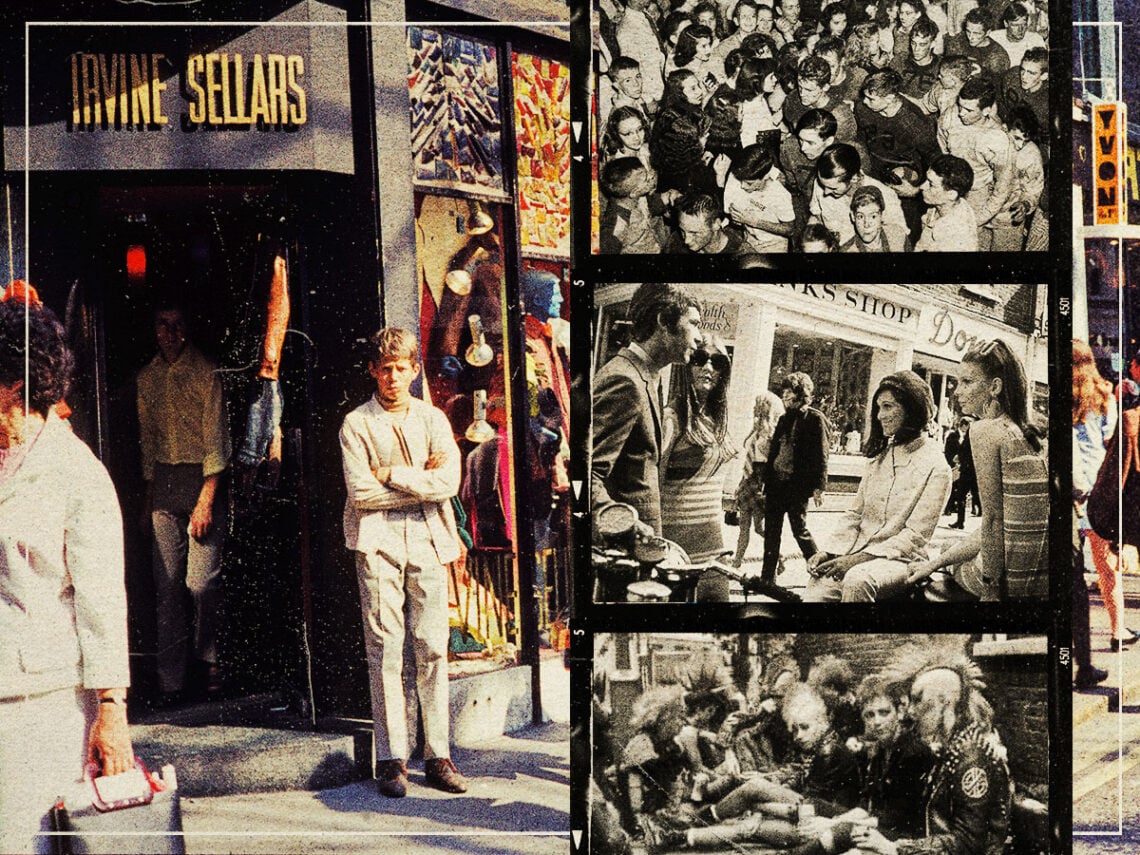
A farewell to subculture: the death of belonging

Oh, subculture, where have you gone? What have they done with you? That one-time sweet sense of belonging, a clearly marked distinction between self and other. Often, it feels like you’re nowhere to be found, replaced instead by the nefarious setters of the new trend. A bit of punk here, a splash of metal, and tied together by a downright mainstream sensibility.
The truth of the matter, though, is that subcultures are not merely an aesthetic choice but rather an outlook on life on which to guide yourself through the hazardous terrain of the late capitalistic planet Earth. They are a way for us to say, “These are my beliefs, these are my choice, this is my style, and these right here are my people”.
Heading down the local park towards the end of the 20th century and the beginning of the new Millennium, one could find an array of different subcultural beings living, not in total harmony, but at least with a base level of tolerance with one another. The grebos and the goths, the scene kids and the emos, the skaters, the punks, the ravers, hell, even later, the hipsters.
But it feels like that whole sense of being ‘one set thing’ has disappeared now. Whether that’s a bad thing or not is no easy thing to dissect, but hopefully, we can root through some of the weeds and get into the more profound matter of the issue.
Subcultures, even as far back as the 1950s, were often defined as a group of people whose beliefs are opposed to those of broader society. Quite simply, subcultures provided ample room for individuals to express their ideals about the world in a group of others who share those very same beliefs, even if they might change over time and individuals would no longer consider themselves part of that particular group.
In the late 1960s, the hippie subculture arose out of a growing belief in pro-peace, anti-war, sexual freedom, narcotic liberation and the removal of power from capitalist opportunists. The punk subculture ten years later essentially had the same beliefs at its core, but the aesthetic was starkly different, and the message was delivered through a more violent expression.
Before we get to where and whys of what might have happened to subcultures, let’s first state the fact that there’s a fundamental imperative to being part of a subcultural group in the sense that an individual no longer feels just that, i.e. a singular person, but part of a larger group that they know and love and trust. That sense of belonging, that tribalism, has been a vital need of human beings ever since they formed pre-historic groups before the advent of broader civilisation.
With many of our contemporary social ills, it’s difficult not to look at the degradation of a civil fabric caused by the advent of digital technology and social media. When once a subculture had to be sought out, physically addressed, beliefs understood, music listened to, and language learned, with social media, one can assimilate the mere aesthetic of a subculture without doing any of the hard work. But this ease of access to pretty much every facet of every subculture negates that fundamental idea of actually belonging to something by doing the hard yards.
Music could not just simply do the rounds on Spotify as it does today. You couldn’t just type in “best emo songs” in a search bar and consider yourself emo all of a sudden. Instead, you’d maybe be handed a record, CD or tape or, at worst, be sent a Mediafire link to a given album. Quite simply, if you didn’t know and didn’t care, it wasn’t for you. And rightly so.

So while the rise of “social” media platforms might have brought about the beginning of the end for subculture, we should also bring to attention the fact that there seems to be less distinction between what’s considered the belief and aesthetic of the wider cultural group and that which deviates from it, and which thereby forms subcultures themselves.
There are a few concessions to make here, of course. The first is that perhaps there’s a benefit to being able to pick and choose which parts of which former subculture make up our personal cultural beliefs and outlook. No longer do we have to be packaged as just ‘one thing’ with cemented views and tastes. But on the other hand, perhaps that very act of picking and choosing creates an overall cultural makeup that just has less meaning. All the choosing, but without the suffering that created that vital sense of belonging in the first place. It’s a somewhat contradictory situation to find ourselves in.
There’s another idea, from a personal basis, that perhaps subculture still only exists in the youth and that I, now at the beginning of my fourth decade on Earth, am simply too old and too far removed from the cultural milieu that still burgeons under the surface. Maybe I’m just older now and am lamenting the loss of my own subculture, the glory days of my youth through which I felt a closer kinship with those who shared the same beliefs and tastes with me.
It also may be true that perhaps subcultures have naturally changed and been woven into one another. Hardcore punk music is enjoying a high point of popularity at the moment, and where heavy music was once a subversive, oft-gatekept, exclusive pastime, it’s now largely, at least in the hardcore scene, an amalgamation of the punk and grebo subcultures, with a subsequent broader appeal. Which, again, might not be such an awful thing, although the risk of “posers” remains as strong, if not more so, than ever.
The real problem, though, is that our sense of belonging just seems to have dissipated from our cultural outlook altogether. Perhaps the rise of the new-left/new-right divide has also paid its dividends. Where once there were an array of beliefs and different ways to approach what it is to be a human being in a late capitalist society, it now appears to be either/or. You’re either a right-wing fascist or a left-wing wokelord. But that ought not to be the case; there should remain nuance, and there should be a coming together of unique individuals, even with a generous dose of cultural crossover where necessary.
Ultimately, the alternative has simply been swallowed up by the mainstream and vice versa. But is this a bad thing? On the one hand, no. Individuals are more culturally attuned to the various facets of culture, which can indeed only be seen as a cultural benefit. Emo is now most often found in the new hip-hop scene, while even the most non-derivative of us dress with nods to a wide-ranging selection of former cultural outlooks. But on the other hand, perhaps there still remains a lack of belonging to a group, a sense that “this is who I am, and these are my people”. Surely that’s an even more critical element of the human experience; to have shared beliefs, even if they are opposed to the usual manner of thinking.
Perhaps there’s just a general sense of loneliness that has arisen out of a lack of human contact, replaced instead by online consultation. When we can ask Google what we should watch on streaming websites, what we should wear, and how we should be, then we can’t be too surprised if we all end up looking and listening and sounding the same, regardless of whether that very perception is borne out of some former collection of the “alternative”. All so different and yet exactly the same.
Clearly, there’s a worry that we miss something through not being part of a group, and by essentially connecting with our fellow human beings through a format utterly opposed to our previous person-to-person way of communication, we further remove ourselves from that vital sense of belonging. Perhaps the remedy is not to force the rebirth of subculture, though, but to consider why we ought to bring a particular facet or belief of a specific group into our preciously individual lives.
That way, we might find more in common with more people, feel less “us versus them” and “me versus you”, and be more open-minded and willing to try new things, all at the very same time as being concrete in our own beliefs and our own self-worth. Just because subculture seems to be spitting its dying words in its final days doesn’t mean that we can’t feel at home in ourselves and with one another. But it’s likely going to require some work.

Never Miss A Beat
The Far Out Punk Newsletter
All the latest Punk content from the independent voice of culture.
Straight to your inbox.