


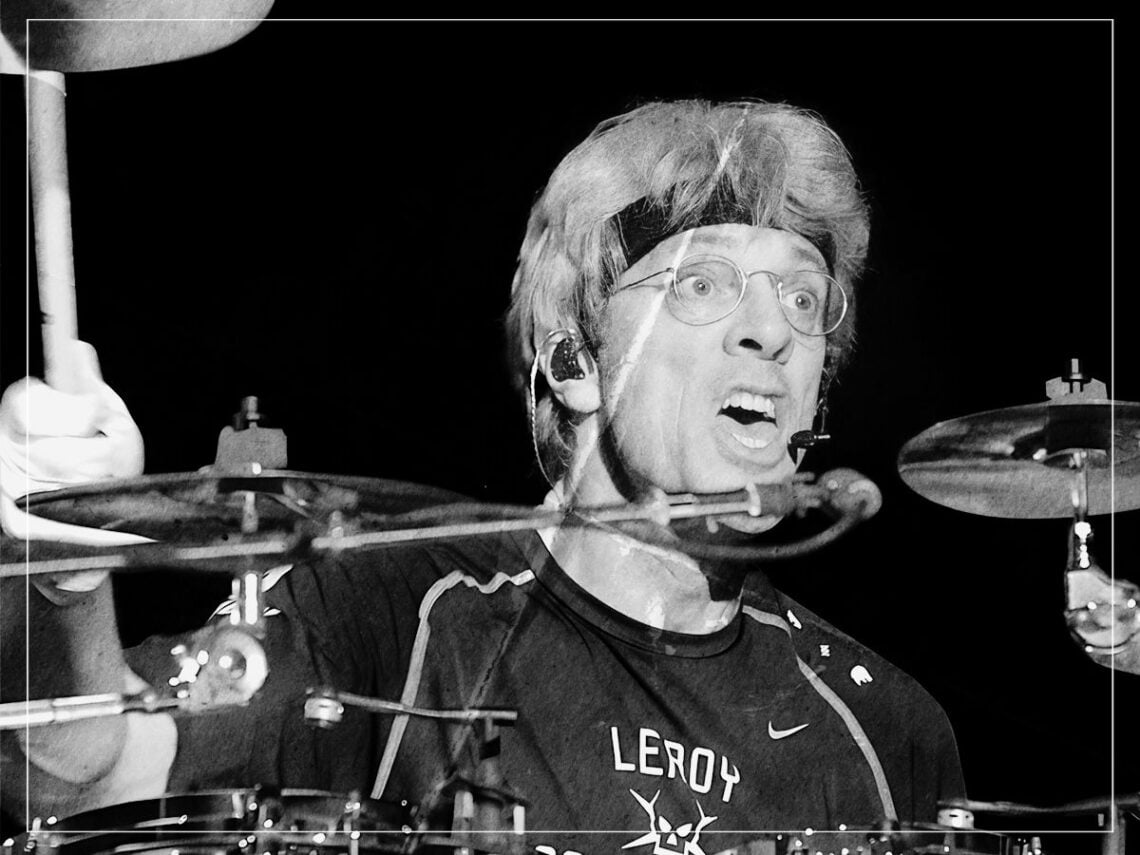
Five songs that prove Stewart Copeland is a drumming genius

There are only a handful of rock drummers who have the distinction of being considered a virtuoso. Despite the innate ability that comes with keeping time, most drummers tend to get the short end of the stick, so to speak, often called the less important members of the group. For all the tremendous melodic factors of a band like The Police, though, Stewart Copeland was an animal whenever he stepped behind the kit.
From the band’s first records to their more expansive material in their later years, Copland was always the one pushing everything forward, creating new rhythmic accents on every single song. Making fantastic use of the hi-hat, Copeland knew the power of adding just the right sonic touch to the record, always having subtle moments reminiscent of jazz drummers as much as rock drummers.
Despite using different cymbal hits, though, Copeland could still pulverise the drum kit at any opportunity. From the different high-energy songs to the mellow ballads that Sting could pump out, Copeland knew how to play ferociously while still knowing when to put everything back to basics.
Copeland has been a major influence on many drummers, including one band that includes two of the best to ever do it, with Foo Fighters’ late percussionist Taylor Hawkins labelling him “my earliest real drum influence.” Hawkins told Metal Hammer, “He was my first drum hero and that had a lot to do with my brother, who’s five years older than me – I still have the Police Around the World, video which I remember him getting me as a kid when I was first learning to play.”
This was reciprocated by Dave Grohl, who said of Copeland, “I grew up listening to The Police, man”, reflected Grohl when assessing the legendary musician’s output. “One of the craziest things that this band [Foo Fighters] has ever done is bring Stewart with us on a private jet from New York to Los Angeles; we had Stewart come out and play ‘Next To You’ with us, which was super fun”.
“Then we got on the private plane,” noted Grohl, clearly enamoured with the situation, “And I just kinda sat there and thought ‘what the fuck am I doing with my life right now?’ Just to sit and listen to the stories of ‘the band’ and that was something I will never forget.”
More than anything, Copeland’s innate ability to serve the song has served him well over the years, constantly playing for the sake of the track rather than allowing himself to showboat. From making the most straightforward strikes sound massive to making intricate parts easy, this is a small sample of what made Copeland a monster drummer.
Five brilliant Stewart Copeland songs to prove hs genius:
‘Red Rain’ – Peter Gabriel

Just because Sting became the breakout star of The Police didn’t mean that the rest of the band would be sitting on their hands. While Copeland would lend his skills to various film soundtracks and include various instrumental projects in his repertoire, one of his more overlooked strokes of genius was when he lent his skills to one of the kings of progressive rock songwriting.
After resisting the urge to use hi-hat on any of his previous records, Peter Gabriel called upon Copeland to deliver the signature sounds of ‘Red Rain’, setting a particular mood from the moment he enters the mix. Regardless of what’s going on above him, Copeland adds a heightened sense of drama to the tune, crafting a drum part that is laid back when it needs to be but never sacrificing the song’s urgency. Gabriel may have been playing with more commercial material at the time, but Copeland proved that just because a song is catchy doesn’t mean it has to be boring.
‘Murder By Numbers’ – The Police

The ending of The Police involved a lot of songs that were left on the cutting room floor. Although Sting would consolidate what he could into his first solo efforts, the band’s collaborative spirit was always about improving the song, even if it suited tracks like ‘Mother’. When they came up with one song short for a B-side, Copeland stumbled upon some accidental genius on ‘Murder By Numbers’.
Initially not knowing when to come in for the first verse, Copeland was settling the groove while Sting began singing and managed to turn the time around before Andy Summers’s otherworldly guitar break started. Although the recovery is commendable, the most significant part of the tune comes from Copeland, hammering away at the ride cymbal in triplets to get as much energy out of the groove as possible. ‘Murder By Numbers’ might feel like a Sting solo song in spots, but it took Copeland to make it a Police masterclass.
‘Regatta de Blanc’ – The Police

Looking back on The Police’s trajectory, the band always looked to push the envelope in the studio. Whether working with new instruments or drawing inspiration from different genres, Sting could always find a way to turn their material into the catchiest song in the world with the rest of the band behind him. Then again, Copeland could still make the band move even when just letting the music do the talking.
Put together from a riff the band had been working on while on the road, the title track of Reggatta De Blanc does seem to live up to its title, having a reggae groove that was unlike anything going on in modern rock at the time. For all the great experimentation, Copeland’s drumming is ferocious, storming out of the gate and locking in with Sting’s bass perfectly. Although the band intended their music to sound advanced, this is the closest the rhythm section ever got to punk.
‘Driven to Tears’ – The Police

When talking about the most significant moments in The Police’s career, Zenyatta Mondatta tends to get neglected next to their more celebrated records. Although it did spawn one of their biggest singles in ‘Don’t Stand So Close To Me’, the rest of the album would feature an array of different influences while showing the band dabbling in world music for the first time. Though the singles may have been picked up by radio for good reason, ‘Driven to Tears’ was close to a masterpiece when pressed to vinyl.
Featuring a stark chord progression from Summers, the sonic landscape of the guitars allowed for Copeland to take centre stage. While he keeps everything in the pocket, the majority of the song features Copeland playing a glorified solo showcase at various points, using the song as a vehicle for how to play impressive fills in a traditional pop song. For aspiring drummers, this is the song people should refer to when wondering how to fit something complex into a hit.
‘Synchronicity I’ – The Police
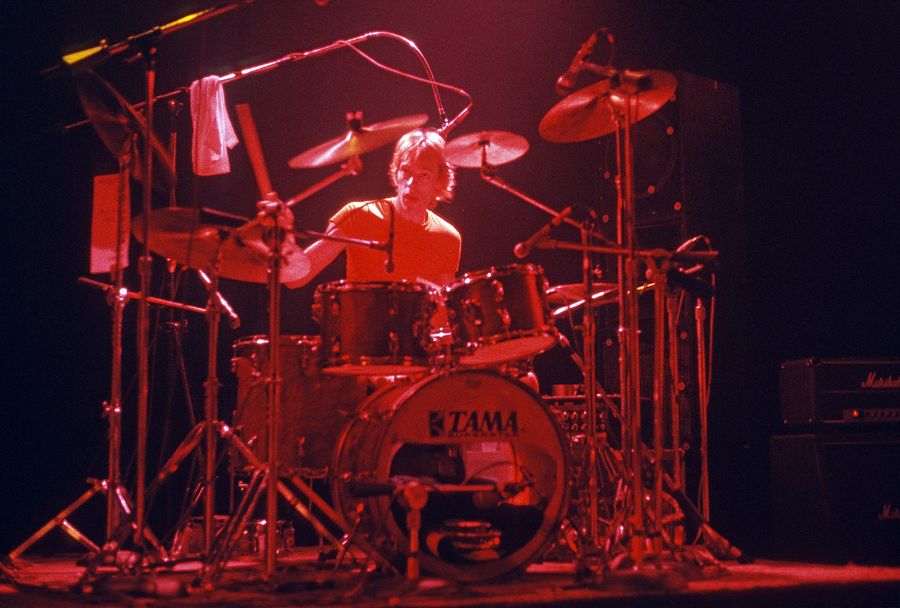
There’s a certain amount of mental power that goes into creating any good drum groove. As much as drummers might like to ride the rhythm for most of a song’s duration without really thinking about it, it gets more complicated when dealing with various syncopated parts as well as songs that have various time signatures. Instead of bowing to the mercy of an odd metre, though, Copeland thought it would be best to keep the same grove rolling throughout ‘Synchronicity I’.
Kicking off the band’s final project, Copeland is flying off the handle throughout most of the song, playing as fast as most normal drummers can with his right hand. Considering the rest of the song is in 7/4, Copeland keeps playing in common time, building to a strange sense of rhythm as Summers and Sting’s parts cascade around the drums before the whole thing comes to a screeching halt by the end. While Copeland may have a reputation of being one of the best drummers the charts had ever seen, this is the kind of song that would earn him praise from the likes of Neil Peart.
