


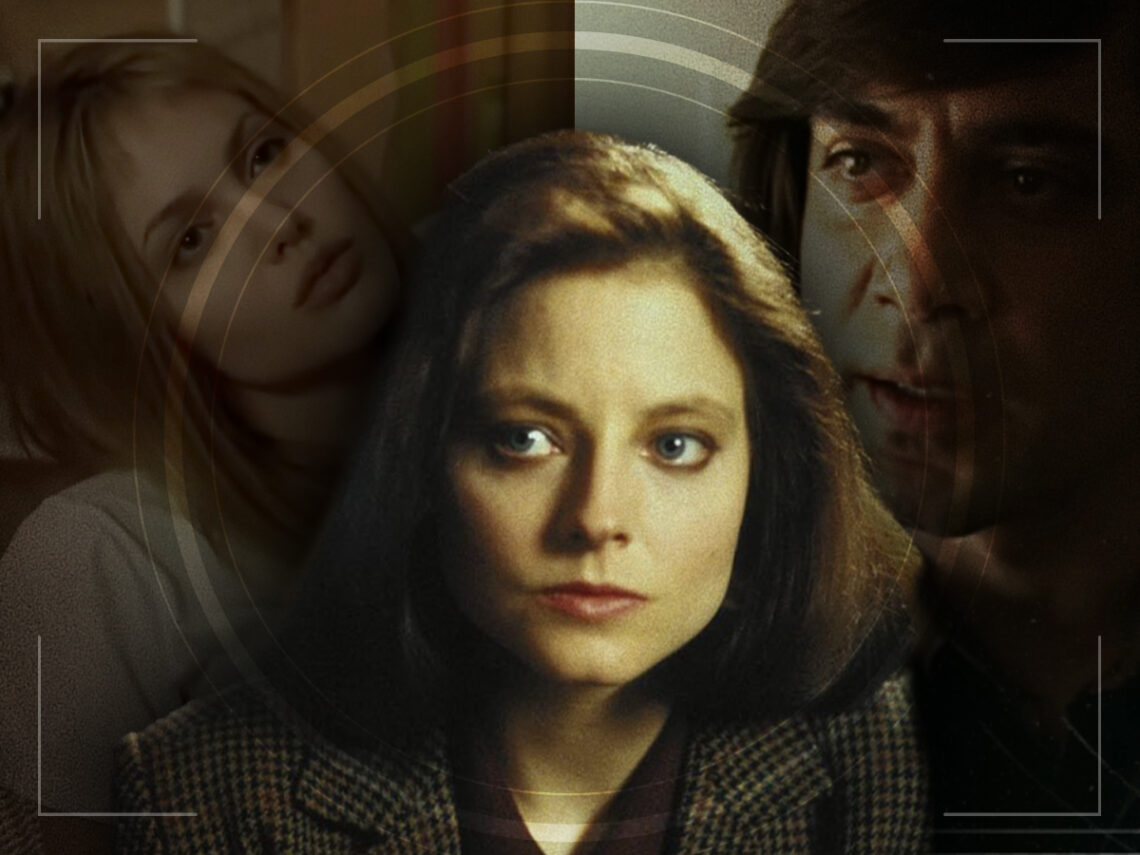
Five scenes that won actors their Oscars

One of the most entertaining parts of the Oscars each year is guessing which clip the Academy will choose for each nominated performance. Will the ‘Best Actor’ and ‘Best Actress’ nominees cringe as a scene of them chewing the scenery plays out? Will the supporting actors look awkward as an unexpectedly emotional moment is shown in front of a room full of their peers?
In truth, cinephiles like to think they know which scenes the Academy will choose as the best representations of each actor’s performance. Sometimes their picks align with what is truly an actor’s most fantastic scene in a film, but on other occasions, they are likely chosen for how they flow alongside other scenes included in the broadcast.
Sometimes, though, a movie scene is so memorable, beautifully realised, and wonderfully performed that it feels like it secured an actor their Oscar win all on its own. These are the scenes that got people talking after they left the cinema, and the ones that people watch repeatedly for years to come. These scenes mightn’t have been used in an Oscars clip, but they’re almost certainly the ones that pushed a star over the line when it came time to decide a winner.
From a coin toss fraught with deadly peril to a mother deciding to relinquish custody of her son, by way of a mentally ill woman taking perverse delight in toying with someone’s mind, here are five scenes that won actors their Oscars.
Five scenes that won actors their Oscars:
The coin toss (Javier Bardem, ‘No Country For Old Men’

When Javier Bardem accepted his ‘Best Supporting Actor’ Oscar for his chilling performance as Anton Chigurh in the Coen brothers’ No Country For Old Men, he thanked the mercurial directors for believing in his ability to portray a dead-eyed psychopath in such a convincing way. Chigurh was a cinematic monster unlike any that had come before, and his scenes dripped with malice and an undercurrent of danger, even when he was simply talking to the owner of a gas station.
“What’s the most you’ve ever lost in a coin toss?” Chigurh’s unsettling hitman asks the poor, unsuspecting proprietor. By this point, audiences have already seen Chigurh strangle a sheriff’s deputy to death and shoot a random driver with a bolt pistol, so they know this seemingly innocent question won’t lead to anything good for the owner.
Chigurh’s stillness, calm delivery, implacable accent, bizarre haircut, and menacingly abstract musings all make for a scene that balances on a knife-edge without ever erupting into violence. It’s a tour de force from Bardem, and surely the scene that convinced the Academy he was taking home the gold. However, praise must also be reserved for Gene Jones, who expertly portrays the confusion and fear of a man who doesn’t truly know how close to death he just came, but he has an inkling.
Joanna’s change of heart (Meryl Streep, ‘Kramer vs Kramer’)

Meryl Streep’s first Oscar win came for her nuanced performance in the late Robert Benton’s legal drama Kramer vs Kramer. The 1979 film told the story of a New York City couple’s divorce, and the harrowing custody battle that followed for their seven-year-old son Billy, in such a sensitive, complex manner that it’s still the gold standard for this kind of movie more than 40 years later.
Streep won ‘Best Supporting Actress’ for playing Joanna Kramer, an unhappy wife and mother who tells her husband Ted (Dustin Hoffman) that she’s leaving home, but also walks out on her son at the same time. Throughout the film, Joanna goes from a woman suffering from mental health issues who abandons her son for 15 months, then returns and tries to wrestle custody of him back from the father who raised him through the turbulent time she was away. It’s an emotional rollercoaster that Streep always ensures stays on the rails.
Joanna is a complicated woman, and it would have been easy for the film and Streep’s performance to portray her as a villain, but that never happens because Benton and Streep go to great lengths to make Joanna sympathetic and real, despite what she did. Even her final scene, which I believe netted her the Oscar, is a clinic in how to pull off a difficult emotional balancing act without ever losing the audience or drifting into melodrama.
“King Kong ain’t got shit on me!” (Denzel Washington, ‘Training Day’)

The Oscars love to show clips of actors delivering fiery, impassioned monologues that showcase a star’s full emotional range. Most of these clips are from poignant dramas that tug at the heartstrings. However, when Denzel Washington won ‘Best Actor’ for his searing portrayal of Detective Alonzo Harris in the 2002 crime drama Training Day, his impassioned monologue came from a very different emotional place.
As Harris, Washington gave one of the most outstanding movie star performances ever. Harris is electric, whether he’s charismatically telling Ethan Hawke’s rookie about how things work on the streets of LA, or shaking down the local gangs who are all extremely wary of him. Washington swaggers through the picture, confidence oozing from his pores, and when he gets the chance to dial up the menace, he does so with aplomb. Then, it all comes crashing to the ground in one gonzo meltdown.
When Harris realises he’s been outsmarted and is about to get taken down by Hawke’s character, he loses his shit in front of an entire neighbourhood that he once held in his iron grip. Washington shows his arrogance, hubris, and disbelief as his world falls apart, all while he tries to exert dominance one last time over a group of people who have finally seen through the facade. The actor’s improv, “King Kong ain’t got shit on me!” has gone down in movie history as the icing on the cake of a scintillating scene, and surely the one that secured Washington’s victory.
Screaming lambs (Jodie Foster, ‘The Silence of the Lambs’)

When thinking of Jonathan Demme’s groundbreaking serial killer thriller The Silence of the Lambs in terms of a scene that won an actor an Oscar, it’s tempting to think of any of Anthony Hopkins’ skin-crawling sequences as Hannibal Lecter. Maybe the infamous slurping noise he makes after boasting, “I ate his liver with some fava beans, and a nice Chianti”, secured him the ‘Best Actor’ award alone. However, Jodie Foster also won ‘Best Actress’ for the movie, and I’d argue that her incredible performance, opposite Hopkins, in the film’s pivotal scene sealed the deal for her.
Much of the early sections of the movie are structured around Agent Clarice Starling visiting Lecter in the world’s most ‘grand guignol’ mental hospital to gain his insights into the serial killer known as Buffalo Bill. Lecter won’t just divulge his pearls of wisdom easily, though, and always asks for some titbit about her psychology in return – and this gives Foster the opportunity to deliver one of the finest scenes of her career.
Lecter convinces Starling to talk about a traumatic incident from her childhood when she woke in the middle of the night while living on a ranch in Montana. She heard a strange noise, which she soon realised was the screaming of the baby spring lambs being slaughtered, and she tried to rescue them to no avail. Foster’s clear trauma in recounting the incident is palpable, but she doesn’t fully lose control, knowing that she still has to maintain some sort of upper hand with Lecter. It’s a fascinating scene full of complex psychology, and Foster nails it.
“My father loves me” (Angelina Jolie, ‘Girl, Interrupted’)

Girl, Interrupted wasn’t exactly a darling of the Academy, as it only received one Oscar nomination. However, Angelina Jolie’s unnerving, heartbreaking performance as the sociopathic Lisa Rowe in James Mangold’s period piece was undoubtedly the stand-out aspect of the film, and she richly deserved her win in the ‘Best Supporting Actress’ category. In truth, it was a star-making turn from Jolie, in an era when such roles still existed in mid-budget dramas, and not just blockbuster action movies.
Set in 1967, Girl, Interrupted followed a group of young women in a mental institution suffering from a variety of maladies, including suicidal ideation, schizophrenia, depression, and anorexia. Jolie’s Rowe, though, is the queen bee of the facility: a sociopath who takes great joy in mentally torturing the other women. Jolie reportedly kept to herself for much of the shoot, remaining cold and aloof with her castmates, as she wanted the nervousness they often feel around Rowe to be as real as possible.
The scene that convinced the Academy that Jolie deserved her trophy was the excruciatingly uncomfortable sequence in which Rowe inflicts maximum psychological damage on Brittany Murphy’s Daisy, who self-harms because her father sexually abuses her. Jolie is genuinely frightening in this scene, and truly makes the audience believe she enjoys seeing her ‘friend’ suffer. It’s a testament to how despicable an actor can make a character without letting the audience forget she needs help, too.
