


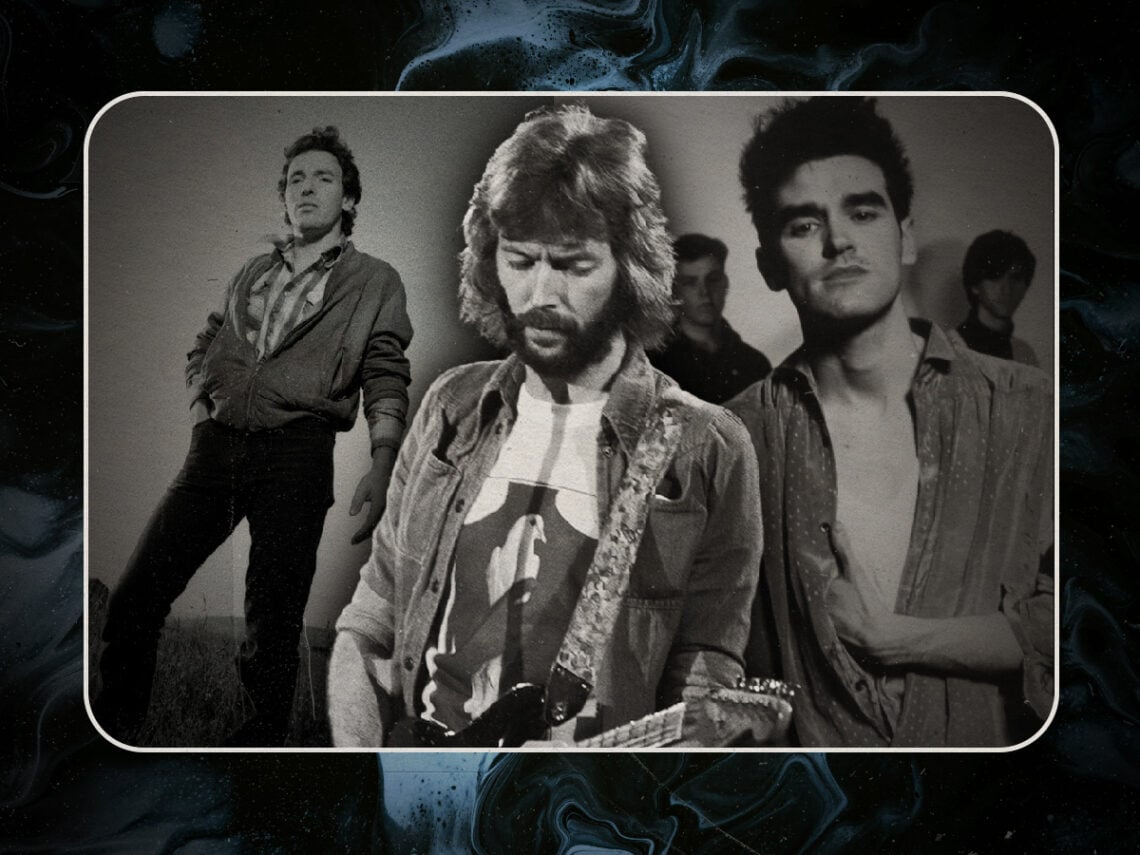
Five sad songs you can only listen to once

According to science, one of the saddest songs of all time is Nirvana’s ‘Something in the Way’, and considering the band’s position as one of the most melancholy groups ever, it makes sense, but there’s a reason behind why it’s that one.
Research points out that songs with a slower tempo, minor chords, and sad subject matter are more likely to make us wallow or feel depressed, and a track like ‘Something in the Way’ ticks all of those boxes, especially when you think about the fact that it also tackles one of the more challenging periods in Kurt Cobain’s life as a societal outcast struggling to make ends meet.
When we return to sad songs, it’s usually because we want something that matches our mood, and in other cases, it’s to experience the beauty of something that speaks to a reality, like depression or anxiety, or other parts of the human experience of feeling lost, alone, or nothing going right in our lives.
However, some songs are so dark that it’s hard to revisit them at all, whether because they sound sad, feel sad, or because the backstory is so gruelling that it’s nearly impossible to face it again after the first listen. A good backstory can change our perception of a song entirely, such as ‘Dancing in the Moonlight’, which, after finding out about its tragic origins, takes on a different light.
So, let’s take a look at some other songs that are so sad that it’s hard to hit play a second time.
Songs so sad you can only listen to them once:
‘Asleep’ – The Smiths

A no-brainer, ‘Asleep’ by The Smiths is undoubtedly one of the saddest songs in existence. The Smiths are, as we know, one of the most depressing bands in history, with ‘Asleep’ undeniably them at their darkest and most melancholic, tackling the loss of fight that comes with a long period of tirelessly battling depression.
Released as a B-side to ‘The Boy with the Thorn in his Side’, the song wasn’t likely intended to gain as much attention as it did, especially as it has none of the upbeat, comedic groove typically present in many of The Smiths’ best songs.
Instead, there is complete and utter resignation, standing as the musical equivalent of feeling, quite literally, at the end of your tether. It’s no wonder that the song was performed only once, and by the end of it, Morrissey was in the middle of the stage in the foetal position.
‘Tears in Heaven’ – Eric Clapton

One of, if not the saddest song in Eric Clapton’s discography, ‘Tears in Heaven’ tackles his grief at losing his four-year-old son in an accident no parent should ever have to face. A song that evokes goosebumps at the mere thought of it, ‘Tears in Heaven’ is the musical embodiment of tragedy, written as a means of processing and healing without any initial intention of actually releasing it.
However, when Clapton did eventually put it out into the world, he experienced a great deal of “happiness”, knowing that his thoughts and feelings on the matter were finally voiced, and that anybody else who had ever experienced losing someone could finally have a worthy musical companion to help them through the pain.
‘Cat’s in the Cradle’ – Harry Chapin

Although the tone of this one might differ slightly from the other, sadder entries in this list, it is by no means less depressing, especially when you look at the broader context of Harry Chapin’s story. A man who dedicated his life to charitable causes, he threw himself into his music, donating most of his concert money to charity organisations and performing at countless benefit concerts.
However, in doing so, he essentially neglected his home life, and ‘Cat’s in the Cradle’ is an ode to all of those years he lost with his son. It also tackles it differently than most formulaic father-and-son songs, focusing on the message that suggests that, despite his own good intentions, time lost with loved ones can never be recovered, a point that hits even harder when you consider that Chapin’s life was cut short at just 38 years old.
‘Streets of Philadelphia’ – Bruce Springsteen

Written by Bruce “I’m not very good at scores” Springsteen for the 1993 film Philadelphia, ‘Streets of Philadelphia’ tackles the suffering and isolation a person with Aids goes through, written from the personal perspective of the person losing their sense of self while navigating through the disease.
Although heavy in message and context, ‘Streets of Philadelphia’ feels exactly as you’d expect, placing you in the position of the dying person with its slow pacing, melancholic chord progression, and lyrics that evoke a deep sense of malaise: “I was bruised and battered / I couldn’t tell what I felt / I was unrecognizable to myself / Saw my reflection in a window / And didn’t know my own face”.
‘There Is No If’ – The Cure

A song so sad that Robert Smith initially wanted to disregard it from their album tracklisting, ‘There Is No If’ tackles the inevitability of death and surrendering your life when things get to be too much, a topic he knows well, venturing further into the darker corners of his psyche, speaking to anybody who has ever found themselves feeling lost and alone.
Many songs in The Cure’s repertoire tackle depression, loneliness, isolation and general malaise, but ‘There Is No If’ is especially alarming because it’s so on the nose, talking about final resolution as if there really is no other way out. As he sings in the song, “Held your hands to your shining eyes and cried / ‘If you die’, you said, ‘So do I’, you said / But it ends the day you see how it is / There is no always forever, just this, just this”.
