


Escaping Fountain Valley: the tragic origins of ‘Dancing in the Moonlight’

Only a handful of songs convey a meaning that is entirely contrary to their sound. Many of us are familiar with the timeless, rhythmic charms of ‘Dancing in the Moonlight’ by Toploader, a track that evokes the warm twilight of summer evenings and captures the euphoric energy of post-party moments. However, behind its rose-tinted glasses, there lies a more insidious root, first conceptualised through the tragic eyes of Sherman Kelly.
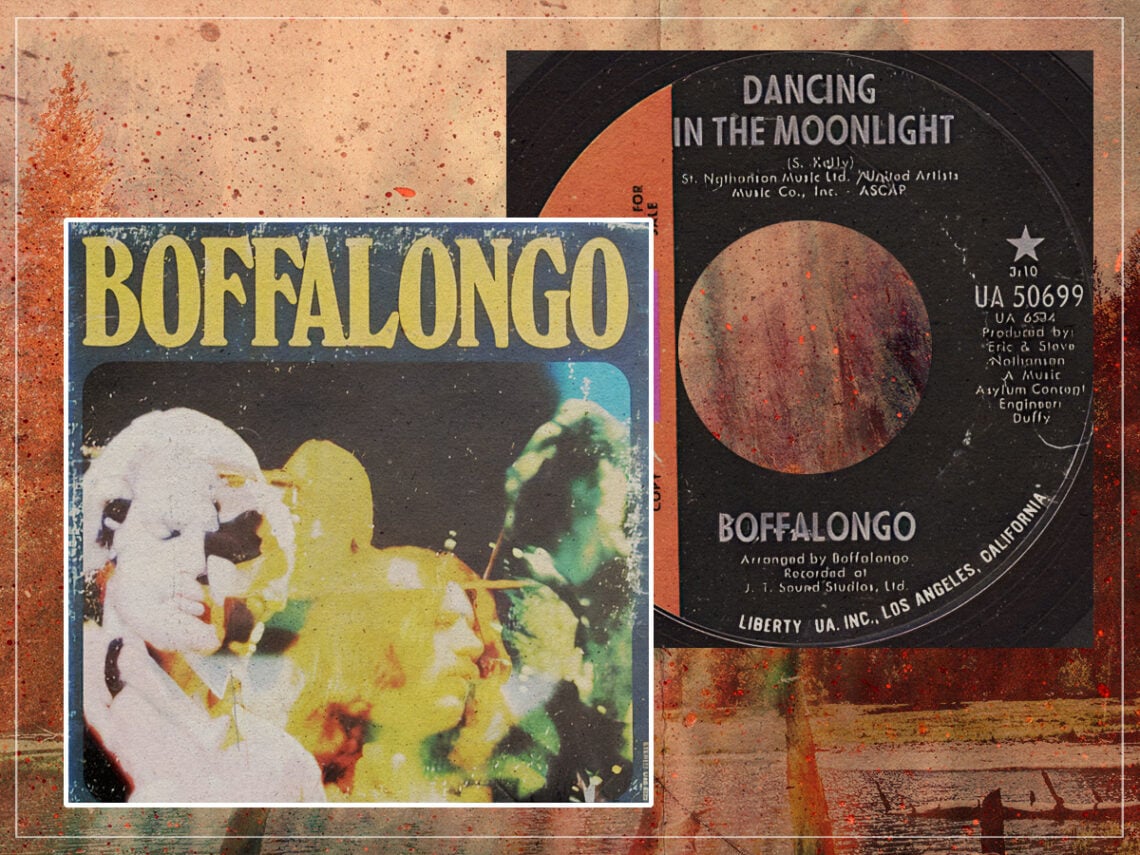
First recorded by Kelly’s band Boffalongo in 1970, ‘Dancing in the Moonlight’ was a result of Kelly’s experience as a victim of the same gang that went on to become more widely associated with the Fountain Valley Massacre. But, to understand more about where Kelly was coming from, we must first start at the beginning.
Back in 1969, Kelly and a group of friends were managing a nightclub in St. Thomas, Virgin Islands. During that period, they made a spontaneous decision to lease a 65-foot yacht and embark on a day trip to St. Croix. Little did Kelly know, he had a susceptibility to seasickness, and both he and his girlfriend ended up feeling extremely queasy during the journey.
Upon arriving in St. Croix, the group disembarked to find dinner, but Kelly and his girlfriend, still suffering from seasickness, weren’t interested in eating. The rest of the group got their food and planned to spend the night on the boat. However, Kelly and his girlfriend, fearing more seasickness, opted to stay in town. The dilemma was that Kelly had left his wallet on the boat due to his seasickness-induced disorientation, leaving them without money or credit cards for a hotel. They explained their predicament to an innkeeper and promised to settle their bill in the morning once Kelly could retrieve his wallet from the boat.
“He said, ‘Sure, you can stay here if your girlfriend will sleep with me’,” Kelly told Vinyl Dialogues. Then, after being turned down at a second inn, his girlfriend suggested stretching out on the beach. “So we did,” said Kelly. “And that’s all I remember very clearly”. Afterwards, while sleeping on the beach, Kelly and his girlfriend fell prey to a violent St. Croix street gang. Kelly suffered a severe beating at the hands of five gang members armed with baseball bats while his girlfriend was sexually assaulted by the gang leader. Thankfully, Kelly regained consciousness during the assault and put up a fight, causing enough commotion to scare off the attackers.
The two then managed to find their way along the shore to the only St. Croix hospital. The gang that attacked them would later be dubbed Fountain Valley Gang, who in 1972 murdered eight tourists and wounded eight more. “I woke up to the sound of my hospital roommate screaming in pain. Finally, the screaming stopped, and I heard two doctors talking about him. ‘That’s it, he’s gone,’ said one doctor about the other patient. ‘What about him, you think he’s gonna make it?’ And the other doctor said, ‘No, I doubt it.’ I realised they were talking about me,” said Kelly.
Even though he did make it, his pain persisted, and music took a back seat. Writing, however, was something he continued doing during his healing period. He began writing verses based on a perception he had, or rather, a desire, for a better world. These verses would soon become the lyrics to ‘Dancing in the Moonlight’: “I envisioned an alternate reality, the dream of a peaceful and joyous celebration of life. It was just me imagining a better world than the one I had just experienced in St. Croix,” said Kelly.
Although most mistake the song as a King Harvest original, this version actually came three years after Kelly’s band recorded it. ‘Dancing in the Moonlight’ appeared on the 1970 Boffalongo album Beyond Your Head, with Kelly on lead vocals, his brother Wells Kelly on drums and Larry Hoppen on lead guitar. However, although Kelly was pleasantly surprised when the track became a hit, he thought that his vocal on the track was “weird” due to his producers giving him cocaine when he was in the studio. “I found myself in the vocal booth,” he recalled, “Where there were a lot of people distracting me. And the producers would give me more cocaine to keep me doing takes until my voice was so distorted and so weird.”
When Boffalongo broke up, Kelly’s brother joined King Harvest and introduced lead singer Doc Robinson to ‘Dancing in the Moonlight’. After the song became a hit, King Harvest invited Kelly to tour with them, where Kelly provided harmony on the track. He only lasted a month, though, after realising he “didn’t really care” for touring.
Although Kelly still enjoyed being a part of the music scene, he stepped back for a while after the tragic death of his brother in 1984. He found it too painful to continue working on musical projects and instead focussed on other prospects, like studying at Syracuse University in New York.
Meanwhile, ‘Dancing in the Moonlight’ remained a modest hit until Toploader released a version of the track in 1999, which propelled it to newfound commercial success. Even though many see the song as a one-hit wonder, and while the origins remain steeped in something darker, its resonance as a beautiful composition speaks louder than the heinous crimes of the Fountain Valley murderers. In a bid to escape his reality, Kelly created an entirely new one, providing a stark reminder that you don’t have to exist alone with trauma. Beauty and healing can be found everywhere, even if it comes from within.
