


The 10 best one-hit wonders in music

There is a certain class of lazy bastard out there who would perceive the possibility of being a one-hit wonder as the pinnacle of potential human achievements. In essence, it means that you have created a cash cow that you can live off forevermore without having to work another day in your life but also without ever suffering from the curse of carrying around the burden of not having done anything with your life. The music industry can be kind sometimes.
Furthermore, the ease of kicking back in peace with rolling radio royalties constantly asserting that you contributed something to the world would surely be medicine enough to cushion the pains of hearing the ‘Oh, are you the ‘Somebody That I Used to Know’ guy?’ So, it would seem that a one-hit wonder is far from a bad thing to be.
As for the songs themselves, they all seem to be strange oddities that have some mystic power behind them—lord knows what that mystic power is, but you can somehow spot a one-hit wonder from a mile off. Unlike most of your record collection, they seem to come about more naturally, like how the post-it note was invented by accident.
Below we have curated the best of these singular triumphs. From the four-chord classic of Eagle-Eye Cherry to the legacy-skewing accidental hit of the anarchistic Chumbawamba, these are the epic anthems that were never meant to be beaten.
10 best one-hit wonders:
‘Somebody That I Used to Know’ – Gotye, Kimbra
If you’re going to have one hit, then aim for something universal. A breakup is perfect fodder for the masses, after all, you don’t get many songs about taxes. With this toe-tapper, Australian songwriter Gotye cooked up a relatable thing of beauty that overtook the airways in 2011. It came from his third album, and he already had some stock built up in his home nation from his first two efforts, however, after the success of this, Gotye went on hiatus and delved into more experimental projects.
All the while, there were hints about his natural avant-garde tendency even within this seemingly seamless beast. For instance, it samples the far from everyday Luiz Bonfa instrumental ‘Seville’ from 1967. And then there is the meta grammatical mistake of “somebody that I used to know” instead of “who” and you get to see the impersonal bitterness behind our unreliable narrator.
‘You Get What You Give’ – New Radicals
Joni Mitchell described this as the song that actually made her fall back in love with music. If you have given the world that, then you’d be right to put your feet up thereafter. Gregg Alexander is a name that will pique the memory but wouldn’t be an easy answer in a pub quiz. Nevertheless, he’s one of Mitchell’s favourite modern songwriters. As the frontman of The New Radicals, he had a few hits between 1997-99. However, one-hit wonder is almost a misnomer, he’s more so the sort of name that has been subsumed by the music industry and now continually crops up as a credited songwriter behind the scenes.
Like many others, Mitchell was crazy about The New Radicals’ 1998 hit ‘You Get What You Give’, asserting that the track rose “from the swamp of ‘McMusic’ like a flower of hope.” So much hope, in fact, that it stirred her creative muse into action once more.
‘Under the Milky Way’ – The Church
This alluring gem fit the captivating world of Donnie Darko perfectly, offering up an era-defining sound that, in all truth, never actually came close to defining the era upon release. All the same, it did reach 24 in the US charts and threatened to push The Church to something akin to a solid cult act which is what their output deserved.
However, as it happens, they possibly hit the starry empyrean of euphoric indie a bit too hard with this and failed to send-up anything else with quite as much appeal. All the same, The Church were a great band, and this alt-rock anthem from 1988 stands alongside similar hits from Echo & The Bunnymen and the likes as among the decade’s best.
‘Tubthumping’ – Chumbawamba
Chumbawamba are a classic example of a band being hoisted by their own success. This hit was a radio classic, but the band were anything but. In fact, they were anarchists and when they appeared on TV to promote the single, they urged fans to go out and steal the single. Naturally, this didn’t sit well with their record label.
Therefore, you had a strange mix unravelling that only served to hamstring the band. Somehow amid this melee of a massive hit, arthouse intentions, label disputes and casual fan bewilderment, they managed to keep thumping away until 2012 after 40 years as a band during which time they happily shrugged off the mainstream masterpiece from 1997 and returned to more political climes.
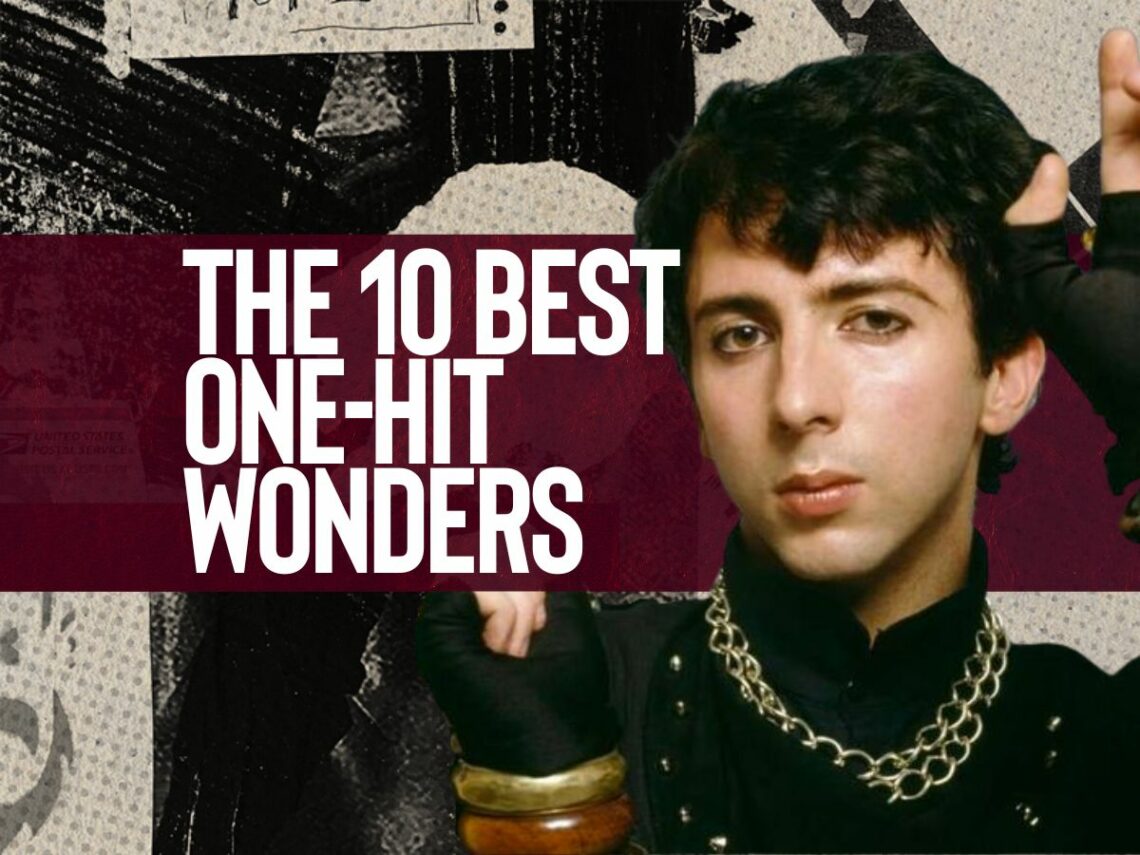
‘Tainted Love’ – Soft Cell
Sadly, Soft Cell were another act hoisted by their own success but this time in a much more traditional way. The band went from virtually unknown to printing money when ‘Tainted Love’ set a new US record of 43 consecutive weeks in the charts. The sudden influx of cash and fame was disastrous.
Only a year on from the release of the song in 1981, near-constant drug use was proving to be a huge issue. By early 1984, the duo amicably split to focus on patching their lives back together. Nevertheless, their hit remains a prescient one that helped to shape the sound of the decade.
‘Spirit in the Sky’ – Norman Greenbaum
Norman Greenbaum’s classic hit is a strange one; the riff and guitar sound is so sultry that it should come with an R18 rating, but this raunchy riff is then dressed in very church-going clothes. This mix creates an odd sense of counterpoint where rock ‘n’ roll’s visceral edge is met with chant-along social club sensibilities, creating something that proves invigorating from every angle.
Like all the best one-hit wonders, it almost came about with mystic ease as Greenbaum explored the wholesome side of music for a change explaining the dichotomous sound. As he told The New York Times: “I thought, ‘Yeah, I could do that,’ knowing nothing about gospel music, so I sat down and wrote my own gospel song. It came easy. I wrote the words in 15 minutes.”
‘Dancing in the Moonlight’ – Boffalongo, King Harvest & Top Loader
If one-hit wonders are somehow predestined, then look no further than ‘Dancing in the Moonlight’. This classic summer evening anthem has been a one-hit wonder for three separate acts: Boffalongo King Harvest & Top Loader. It now serves as a warning to all potential acts: cover this song at your own peril. Originally written by Sherman Kelly in 1970 for his band Boffalongo, it made its way onto King Harvest’s radar who had their big hit with it in 1972. It then lay dormant waiting for its next victim, when Top Loader tackled it in 1999.
The song itself might sound idyllic but it actually has a horrific backstory. As Kelly writes: “On a trip to St. Croix in 1969, I was the first victim of a vicious St. Croix gang who eventually murdered eight American tourists. At that time, I suffered multiple facial fractures and wounds and was left for dead. While I was recovering, I wrote ‘Dancin’ in the Moonlight’ in which I envisioned an alternate reality, the dream of a peaceful and joyful celebration of life. The song became a huge hit and was recorded by many musicians worldwide. ‘Dancin’ In The Moonlight’ continues to be popular to this day.”
‘Save Tonight’ – Eagle-Eye Cherry
Four chords are all it takes to have a big hit: I–V–vi–IV : C–G–Am–F. If you find out a new way to deliver this classic structure, then you are onto a winner. Pythagoras once posited that music was the language of maths and that there was a science to making it sound appealing to the human ear, well few have cracked that alchemy quite as seamlessly as Eagle-Eye Cherry.
The Swedish songwriter knew all about this theory. His father was the American jazz artist Don Cherry and his mother was the artist and fashion designer Moki Cherry. He had been raised with the arts and had a keen eye for the fine-tuned science behind it. This 1997 single served that up in irresistible style even if you pretend to be too cool for it for a while.
‘Teenage Dirtbag’ – Wheatus
Say what you like about Wheatus, I’ll be damned if ‘Teenage Dirtbag’ doesn’t at least flood you with more memories than a trip to the seaside or logging back into MySpace. Whether it’s hanging around outside of Oddbins waiting for a good Samaritan to buy you White Lightning if you’re British, or perhaps if you’re American, taking your first ‘E’ at prom and telling the Principal how you really feel, ‘Teenage Dirtbag’ is full of so much nostalgia that it’s bound to bring something forth.
In fact, it even seemed nostalgic at the time of release. It’s not like it has a throwback sound or makes references to the past, there is just something inherently reverie-inducing about the song. And as frontman Brendan Brown explains, it is simply about “a skinny guy with a mullet who probably didn’t have a lot of friends.”
‘I Try’ – Macy Gray
‘I Try’ is almost a meta tale of the one-hit wonder phenomenon—the most fateful of all the mystic unique successes. You see, Gray was no stranger to the music industry when the track became a hit in 1999, she had previously been in a hotly-tipped rock band, but Atlantic Records deemed their album unworthy of release and they were cut off. So, Gray gave up on the dream, became a secretary, settled into marriage and had three children.
All the while, she still kept gigging on the side and eventually, Epic Records decided to give her another shot at making music, this time as a solo artist. However, around the same time, she was going through a tragic divorce, and this pulled her attention away from her dream. She was unable to leave the memory of her once beautiful marriage behind and poured this pain into a song that typified the exultation of music with its fitting uplifting melody but heart-aching lyrics. “Though I try to hide it, it’s clear,” she sings of trying to keep a brave face for her career while missing her ex-husband, “my world crumbles when you are not near.”
