


Five outstanding songs about the Berlin Wall

When the Berlin Wall was constructed in 1961, it was more than just a dividing of a country. The line drawn between East and West Germany, between the Communist state and the Federal Republic, was built with the intention of stopping East German citizens from fleeing their regime. But quickly, the image of the structure became a metaphor referenced time and time again in art, literature and music, representing a greater symbol of division.
In a lot of music, the setting of Berlin became a modern version of Verona, with artists creating new takes on a Romeo and Juliet tale of star-crossed lovers. Rather than being separated by feuding families, they were instead divided by the wall and by the two differing political climates on either side. For some, their music used the wall as an obstacle to cross, with a message that love can endure hardship. To others, the looming structure was a symbol of doom, representing a gulf with no bridge between.
But beyond the metaphors people attached to the wall, the structure had huge social and political implications. At the time of the Cold War, when fear about the threat of communism was heightening, the wall became a very real example of that fear, where crossing the wall could lead to violence or even war. Outside of Berlin, the years the wall stood for, between 1961 and 1989, were transformative. In the UK, the punk scene emerged as a reaction to the country’s worsening political and economic state. In the US, the hippie era of optimism came to an end, leading to a period of darkness thanks to the consequences of free love and drugs. It seemed that everywhere, things were getting bad as the world rolled into tougher times. The dark grey wall felt like a perfect symbol for that or an easy setting for these stories.
Time and time again, the structure crops up in music, film and beyond. Still today, the political, social and cultural meaning and impact of the wall is studied and considered. But for musicians, especially those that flocked to Berlin to find new inspiration, the image of the wall provided the perfect metaphor or setting for their songs.
Five songs about the Berlin Wall:
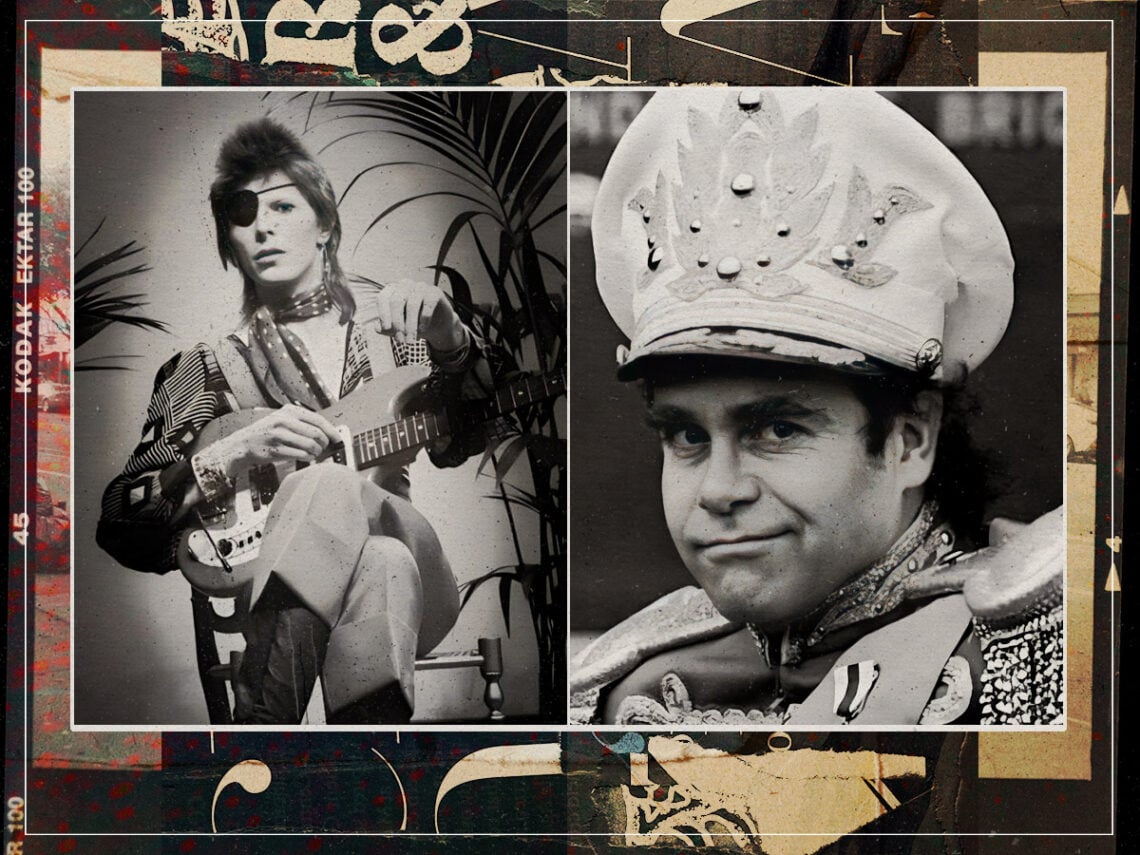
‘Heroes’ – David Bowie
In the story of David Bowie, Berlin is an essential setting. By the mid-1970s, he was one of the most famous musicians on the planet. His larger-than-life characters had made him a star, but they’d also utterly exhausted him, leading him into a life that he was beginning to realise was not sustainable. Worn out from his touring schedule and crashing out from his worsening drug addiction, Bowie and his friend Iggy Pop decided they needed to get away. They headed to Berlin to search for new inspiration and a bit of space to get their lives back on track.
The result of the years he spent in West Berlin was Low, Heroes, and Lodger; known as his Berlin Triology. Inspired by Krautrock, the city he was immersed in and the work of Brian Eno, his music took a new direction, away from the glam rock of his earlier releases and towards something more considered.
It also gave him one of his biggest hits; ‘Heroes’. The track was recorded at Hansa, a studio mere metres away from the looming Berlin Wall. One day, during a break, he saw his producer Tony Visconti kiss the singer Antonia Maass by the wall, inspiring this swelling track about love, rebellion and strength. It tells the story of two loves, one from East Berlin and one from the West, capturing the divided city it was written in.
‘Holidays In The Sun’ – Sex Pistols
“I’m looking over the wall, and they’re looking at me,” Johnny Rotten exclaims in ‘Holidays In The Sun’, using the Berlin Wall as a kind of modern stand-in for Nietzsche’s philosophy “When you stare into the abyss, the abyss stares back at you.” Known best for their rowdy punk anthems that routinely take shots at the system, the Sex Pistols‘ attack on a divided Berlin is perhaps their most nuanced rallying cry.
Across the track, the band consider a number of complex themes. They’re contemplating class, tourism, the perceived freedom that money affords and the stark realisation that money really can’t buy freedom at all. As Rotten’s narration dips over the wall, moving between the two patterns of thought that separated East and West Berlin, he’s making the point that anxiety and injustice live on both sides, no matter which regime rules.
‘99 Luftballons’ – Nena
A song that goes just as hard in German as in English, Nena put a nuanced consideration of division and threat into a timelessly catchy pop song. Written from the perspective of a German band rather than an external act, the song captures what it was like to live in the country at the time and the lingering sense of fear that the Wall and what it stood for left the population with.
The story goes that in 1982, the band’s guitarist went to see The Rolling Stones play in West Berlin. During the show’s finale, he noticed red balloons being released. As he watched them float off into the distance, he wasn’t able to merely see it as a beautiful sight at the end of a great night. Instead, he was gripped with fear over what might happen when those harmless balloons made their way across the wall into East Berlin. In the English translation, the band sing, “Ninety-nine red balloons / Floating in the summer sky / Panic bells, it’s red alert! / There’s something here from somewhere else!” They’re imagining a scene in which these balloons, let off as a token of fun and life, were mistaken for a threat, sparking violence between the two divided sides as “The war machine springs to life.”
‘Nikita’ – Elton John
One of the most common images of the Berlin Wall in pop culture is not so much a symbol of the social and political divide it was but an image of star-crossed love. Time and time again, the wall acts as a barrier between lovers, with plenty of songwriters crafting their own Romeo and Juliet-type tales in which the Berlin Wall acts as the force keeping them apart.
In 1985, Elton John released his own take in the form of ‘Nikita’. Telling the story of someone writing to his lover on the other side of the wall, they’re mourning the division between them that feels impossible to cross. There are scattered references to soldiers throughout the lyrics, but on a broader scale, John is using the idea of the Berlin Wall to explore a larger barrier in his life: sexuality. It was only after the singer came out that he admitted this song was actually about a man, and the wall represented the barrier of homophobia. As an easter egg to the true meaning, he named the song ‘Nikita’, which is immediately registered as a woman’s name but is actually taken from Nikita Khrushchev, the man who ordered the construction of the wall.
‘Berlin’ – Lou Reed
The image of Berlin loomed so large in Lou Reed’s artistic mind that he not only named a track on his 1972 debut album after the city but revisited it in 1973 as the setting for a whole record.
However, when he wrote the initial track, Reed had never actually been to the place. Instead, but much in the Elton John track, the Berlin Wall became a stand in for division between lovers. Yet while John wrote of it as a hurdle to be crossed as the two figures’ love endured the obstacle, Reed’s vision was much gloomier. In his case, the metaphor of the Berlin Wall was a message of doom, as if the split of the couple in question was inevitable.
But at first, Berlin is simply the sweet setting of a happy memory for his two fictional characters. However, as the story of the album goes on and the pair fall into a tragic fate, the looming idea of the dividing wall acts as a symbol for their separation.
