


Why did ’99 Luftballons’ get an English rewrite?

It’s an unmistakable opening: a spacey synth lifts before a woman’s voice sets the stage. The palpable drama of the introduction then drops into a synth-funk breakdown filled with bass slaps, syncopated rhythms and slick 1980s keyboard riffs. With a drum fill that sends the listener off like a rocket, the first verse of ’99 Luftballons’ springs to life.
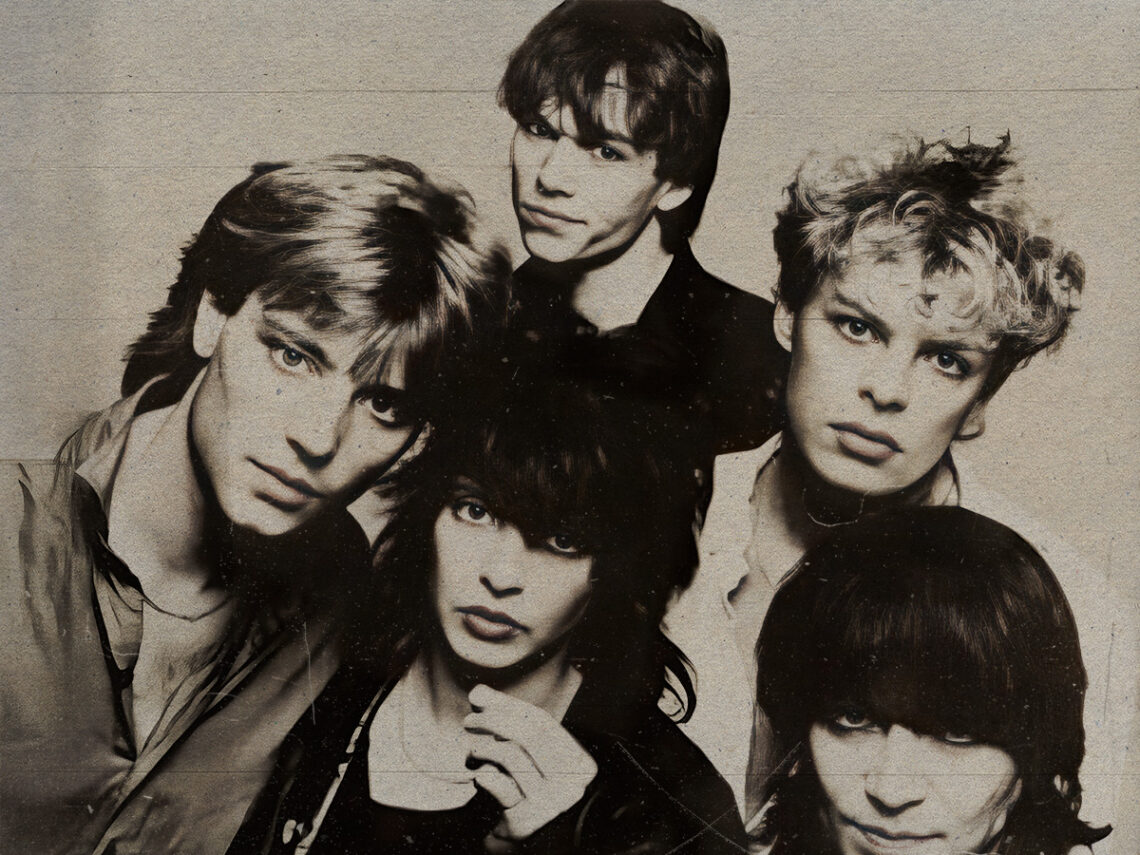
For German new wave band Nena, ’99 Luftballons’ quickly became their signature song. Written by band members Carlo Karges and Uwe Fahrenkrog-Petersen, the song was originally inspired by Karges watching balloons get released at the end of a 1982 Rolling Stones concert in West Berlin. Karges wondered if the balloons would alert the ever-vigilant troops stationed at the top of the Berlin Wall on the east of the German capital. With that, the idea of an innocent balloon being the spark of a Cold War crisis was born.
Audiences around the world could hear the song’s story, but not all of them could understand the words. The original version of the song, ’99 Luftballons’, was recorded in Nena’s native German language. After the track became a hit single throughout continental Europe and Japan, Nena were persuaded to record an English-language version of ’99 Luftballons’ for release as a single in the United Kingdom.
The English lyrics were written by Kevin McAlea, an Irish keyboard player best known for his work with Kate Bush. McAlea chose not to directly translate the German lyrics. Instead, he took the story and message from the original song and made an English-language reinterpretation of it. Both songs follow roughly the same story and conclude with the same ending: a decimated city featuring one final release of a balloon.
Since it would have been ’99 Air Balloons’ if the song had been translated directly, McAlea made a slight alteration to make it ’99 Red Balloons’. When the song eventually made it over to America, there were two different versions from which radio stations and music buyers could choose from. In a somewhat-unexpected twist, American pop music fans actually preferred the original German-language version of the track.
In March of 1984, a full year after the original version of the song was released as a single, ’99 Luftballons’ was on its way to becoming a number one hit in the United States as ’99 Red Balloons’ was on pace to do the same in the United Kingdom. ’99 Luftballons’ eventually stalled out at number two on the Billboard Hot 100, kept out of the top spot by Van Halen’s ‘Jump’. ’99 Red Balloons’ hit number one in the UK for three weeks, eventually getting bumped from the top spot by Lionel Richie’s ‘Hello’.
As the band experienced global success, the members of Nena expressed their dissatisfaction with the English-language version of the song. When the song hit number one in the UK, the members of the band claimed that they were “not completely satisfied” in an interview with Record Mirror. Unhappy with the lack of nuance that the English-language version had, Peterson went so far as to claim that the band “made a mistake” in releasing the English version, claiming that “the song loses something in translation and even sounds silly” in a contemporary interview.
The mix between both versions of the song became increasingly blurred as the years went on. 1980s compilations and radio stations often flip between using one or the other, and on their 2000 cover, American ska punk band Goldfinger sang most of the song in English before switching to the German lyrics for the final verse. Tastes vary, but both ’99 Luftballons’ and ’99 Red Balloons’ have become Nena’s collective calling cards for almost four decades.
