


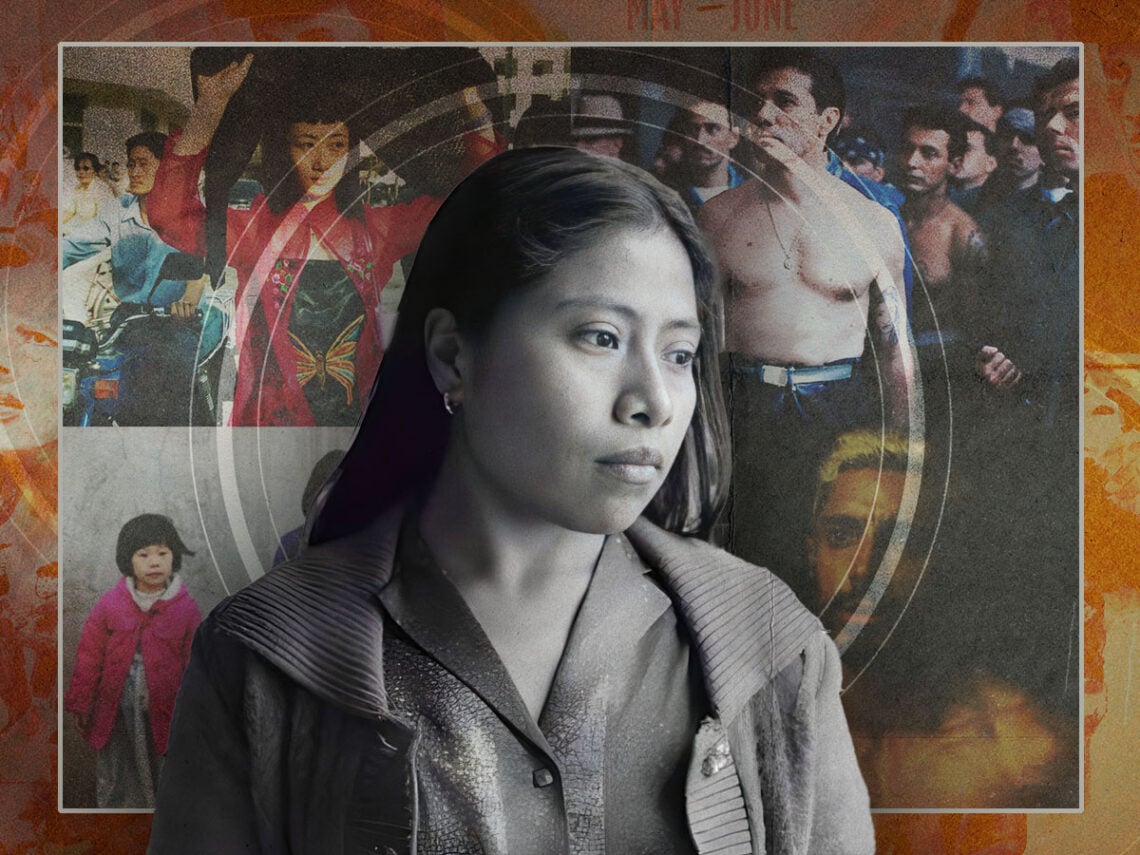
Spiritual successors: Five modern movies to watch after your obsession with Italian neorealism

As one of the most important movements in cinema history, the influence of Italian neorealism reverberated throughout the industry for decades to come, with the key movies from its founding figures living on as inimitable classics and seminal masterpieces.
Echoing the nation’s societal and cultural changes both during World War II and in the immediate post-war years, filmmakers sought to present audiences with relevant, socially conscious, and thematically resonant stories that favoured authenticity in evoking a feeling that was sweeping through Italy at an increasing pace.
Shining a light on the daily life of the everyday citizen, non-professional actors and on-location shoots were instrumental in not only the aesthetic, but the mindset that would define neorealism. The finest examples may be reflective of a certain moment in history, but the films themselves have become timeless.
The legacy left behind by the movement’s most lauded names didn’t just revolutionise European cinema, but it created a long-lasting effect that was felt for generations to come. If it weren’t for Alberto Lattuada, Giuseppe De Santis, Luchino Visconti, Roberto Rossellini, Vittorio De Sica and the other titans, then the art form would look very different today.
The DNA of Italian neorealism eventually crept over to America and greatly informed the ‘New Hollywood’ era, where another band of auteurs came to prominence by upending the established norms and telling stories on-screen that talked directly to an audience who were living through them.
Even today, there are films being made on a regular basis that carry on the spirit of what neorealism was and why it was so integral to cinema’s ongoing evolution, with the following five appointments viewing for anyone enamoured by the movement who wants to further their obsession.
Five movies evocative of Italian neorealism:
5. Sound of Metal (Darius Marder, 2019)
On the surface, a movie about the drummer in a heavy metal band wrestling with the effects of hearing loss doesn’t possess many similarities to Italian neorealism, but that doesn’t mean they aren’t there.
Co-writer and director Darius Marder’s background as a documentarian grounds the film in authenticity, while the filmmaker utilises non-professional actors and members of the deaf community in a manner not unlike the way the neorealist greats would use real people to inform their tangible sense of reality.
Think of it as a tub-thumping spiritual successor to Bicycle Thieves, both of which focus on the devastating effects of prosperity being torn away. In the neorealist classic, it’s the loss of a bike, whereas, in Sound of Metal, it’s Riz Ahmed’s Ruben Stone being left powerless as his livelihood disappears from his grasp.
4. Treeless Mountain (So Yong Kim, 2008)
One of neorealism’s hallmarks was the desire to leave the escapism of cinema at the door and focus on grounded, relatable stories and characters that transcend cultural and national barriers to dig into issues that affect humanity the world over.
In that regard, writer and director So Young Kim’s Treeless Mountain has those bases well and truly covered. The story follows two young sisters being looked after by their aunt when the mother sets out to track down their father, and they soon discover their best chance of thriving is by taking charge of their own lives in a societal setting that’s repeatedly left them neglected.
Narratively and thematically, Treeless Mountain touches base with several of the motifs and undercurrents integral to the Italian neorealist movement, telling a story that would pack the same punch were it told exactly the same way half a century previously on the other side of the world.
3. Roma (Alfonso Cuarón, 2018)
The masters of Italian neorealism wouldn’t have been able to comprehend the existence of Netflix, but the streaming service has nonetheless produced the work of a single-minded auteur who carries many of the same sensibilities.
Alfonso Cuarón’s mediative and self-reflexive Roma casts its gaze inward to craft a semi-autobiographical story of a middle-class Mexican family’s housekeeper that was inspired by the filmmaker’s own upbringing, a street-level social parable that wouldn’t have been out of place in post-war Italy.
Steeped in themes of familial closeness, the battle between poverty and privilege, and the divides caused by class and gender, even Roma‘s title is evocative of the Italian capital. Beyond that, though, it’s on much the same wavelength both visually and thematically.
2. American Me (Edward James Olmos, 1992)
One of the main bedrocks of Italian realism was stories narrowing the focus of cinema to the everyday people often left at the whims of a world that doesn’t care about them, and that’s a sentiment true of Blade Runner star Edward James Olmos’ American Me.
In a story spanning 30 years and inspired by real events, American Me was filmed almost entirely on location and tracks the lives of Hispanic gang members as they evolve from wayward children into hardened adults shaped for better and worse by their surroundings.
Films rooted in the personal experiences of the people who made them were intrinsic to the neorealism movement, a feeling that’s on full display in Olmos’ achingly powerful drama that examines a trajectory to have swallowed up so many over the years.
1. Unknown Pleasures (Jia Zhangke, 2002)
Among the foremost purveyors of modern cinematic realism, Chinese auteur Jia Zhangke has built his career largely on the back of capturing the feeling of a generation caught up in a never-ending sea of change they can either embrace or deny.
Unknown Pleasures spotlights a trio of disaffected youngsters who fall into the so-called ‘Birth Control’ generation, with the film being used as a means to underline the inherent dangers and detachment from reality that can stem from overindulging on technology, screentime, and outside cultural influences.
Zhangke has even acknowledged the influences the legends of Italian neorealism had on his own output, and it’s something he’s embraced through a series of acclaimed features that channel the spirit of the movement in a distinctly localised fashion that’s entirely his own.
Chasing the Real: Italian Neorealism_ is at BFI Southbank from 1 May – 30 June, with selected films also available to watch on the BFI Player.
Rome, Open City was re-released by the BFI in selected cinemas from 17 May.
