


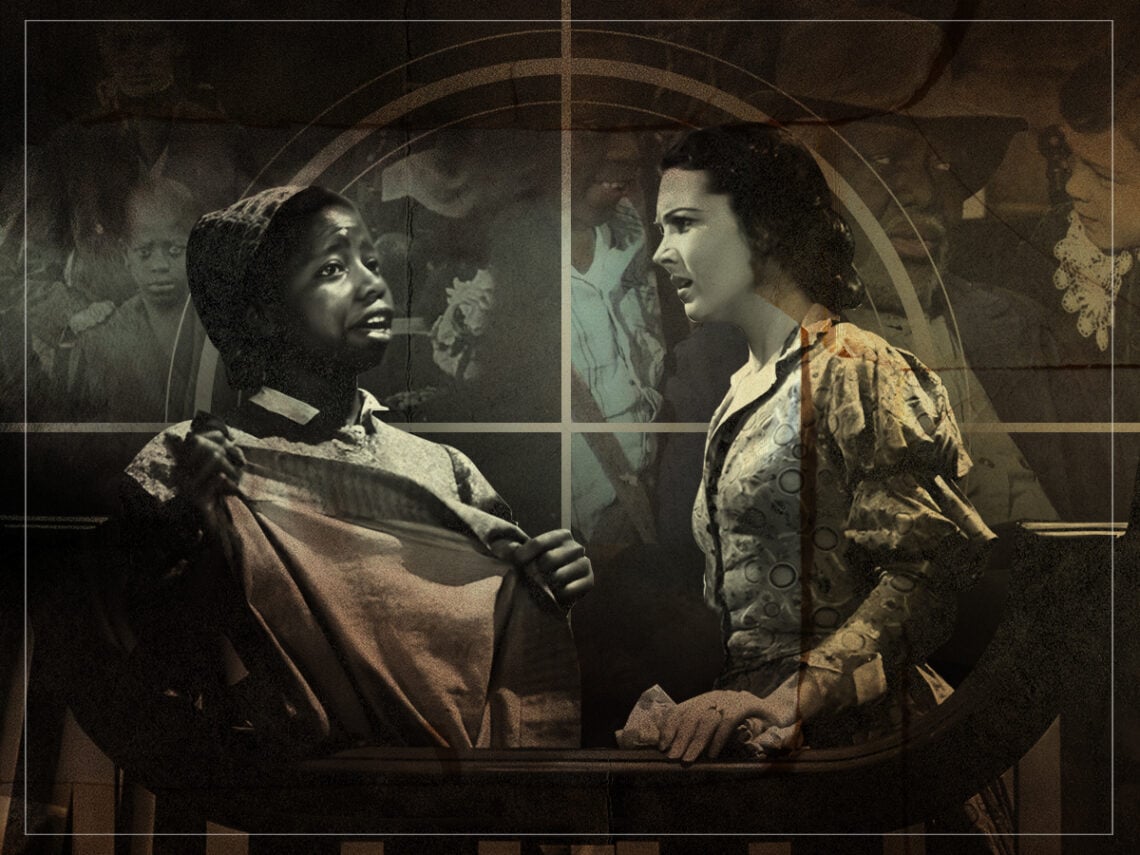
The five most racist movies ever made

In the time that cinema has evolved into what we know today, so have society’s attitudes. Of course, prejudice and violence motivated by race are still widespread, but there is a much larger consensus among the general population that this kind of thinking is abhorrent. Thus, the way that race is depicted in film has changed a lot since the early days of the industry.
There were many early silent filmmakers who used white actors in blackface to play black characters, and most depictions of people from non-white backgrounds were portrayed stereotypically and offensively. For a long time, Hollywood has perpetuated ideas about people of colour that have helped to normalise these racist attitudes in real life, from the ‘mammy’ trope to the often offensive depiction of East Asian characters.
While cinema is not rid of these problems – certain stereotypes can still be found today – the industry used to be scarily much more relaxed. There are even countless old Disney films that feature characters with racist undertones, from Song of the South to Dumbo. People didn’t care that these movies were for children, who would subconsciously absorb these prejudiced stereotypes from a young age.
Cinema has a complex racial history, so we’ve compiled five of the most racist movies of all time, which were somehow allowed to be made and distributed. We haven’t included any propaganda films, such as those made by the Nazis; rather, these are films that were meant to appeal to widespread audiences as acts of entertainment.
The five most racist movies ever made:
The Birth of a Nation (D W Griffiths, 1915)
Perhaps the most notorious film of all time, The Birth of a Nation was so racist that it literally inspired a revival among the Klu Klux Klan. The film preached white supremacy and depicted black people (white actors in blackface, no less) as inferior. It even encouraged lynching, and as a result, violence against African American people at the hands of white gangs increased following the movie’s release.
While you might hear people call the film ‘incredibly influential’ because of the pioneering cinematic techniques it used to tell its story, we simply cannot look past the fact that this is easily the most offensive film ever made. The epic film was a landmark moment in cinema history due to its ambitious nature, but The Birth of a Nation has left a negative impact on American culture that can still be felt today.
Song of the South (Harve Foster, Wilfred Jackson, 1946)
Disney movies are a beloved part of many people’s childhoods, but the dark reality is that many characters are rooted in racial caricatures. Fantasia featured many beautiful animations, but of course, Disney had to spoil one segment by depicting the black centauresses as inferior to those with white skin – something that has since been edited out of the film.
However, the most racist film that Disney has ever made is Song of the South, a film that perpetuates the notion that everything was better back in the days of racial segregation and slavery. It follows a young boy who goes to stay at his grandmother’s plantation in Reconstruction-era Georgia, where he meets Uncle Remus, who tells folktales. The movie depicts African Americans as subservient to white people, so much so that Disney has not allowed the film to be made available on home video or streaming services.
Gone With the Wind (Victor Fleming, 1939)
Hailed as a classic romantic drama by many, Gone With the Wind won ten Academy Awards. Yet, the Reconstruction-era movie is laced with racist thinking, with the black characters playing stereotypical roles as servants, while the white women are depicted with a much higher sense of worth. Hattie McDaniel might have won an Oscar for her role, becoming the first black actor ever to do so, but her character, Mammy, has long been criticised for being written as a racist view of how black people should operate in society.
Many people believe the film champions the Lost Cause myth, and while it downplays the outright racist elements found in the book it was adapted from, Gone With The Wind is still a highly uncomfortable and offensive watch. The film was denounced by many black activists who attempted to boycott it, but the movie sadly became an award-winning classic regardless.
The Sheik (George Melford, 1921)
Rudolph Valentino is often regarded as an iconic legend of the silver screen, but in calling him such, it is important to remember he also starred in an incredibly racist film, The Sheik. Made in 1921, the film proved to be his golden ticket into Hollywood, but the movie’s legacy is a lot more complex. The Italian-born actor played the Arabic main character – well, that’s until it is revealed that his character is actually European because, of course, there is no way an interracial relationship could work.
Full of racist thinking and misogynistic attitudes, The Sheik is a terrible film that reflects the laxness of the industry at the time. The appropriation of culture is on full display here, with the Hollywood filmmakers in charge clearly nitpicking the aspects of Arabic culture they find most beautiful (such as the landscapes) and sandwiching them alongside racist stereotypes.
The Littlest Rebel (David Butler, 1935)
Poor Shirley Temple was only seven when The Littlest Rebel was released, with the film depicting the child wearing blackface in one of many racist scenes. Directed by David Butler, the film is set during the American Civil War. Temple plays the daughter of a Confederate soldier, although a slave looks after her.
For the film’s entire runtime, we see countless racist stereotypes, with the black characters treated as second-class citizens. Many viewers have tried to suggest that the fact that Temple’s character gets along so well with the black characters negates the racism that is blindingly apparent, but that is simply not the case. While this was meant to be a fun, family-friendly movie, how can racism and portrayals of blackface be remotely enjoyable to watch?
