


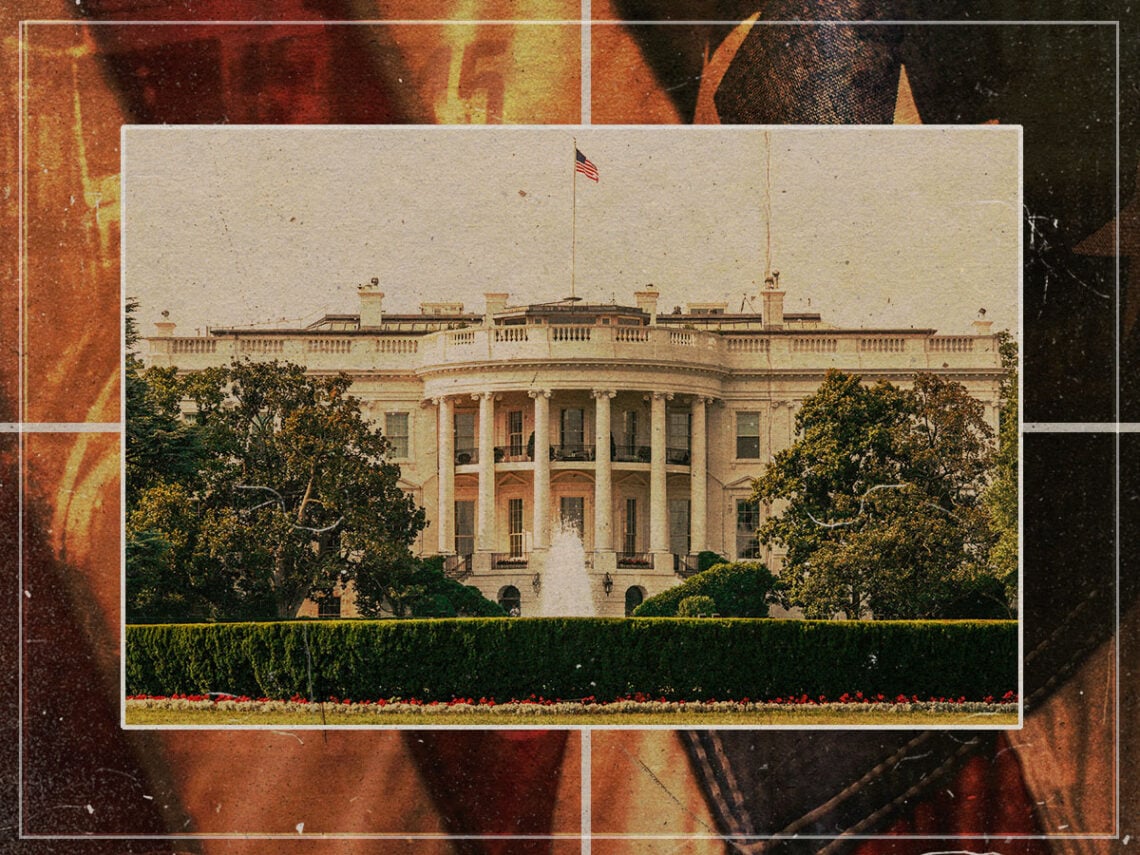
The first movie to be shown at the White House

When we think about the greatest cinemas across the whole of America, we might consider the Cinerama Dome in Hollywood, AMC Loews Uptown in Washington D.C., or the Alamo Drafthouse of Austin, Texas. One place we certainly wouldn’t consider is the residence of the current standing President, the White House, despite the iconic landmark having housed screenings of countless movies over the years.
Whilst the White House has been screening movies for generations, it wasn’t until 1942 that President Franklin Roosevelt sought to install a permanent movie theatre. Converting a cloakroom into a showcase space, the White House Family Theatre has long been used to rehearse speeches, as well as to host guests and recline to the greatest and most curious movies from the history of cinema.
Indeed, whilst there have been a number of appropriate screenings over the years, including Paul Greengrass’ United 93, Roger Donaldson’s Thirteen Days and Randall Wallace’s We Were Soldiers, which all speak to American patriotism, there have also been a few eyebrow-raising screenings. Often being shown to lucky visitors to the White House, such films have included 2005’s The Lion, The Witch, and The Wardrobe, 2008’s The Tale of Despereaux and 2006’s Charlotte’s Web.
But these screenings come decades after the very first movie to be screened at the White House, the influential yet endlessly controversial D. W. Griffith film Birth of a Nation.
Released back in 1915, Birth of a Nation is considered to be one of the most important movies in cinematic history, bringing several groundbreaking techniques to the table, including ingenious close-ups and meticulous set design. Yet, there’s no getting beyond the film’s flagrantly racist messaging, depicting black characters as horrible stereotypes whilst championing the despicable real-life acts of the Ku Klux Klan.
Understandably seeing backlash against his movie, Griffith set out to seek approval from the top of the movie business, all whilst the civil rights group The National Association for the Advancement of Colored People (NAACP) planned protests across the USA. So, who better to turn to for support than the American President himself?
Just ten days after the premiere of the movie in February 1915, the film was brought to the White House to be screened for President Woodrow Wilson in the East Room of the iconic building. The filmmaker didn’t exactly get the endorsement he was after, with Wilson not letting his opinion on the movie be known, only stating: “It’s like writing history with lightning. My only regret is that it is all so terribly true,” but this was enough for Griffith to legitimise the film’s existence.
Take a look at a clip from the ‘Best Picture’ nominee BlacKkKlansman, directed by Spike Lee, below, where actor Harry Belafonte explains the impact of the movie.
