


The 10 most controversial movies of all time

What makes a movie, or indeed an idea, controversial? Often, it’s the concepts that challenge popular opinion, explore topics of bad taste, or attack a large subsection of society in pursuit of some sort of self-constructed ‘truth’. Still, this isn’t to say that all controversial movies are inherently offensive or mean-spirited, with countless divisive films throughout cinema history having had the ability to shift public opinion for the better.
Some of the most controversial movies of all time arise from the dawn of cinema, when censorship regulations weren’t as strict, and society wasn’t quite as considerate towards marginalised audiences as it is today. Indeed, these days, it’s difficult for a film to really surprise, shock and force controversy, no matter what a filmmaker can throw at a movie, most of us can shrug it off – ‘we’ve seen it all before’.
This hasn’t stopped a number of usual suspects (we’re looking at you, Lars von Trier) from constantly challenging their audiences with stories that are difficult to comprehend, digest and process, but such is the thrill of the cinematic experience.
In the process of putting together our list of the ten most controversial movies of all time, we’ve focused on the films that have caused the most amount of moral panic and public outcry over time. So, whilst we appreciate that 1988’s Man Behind the Sun and 2003’s August Underground’s Mordum are indeed highly disturbing movies, they are almost unknown in the spheres of public consciousness.
The 10 most controversial movies of all time:
10. Deep Throat (Gerard Damiano, 1972)
Opening up western society to more ‘socially acceptable’ porn, Deep Throat, directed by Gerard Damiano, was created in the midst of the Golden Age of Porn and arguably changed cinema forever. The film told the bizarre story of a woman born with a clitoris in her throat who decides to make the most of her unique situation and starred the iconic American pornographic actress Linda Lovelace.
Banned throughout the USA, prosecutors across the country presented obscenity charges against any cinema owner who chose to screen the movie. Despite their best efforts, Deep Throat was seen by the likes of Martin Scorsese, Brian De Palma, Jack Nicholson and many more.
9. Faces of Death (John Alan Schwartz, 1978)
Part of the notorious ‘Video Nasties’ list, John Alan Schwartz’s Faces of Death was a curious and very disturbing faux documentary. The problem was that the film, which quite simply showed footage of people and animals being killed, wasn’t entirely fictional, with some deaths being real. Banned in several different countries, Faces of Death also became something of a cult hit, earning $35 million from a measly budget of just $450,000.
Banned in multiple countries whilst being censored and cut in several others, Faces of Death joined the likes of Driller Killer, The Last House on the Left, and I Spit on Your Grave as the most notorious video nasties of all time.
8. The Exorcist (William Friedkin, 1973)
Whenever a new horror movie is released, you can be sure that a publication will call it ‘the new Exorcist’. There’s a reason for this, too, William Friedkin’s 1973 classic caused a moral panic across the world, with the movie being accused of planting Satanic subliminal messages and corrupting the minds of young audience members. To this day, the film remains one of the most iconic genre movies of all time.
Adapted from the novel of the same name by William Peter Blatty, The Exorcist tells the story of a young girl named Regan (Linda Blair) who becomes possessed by a demonic being, forcing two priests to question their faiths.
7. A Serbian Film (Srdjan Spasojevic, 2010)
Srdjan Spasojevic’s 2010 movie A Serbian Film is the only 21st-century flick that has made it onto our list of the most controversial films of all time. Telling the story of an ageing porn star who agrees to appear in an ‘art film’ only to be tugged into a world of paedophilia and necrophilia, A Serbian Film is a grotesque movie inside and out, offering very little in terms of artistic value, even if the filmmaker intended it to be a political message against the Serbian government.
Magnetising great controversy due to its depiction of rape and sexual violence, there are several sequences in A Serbian Film that we don’t wish to discuss in great detail. The fact that it was banned in 46 countries should be reason enough to stay away.
6. A Clockwork Orange (Stanley Kubrick, 1971)
Controversy and Stanley Kubrick aren’t two things you’d usually put together, but look closer, and you’ll see that the director wasn’t afraid of ruffling a few feathers. Aside from the adaptation of the controversial Vladimir Nabokov novel Lolita, Kubrick also caused a minor moral panic when he released A Clockwork Orange in 1971, thanks to its depiction of sexual violence and subversive violence.
In fact, so worried about copycat violence was Kubrick that he himself pulled the film from cinemas, stating: “To try and fasten any responsibility on art as the cause of life seems to me to put the case the wrong way around. Art consists of reshaping life, but it does not create life, nor cause life”.
5. Freaks (Tod Browning, 1932)
Tod Browning’s 1932 film Freaks was controversial in a peculiar way. The film, which followed a circus trapeze artist who agrees to marry the leader of a group of side-show performers, received a bizarre test screening in which audience members ran out in disgust. In one shocking incident, a woman claimed to have miscarried whilst watching the film, prompting her to sue MGM.
Even still, the film isn’t considered to be controversial for its depiction of disabled people, with some critics even stating that Tod Browning portrays the characters in a somewhat progressive light.
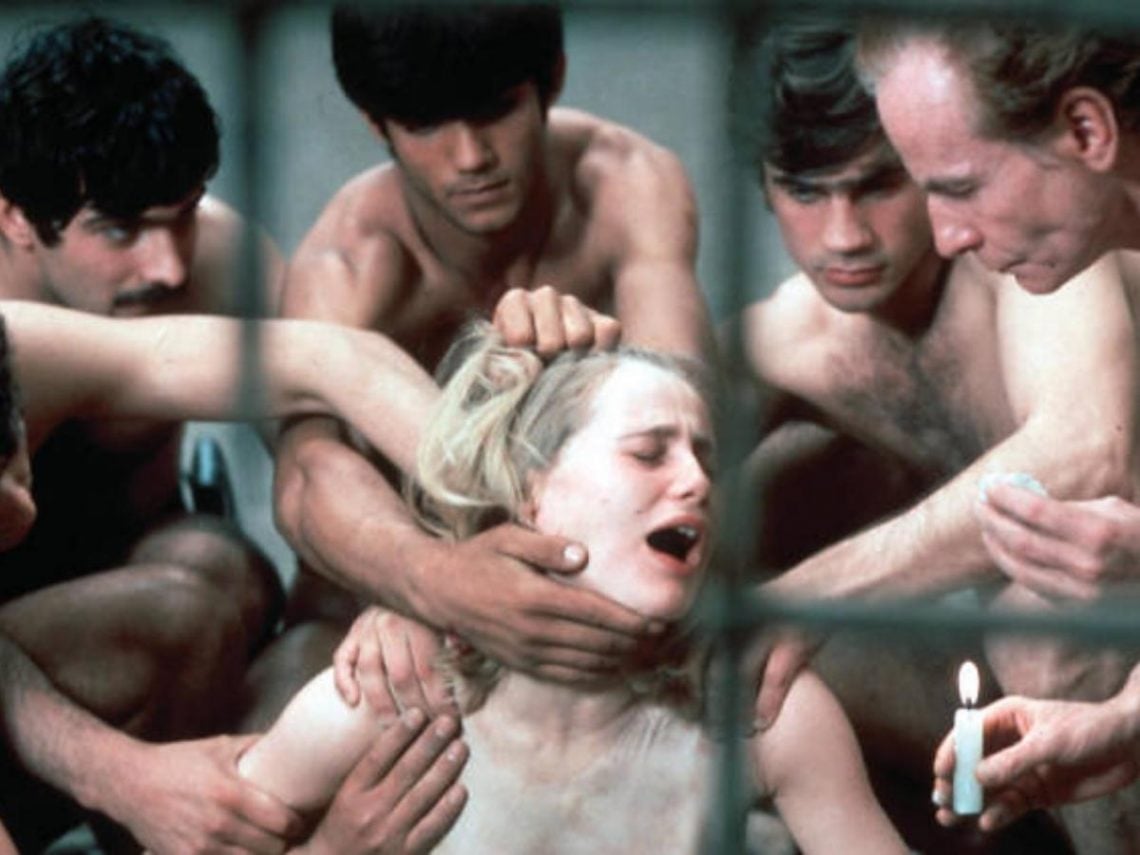
4. Salò, or the 120 Days of Sodom (Pier Paolo Pasolini, 1975)
Pier Paolo Pasolini’s horrifying drama Salò or the 120 Days of Sodom tells the story of fascists who round up nine adolescent boys and girls to put them through over a hundred days of physical, mental, and sexual torture. Influenced by the Dante Alighieri poem Divine Comedy, here, the darkest side of nihilism is reached, with Pasolini expressing the inhumane acts of the establishment with reserved coldness.
Banned in multiple countries due to its portrayal of murder, torture and rape, largely on characters who are meant to be 18 years old or younger, the film remains one of the most graphic and controversial of all time.
3. Cannibal Holocaust (Ruggero Deodato, 1980)
Aside from having an unreasonably great original score, Ruggero Deodato’s 1980 movie Cannibal Holocaust is largely known as one of the most shocking and controversial films of all time. Deodato’s film is something of a found footage movie, telling the story of a professor who discovers a lost film shot by a group of documentarians whilst on a rescue mission in the Amazon rainforest, with the tape uncovering some disturbing truths.
Sparking controversy for several different reasons, the film was considered shocking due to its graphic gore, scenes of sexual violence and real-life cruelty to animals, which saw the film being banned in 50 countries.
2. The Last Temptation of Christ (Martin Scorsese, 1988)
On this list, we’ve covered some pretty niche arthouse flicks and ‘top of the shelf’ oddities, but our pick for the second most controversial film of all time is a movie from none other than Martin Scorsese. His 1988 movie The Last Temptation of Christ, which tells the story of Jesus Christ through to his final death, drew swathes of controversy, much of which coming from one scene that departs from the bible, showing Jesus and Mary Magdalene getting married.
Protests from Christian groups were vocal and fierce, with an Integralist Catholic group even setting fire to a Parisian theatre that was playing the movie, injuring thirteen people. On top of this, Scorsese received death threats for making the film.
1. The Birth of a Nation (D. W. Griffith, 1915)
It is a pretty damning indictment on American politics that the most racist movie of all time happened to be the very first one that was ever screened at The White House. D. W. Griffith’s The Birth of a Nation is seen as an important cinematic document but is more so considered to be a deeply racist film that celebrates the barbaric acts of the Ku Klux Klan and ridicules ethnic minorities throughout.
Causing riots in multiple cities throughout the country whilst also being banned in many others, D. W. Griffith’s movie, which was released at the dawn of American cinema, was crammed with racist lies about black people that merely fueled the anger and resentment of the white population. It was the fact that it was celebrated by so many, including the President of the time, Woodrow Wilson, that makes it such an abhorrent and controversial movie.
