


Five Easy Masterpieces: an introduction to glam rock

When The Beatles’ reign came to a close in 1969, several prominent bands had begun to set the controls for a new decade. Most notably, the 1970s brought us the punk revolution, wherein angsty groups like Ramones and Sex Pistols stripped things back to basics. Earlier in the decade, the rock radar was dominated by bands operating in the realms of heavy metal, prog rock and glam rock. All three styles can be traced back to the late 1960s psychedelic rock wave.
Just as Pink Floyd bridged the gap between psychedelic rock and prog rock, Marc Bolan and his band T. Rex represented the branch that extended from psychedelic rock to glam rock. Early intricacies and folky flourishes made way for punchy, overdriven chords which define the classic glam rock sound. Concurrently, David Bowie began to shuffle towards glam territory in Hunky Dory. He would become the most influential star of the genre over his following two albums.
Besides kooky, often star-bound lyrics and propulsive rock rhythms, glam rock was defined by a glittery, androgynous aesthetic. In a continuation of the countercultural attitude of the late 1960s, most glam rock stars, including Bowie, Bolan, Bryan Ferry, Elton John and Freddie Mercury, garbed up in makeup and feminine clothing to defy widespread views on gender ambiguity and the unwritten rules of fashion.
As a prominent musical movement, glam rock prevailed for around five years between 1970 and ’75. The wave offered an attractive range of music, from the seminal and progressive work of Bowie and Roxy Music to the propulsive, often insincere work of Slade and Sweet. In the list below, I bring you my five favourite glam rock albums as essential starting points for newcomers looking to tackle the genre’s vast and varied catalogue.
Five essential glam rock albums:
David Bowie – The Rise and Fall of Ziggy Stardust and the Spiders From Mars
David Bowie might have hoped for a quicker rise to the top, but we’re thankful he didn’t trace the fall of Ziggy Stardust. Following his underwhelming 1967 debut album, he persevered with incremental improvements in Space Oddity, The Man Who Sold the World and Hunky Dory. This early trajectory reached a stellar peak in 1972 with the arrival of The Rise and Fall of Ziggy Stardust and the Spiders From Mars. The consummate concept album set the bar against which all subsequent glam rock LPs would be measured.
The album introduced Bowie’s most famous alter ego, Ziggy Stardust, an androgynous rock star from Mars who visited Earth with the Spiders. Five years in the future, as an apocalyptic disaster looms, Ziggy Stardust brings a message of hope to fans in his music and becomes a worshipped messiah of rock ‘n’ roll. Sadly, he succumbs to the pressures of fame and excess in the final song, ‘Rock ‘n’ Roll Suicide’.
T. Rex – Electric Warrior
Marc Bolan of T. Rex is regarded as one of the earliest originators of the glam rock sound. In the late 1960s, the band, then called Tyrannosaurus Rex, found success in London’s psychedelic rock scene with a more sedate, folk-inspired rock sound. After a successful transition with the eponymous fifth album of 1970 and its breakthrough single ‘Ride a White Swan’, T. Rex returned to the studio with Tony Visconti to record their foundational glam masterpiece, Electric Warrior.
Most of the songs on the album hone in on the propulsive, radio-friendly sound of ‘Ride a White Swan’, but it still offers plenty of depth and variety. Bolan’s overdriven guitar sound in tracks like ‘Get It On’ and ‘Jeepster’ soon became a standard for groups like Sweet and Slade. The punchy, danceable highlights are balanced elsewhere by the slow, brooding ‘Cosmic Dancer’ and the psychedelic, lead guitar odyssey, ‘Monolith’.
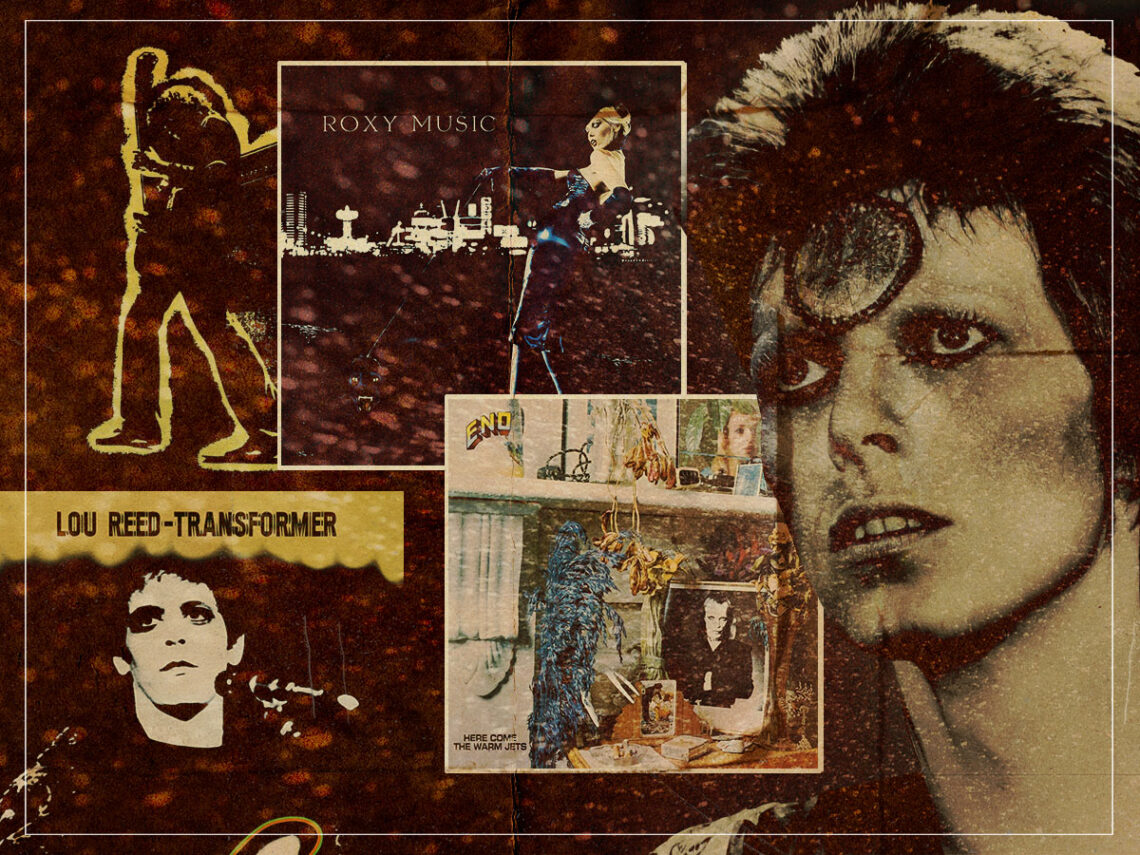
Roxy Music – For Your Pleasure
Roxy Music recorded eight studio albums over ten years of dramatic change. The kooky art rock sound debuted in the eponymous album of 1972 had lost its angular edges by 1982, when the streamlined productional masterpiece Avalon hit the shelves. Most fans seem to prefer either the earlier glam rock era or the band’s later synth-pop-adjacent period, but few can argue against the seminal artistry of the former.
While each early Roxy Music album brought something new and exciting to the table, For Your Pleasure was the closest to perfection. Across its 42 minutes, there’s not a dry moment, thanks to some absorbing songwriting from Bryan Ferry and some progressive synth-based compositions courtesy of Brian Eno, who departed the band after this album. The record is well balanced, with energetic hits like ‘Editions of You’ and ‘Do the Strand’ and milder, voluptuous gems like ‘Beauty Queen’ and ‘In Every Dream Home a Heartache’.
Lou Reed – Transformer
After changing the course of rock music with The Velvet Underground & Nico in 1967, Lou Reed stuck around to helm the band through a further three studio albums. The latter Velvets material brought plenty of engaging music to the catalogue, both radio-friendly and otherwise, but Reed didn’t quite find the critical or commercial praise he was after. As he set out on a solo career, a self-titled debut failed to turn the tides. Fortunately, help was on its way from the UK’s number one Velvet Underground fan, David Bowie.
Though the Velvet Underground’s debut album failed to sell particularly well in the US, let alone overseas, Bowie was among the few London beatniks who got their hands on the record. After acquainting Reed, he and his Spiders From Mars guitarist Mick Ronson agreed to help the New York star record his second solo album. The result was one of the glam era’s most essential releases, Transformer. ‘Walk on the Wild Side’ is undoubtedly one of the most iconic glam anthems, both sonically and thematically, and ‘Perfect Day’ might just be Reed’s finest ballad.
Brian Eno – Here Come the Warm Jets
With this list, I may have left a few diehard Queen, Kiss or Slade fans in the grumps. However, for my last selection, I couldn’t overlook one of my avant-pop favourites from the great Brian Eno. After leaving Roxy Music in 1973, Eno joined King Crimson’s Robert Fripp to record (No Pussyfooting). After that experimental success, he opened his solo oeuvre with the brilliant 1974 album Here Come the Warm Jets. As a continuation of his Roxy Music work without Ferry’s vocals, the album draws from influences in the contemporary krautrock wave with progressive instrumentation and production methods.
Although Eno handled most of the songwriting and arrangement, the endeavour benefited hugely from collaborations with Fripp, Paul Rudolph, Busta Jones, and his former Roxy Music bandmates Phil Manzanera, Andy Mackay and Paul Thompson. This vibrant, eccentric album is a blast from start to finish with a pleasing spread of compositional ideas, tempos and themes. Eno continued in a similar glam-inspired avant-pop vein over his next couple of albums but ultimately ventured into ambient music and offered his premium production services to the likes of David Bowie, Talking Heads and U2.
