


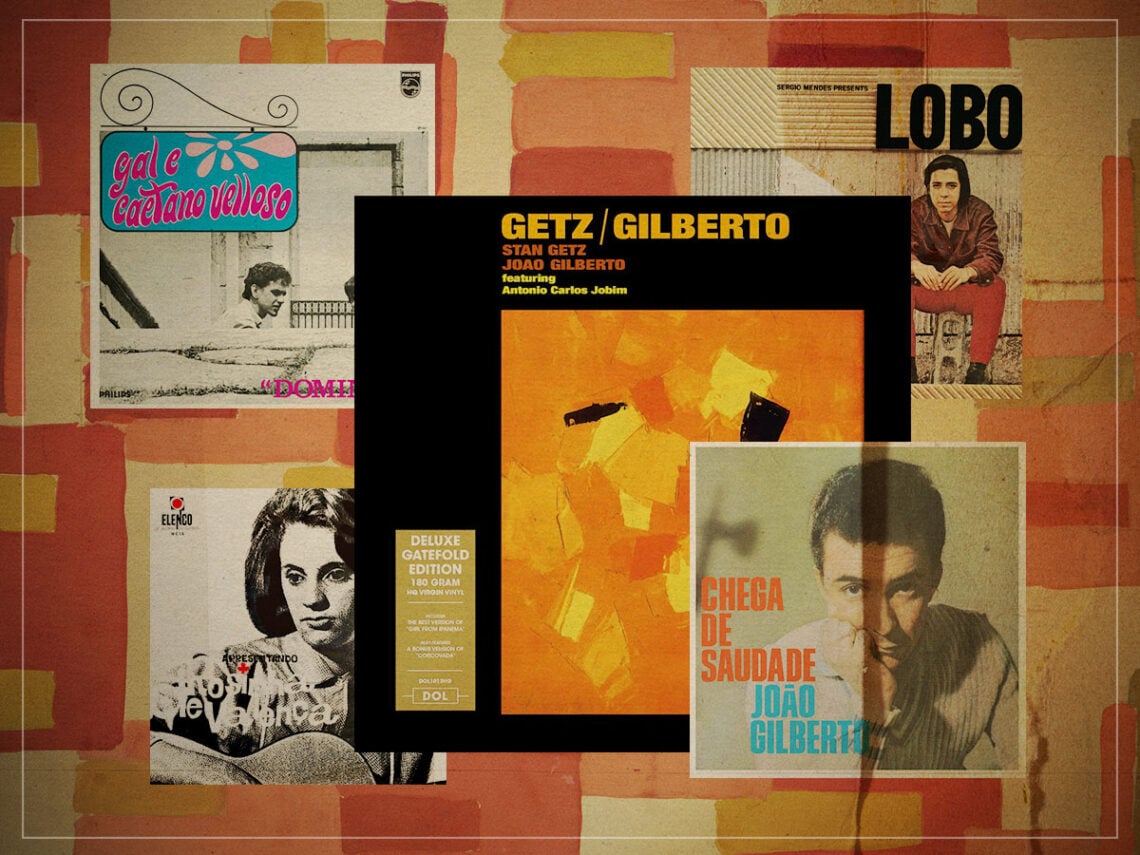
Five Easy Masterpieces: An introduction to bossa nova

So often the greatest musical movements are born not from defiance and freedom in the face of oppression, and bossa nova is among the greatest examples of this fact. Arising from the vibrant streets of Rio De Janeiro during the late 1950s, the sun-soaked sounds of bossa nova helped to soundtrack the political turbulence of 1960s Brazil, which eventually saw the establishment of a military dictatorship. For artists in Brazil, resistance came in the form of bossa nova’s defiant melodies.
Endlessly indebted to the sounds of samba, jazz, and funk, bossa nova also draws from the traditional styles of Brazilian folk music, with origins going back centuries. Yet, in spite of its inherently Brazilian style and origin, the bossa nova sound quickly spread throughout the world. Artists like Sergio Mendes travelled north to the United States to spread the gospel of bossa nova, quickly finding a dedicated audience for its unique groove and diverse atmosphere. Soon, everywhere from Rio to Rome was captivated by this distinctly Brazilian style of music.
Artists like João Gilberto are to thank for the emergence of bossa nova during the late 1950s, developing and adapting the samba style into something bold and modern. However, the following decades saw a wide range of different artists make their own mark on the genre. Easy-listening dinner party records, vulnerable folk-influenced albums, and politically charged protest songs are all equally at home under the umbrella term of bossa nova.
Bossa nova continues to captivate audiences to this day, spurred on by the continued brilliance of Brazil’s grassroots music scene in the 21st century, but with such a broad spectrum of releases in the bossa nova sphere, it can be difficult to know where to begin. Fear not, as your old pals at Far Out Magazine have lovingly selected five masterpiece albums from the heyday of bossa nova to act as an introduction to one of the 20th century’s most vibrant and infectious music scenes.
Five essential bossa nova albums:
João Gilberto – Chega de Saudade (1959)

Where better to start on this journey into the heart of bossa nova than the record which started it all? For much of the 1950s, João Gilberto was making a name for himself as one of the leading guitarists and composers of the Brazilian samba and Latin jazz scene. His talents soon eclipsed the boundaries of samba, and he was keen to push his work forward in new directions. Eventually, this knack for inventiveness led the composer to create this album, Chega de Saudade.
Rightly hailed as the first-ever bossa nova album, the 1959 release set out the manifesto of the movement, in addition to establishing the incredible sounds of Gilberto. His dedication to the relaxed melodies and commanding rhythm set that standard for the future of bossa nova, although very few artists came close to rivalling the trailblazing sounds contained within this seminal release.
Gal Costa and Caetano Veloso – Domingo (1967)

Any discussion surrounding the history of Brazilian music that does not include mention of Gal Costa or Caetano Veloso is not to be trusted. This 1967 album, marking the debut release of Veloso and one of Costa’s earliest efforts, sees the pair join together their respectively beautiful performance styles into something which sounds like no other. The album itself was released towards the tail end of bossa nova’s relevancy in Brazilian popular music, bridging the gap between the bossa years and the emergence of MPB.
Música popular brasileira (MPB) used the basis of samba and bossa nova to incorporate a vast range of different styles from around the globe into Brazilian music. As such, Domingo is among the most diverse inclusions on this list, moving from bossa influences to mellow jazz and vulnerable vocal performances, which make the record a gentle but compelling listen.
Rosinha de Valença – Apresentando (1963)

Composer and acoustic guitar master Rosinha de Valença is a woefully underrated figure within Brazilian music and bossa nova. Having to fight fearlessly in order to have her voice heard as a female artist in a society and musical landscape dominated by men, Rosinha’s work was rarely treated with the same reverence or respect as her male contemporaries, but the quality of her discography largely speaks for itself.
Released in the same year that the performer relocated to Rio De Janeiro, her debut album captures the beauty of grassroots, acoustic bossa nova during the golden age of the genre. Her repertoire soon progressed to include styles of R&B, jazz, and, later, MPB, but this 1963 debut is chock full of all the vibrancy and inventiveness that made bossa nova such a global phenomenon. What’s more, it was this album which gained Rosinha the attention of bossa nova icon Sérgio Mendes, who quickly recruited her for his group Brasil ‘65.
Edu Lobo – Sérgio Mendes Presents Lobo (1971)

Speaking of Mendes, the Niterói native was a key figure in popularising bossa nova across the globe, thanks to his funk-ridden take on the bossa sound. The success of ‘Mas que nada’ typified the golden age of bossa nova, but his support of the style certainly didn’t stop there. In 1971, Mendes produced and compiled an album by legendary guitarist and composer Edu Lobo, perfectly capturing the ethereal quality of Lobo’s acoustic bossa nova sound.
Including tracks from his equally masterful 1970 album, Cantiga de longe, this record was key in exposing the genius of Edu Lobo to widespread audiences across the globe. After all, the guitarist was among the most prolific, inventive, and important components of the bossa nova scene, remaining dedicated to the distinctive sound throughout much of his discography. You could easily select any Lobo record for inclusion on this list, but as far as introductions go, you cannot get much better than this storming 1971 classic.
Stan Getz & João Gilberto – Getz/Gilberto (1964)

Bossa nova might have started with Gilberto’s Chega de Saudade in 1959, but the Brazilian guitarist certainly did not stop there. Throughout the 1960s, he continued to drive the style forward, incorporating elements of American jazz into his sound and experimenting with the boundaries of bossa nova. Arguably, his finest moment as an artist came in 1964 when he participated in a collaboration with the American jazz saxophonist Stan Getz. The resulting album, Getz/Gilberto, is not only one of the greatest bossa nova records ever released, but it might just be one of the finest jazz albums of the 1960s.
This is the album that is often credited with first establishing bossa nova in the United States, thanks to being recorded in New York City during a particularly exciting period for the Big Apple’s jazz scene. The album exemplifies the adaptability and universal appeal of bossa nova as a genre, with Gilberto’s distinctive sound blending seamlessly with the masterful playing of Getz. Collaborations are a tricky thing to pull off in music, but this legendary 1964 album should go down in history among the most triumphant collaborations ever recorded.
