


Five classic books to inspire wanderlust

Reading can take us anywhere, and when I first decided I wanted to travel, and not just the lad’s holiday at 18, it was in part down to the books I’ve read, showing me that there was more to see beyond the British Isles.
People have been writing about their travels for as long as the pen was a quill. From historical figures like Marco Polo, exposing the expanse of the world to an audience who’d never see it, to Elizabeth Gilbert writing your mum’s favourite book, Eat, Pray, Love, good literature is inspirational, and travel literature makes you want to see borders beyond your own.
If you’re sitting while reading this on the morning commute, then I’m going to give you some suggestions for books that’ll transport you to another place as you sit solemnly for your stop. It’s time to find some real page turners that’ll open your mind, and potentially open your web browser to Sky Scanner.
Here are five classics that will inspire your wanderlust and get you booking that flight you’ve been doubting.
Five classic books to tap into your wanderlust:
‘On the Road’ by Jack Kerouac (1957)
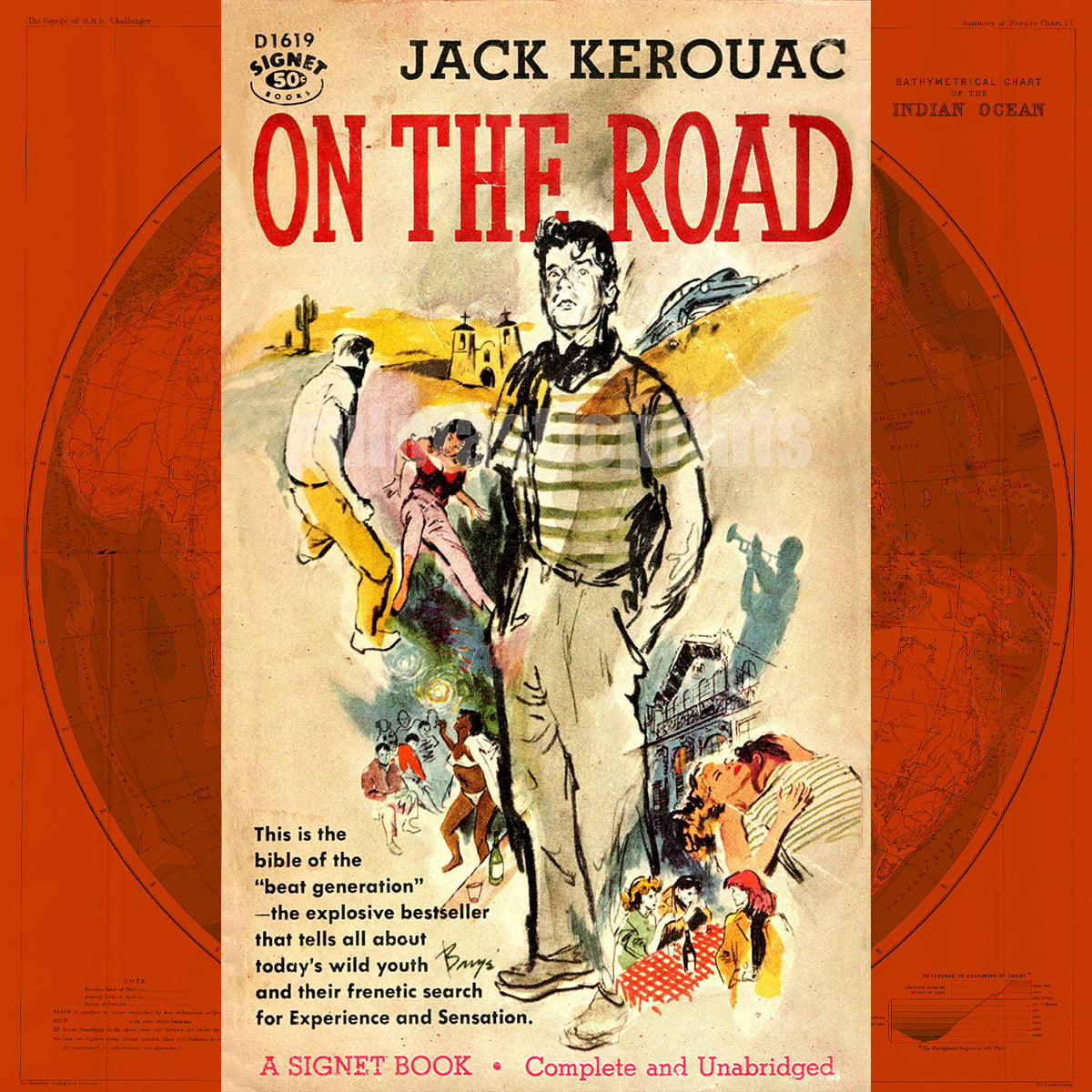
Without wanting to sound too Far Out, we were always going to see On the Road on this list. Jack Kerouac’s seminal novel is the go-to book when it comes to experiencing the spontaneity and thrill of road tripping.
This semi-autobiographical narrative blurs the lines between reality and fiction, as Kerouac, through the character Sal Paradise, as well as Dean Moriarty, based on friend and fellow Beat poet Neal Cassady, travel across America and Mexico. It’s a journey full of spontaneous moments, a distinct lack of forward planning and finding meaning in dive bars, drugs and sex.
This iconic book has had a huge cultural impact and is considered one of the essential works of the Beats, with its stream of consciousness style being hugely innovative at the time it was written. Its wider impact has been to romanticise the idea of hitting the open road and using travel as a vehicle for self-discovery, considering it beyond tourist destinations for the journey itself, the characters that you meet along the way and what you learn about yourself in the process. While our own travels might not be quite as bohemian as those of Kerouac, On the Road inspires us to be impulsive and experience everything that life has to offer.
‘Into the Wild’ by Jon Krakauer (1996)
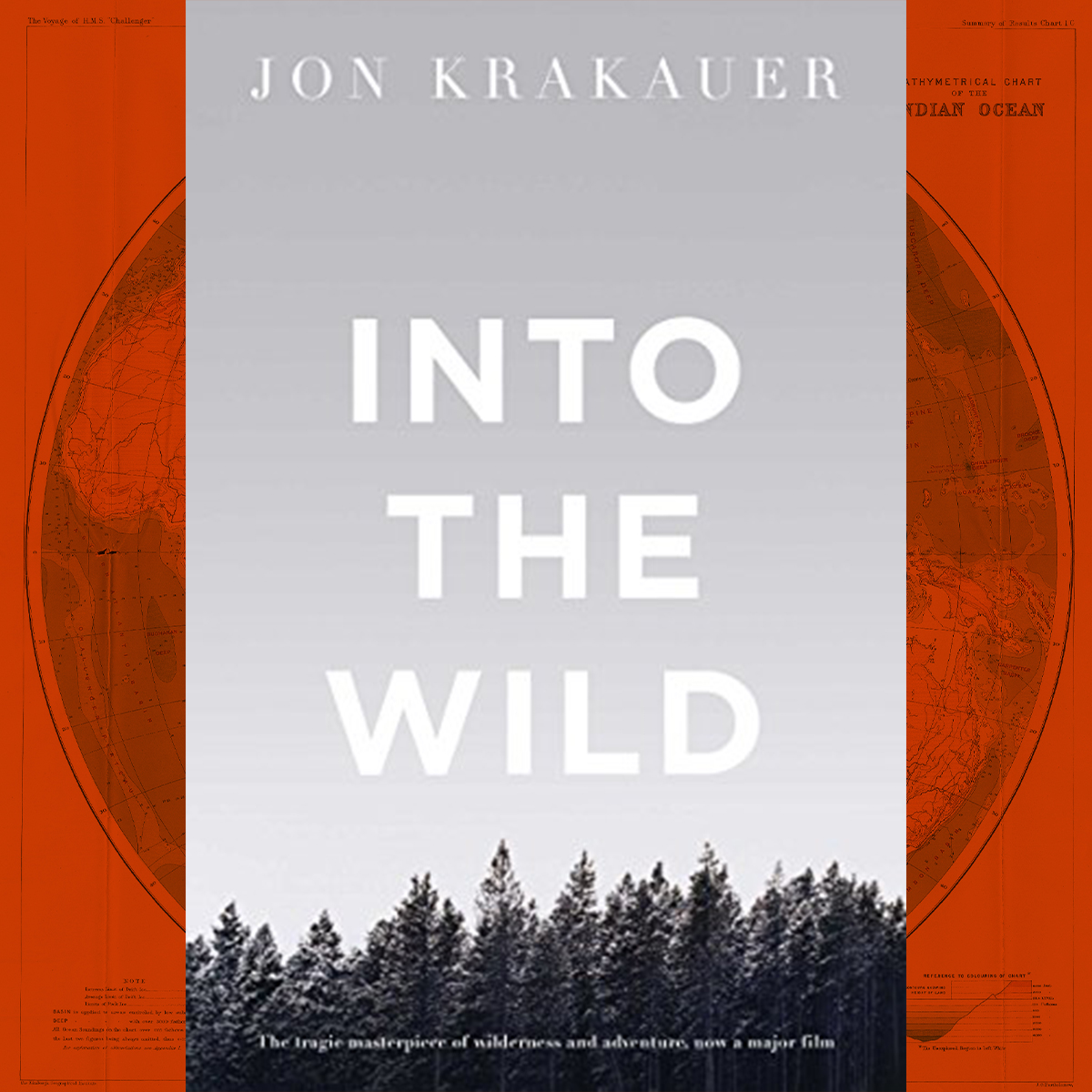
When it comes to solo travel and truly immersing yourself in nature, there is no book that does more to inspire than Into the Wild, despite what’s ultimately a sad ending. Jon Krakauer breaks down the true story of Christopher McCandless, the self-nicknamed ‘Alexander Supertramp’, and his journey to find independence through travel.
McCandless gave up all his material possessions to charity and went deep into the Alaskan wilderness, and it is this process that Krakauer reconstructs using interviews with those the former met, as well as his diary entries and letters. Despite this taking place in the early 1990s, existing now in a world in which we’re constantly online, inundated by marketing brands, and our relationships feeling increasingly surface-level, the idea of escaping to nature is an attractive incentive, a reminder to ‘touch grass’ if you will, which is what bolsters the book’s relatability.
Reading Into the Wild not only probes our desires to escape the rat race, encouraging truly immersive travel and the idea of exploring in solitude beyond conformity, but it also investigates whether McCandless was reckless in his pursuit, offering a balanced take surrounding the possibility of making this sort of a journey a reality.
‘Down and Out in Paris and London’ by George Orwell (1933)
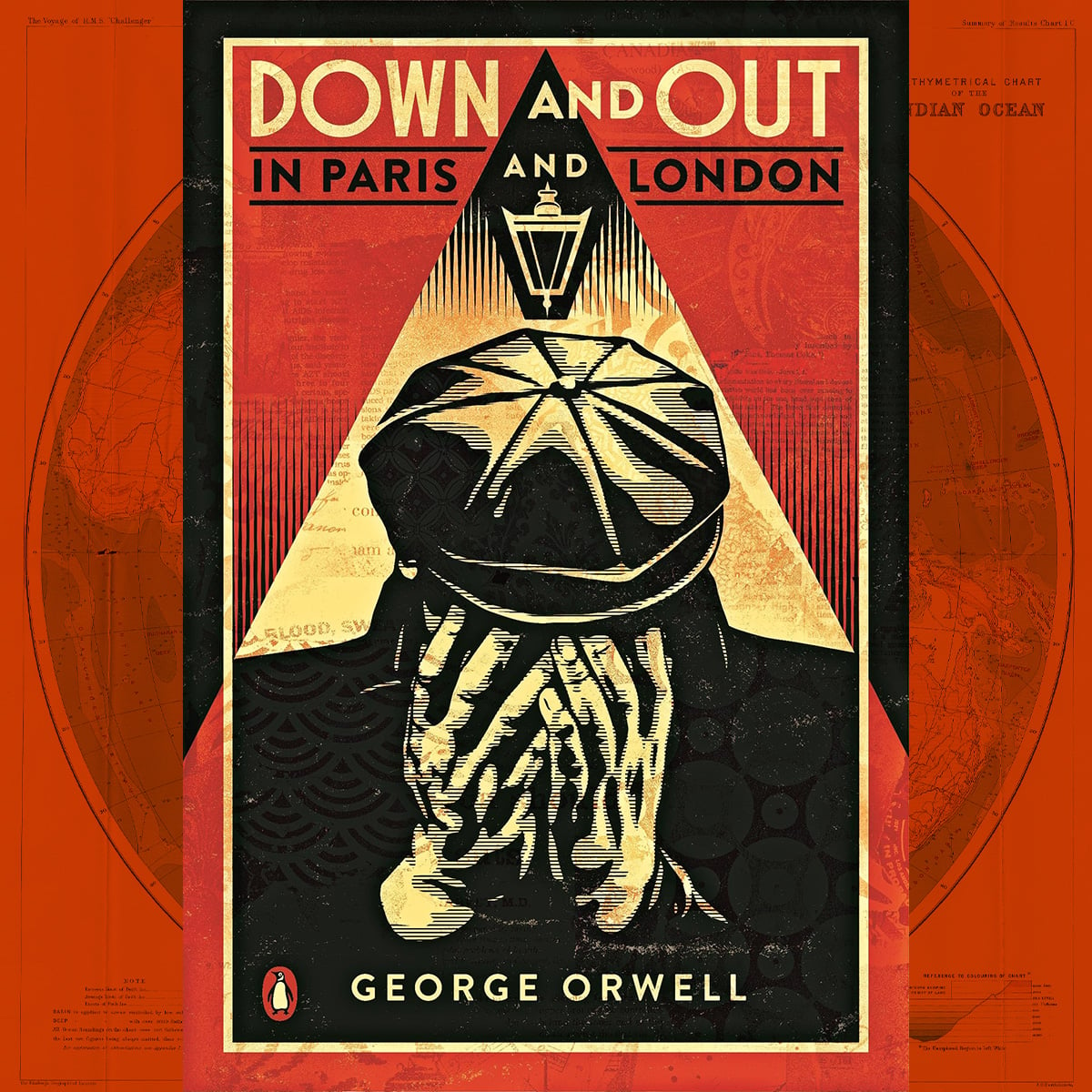
George Orwell’s impact as a writer is seismic, with 1984 and Animal Farm often described as two of the most essential books of the 20th century. However, while those books are beloved for being terrifyingly prescient, he has other books in his canon that are perhaps overlooked in their shadow.
It’s a reduction to call Orwell a travel writer, but it can’t be denied that his works often involve detailing life abroad and exploring unfamiliar environments, for which both Burmese Days and Homage to Catalonia deserve a mention here; however, it’s Down and Out in Paris and London that really stands out in the ilk of his catalogue.
It’s a memoir that details Orwell’s life in the two cities, first as a pot washer in Paris and then living homeless in London. While that does sound like the usual wanderlust material, it exposes the gritty underbelly of these two metropolises that are among the most romanticised on the planet, offering an alternate look at them. It inspires those travelling through the world’s major cities to look beyond the viral hotspots and strive to really see the cities through as many natives and non-natives’ eyes as possible.
‘Eastern Horizons’ by Levison Wood (2017)
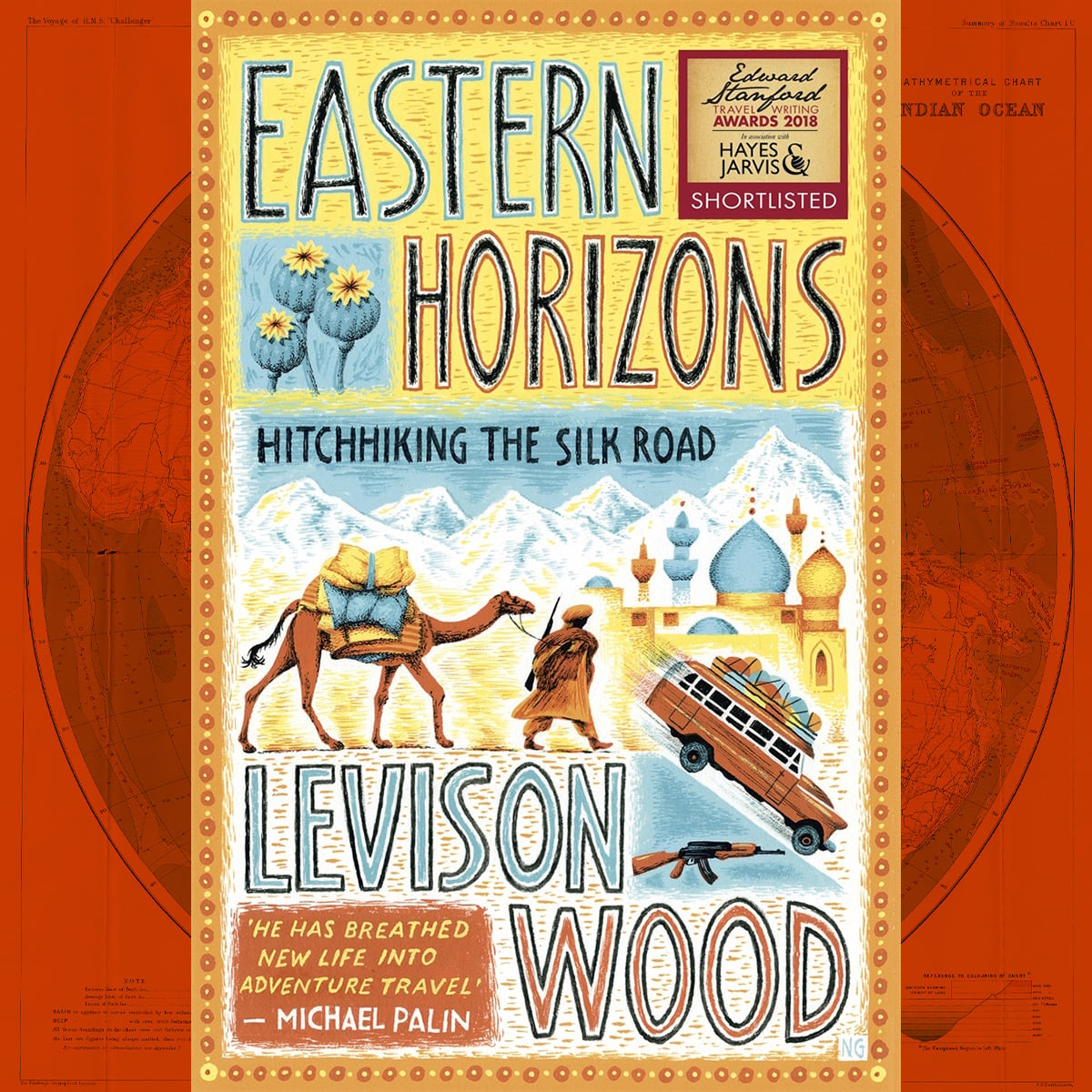
The word explorer is rarely used these days, especially for somebody born in 1982, but former British Army officer Levison Wood is the latest in a long lineage of British explorers, most famous for being the first person to walk the entire length of the River Nile. It’s something he detailed in Walking The Nile, but it’s Eastern Horizons that is his pinnacle of explorative writing.
Eastern Horizons explores Wood’s decision at 22 to travel from Europe along the Silk Road, and it’s an inspirational book for two main reasons: First, Wood having a budget of £750, including the return flight to England, really motivates you to travel regardless of what you have in your bank account. Second, Wood’s explorations through the Caucasus and Central Asia are fascinating because these areas are comparatively untouched by tourism, motivating you to seek out the roads less taken.
Like many other travel classics, this is a book that revels in the joys of human contact and what can happen when you meet people from areas and cultures you’re not familiar with, whether that’s a family offering you food or Mujahideen fighters. The Silk Road has had a profound impact on human history, and Eastern Horizons explores that context, while also detailing youthful rebellion and the joys of travelling in the present.
‘Holidays in Hell’ by PJ O’Rourke (1988)
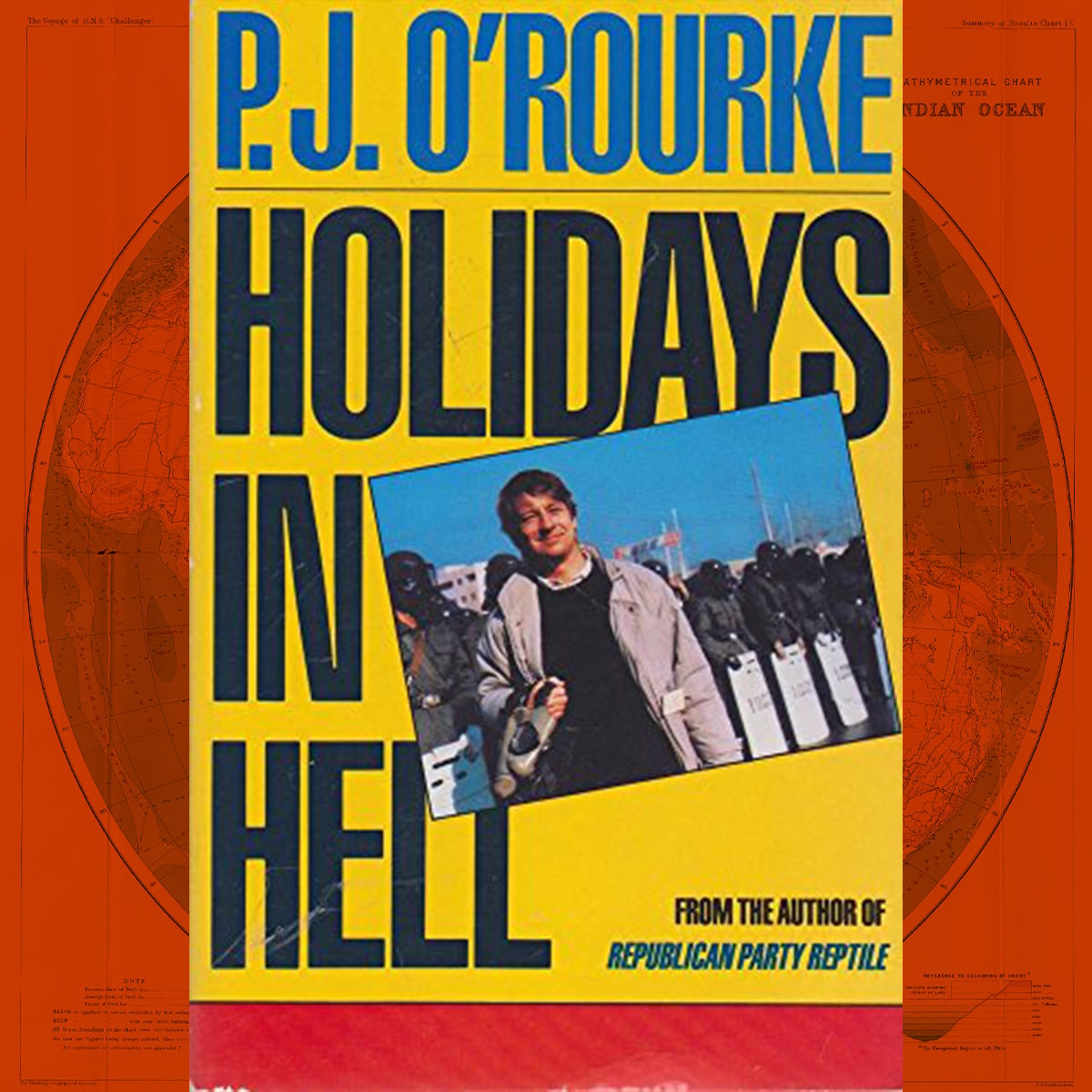
PJ O’Rourke’s Holidays in Hell is his travelogue masterpiece, detailing his trips to some of the world’s most troubled areas during the 1980s. This book is very much a product of when it was written, both in terms of the places visited, such as Apartheid-era South Africa and war-torn Lebanon, but also in terms of the language, with O’Rourke occasionally appearing insensitive and speaking in broad generalisations.
When it comes down to it, this is a funny and satirical look at O’Rourke’s travels, which saw him visit some off-the-beaten-track locations at unique periods of history. With chapters such as ‘Panama Banal’ and ‘Christmas in El Salvador’, you know you’re not getting the stereotypical travel book offering historical anecdotes.
In many ways, this book is a forerunner to the likes of today’s travel vlogging stars like Bald and Bankrupt, offering a sideways but informative look at areas which aren’t well-trodden due to the conflicts that form their landscape. This is dark tourism before the phrase was coined and will inspire readers to see the world beyond what they see on Instagram to investigate what makes a destination beyond marketability.
