


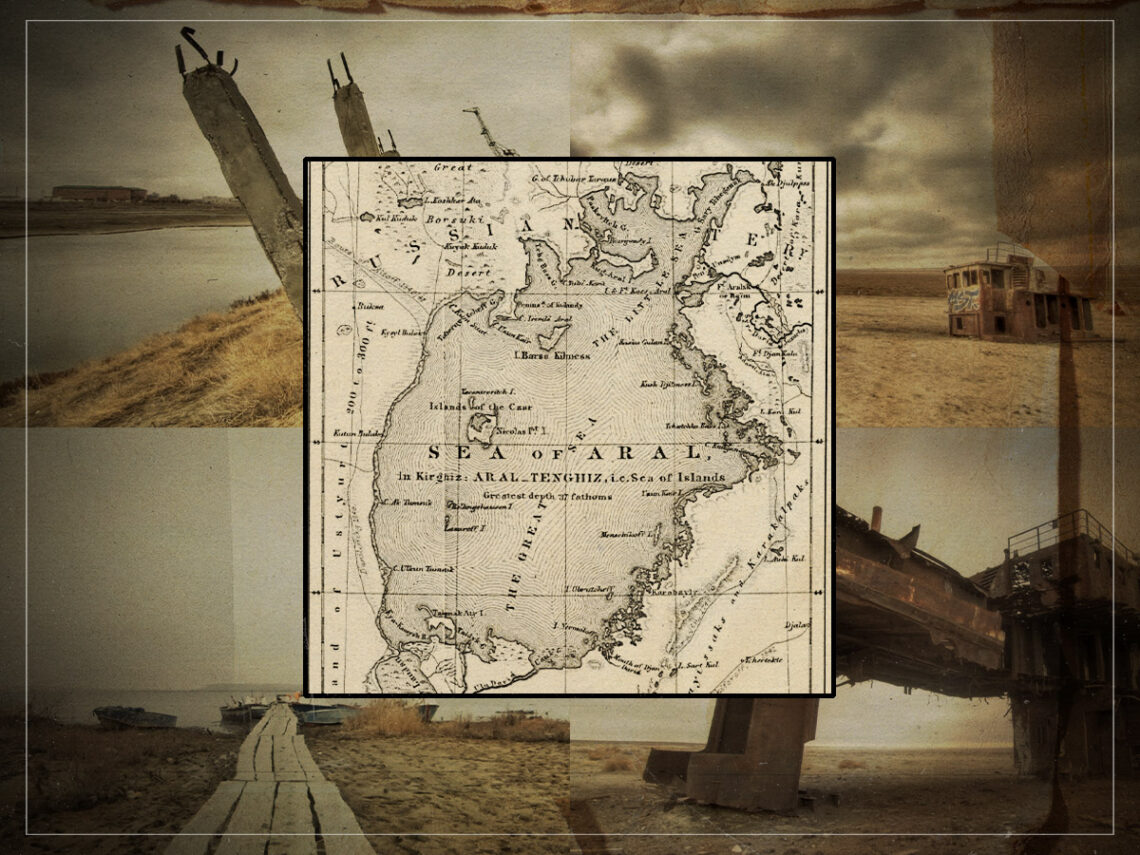
The death of the Aral Sea: The awful ironies of the latest dark tourism expedition

Dark tourism isn’t a new idea, but there’s something cruelly ironic about one of the latest dark tourism hotspots. The Aral Sea, or what is left of it, was the first major climate change disaster in living memory, and to make things worse, tourism to the region risks exacerbating things.
The Aral Sea sits in Central Asia, between Kazakhstan and Uzbekistan and was at one point the third-largest lake on the planet. Now, it sits as a barren wasteland, one-tenth the size that it was 60 years ago and a stark reminder that human interference can have a devastating impact on the natural world.
The large expanses of Kazakhstan, far from Moscow and sparsely populated, made it the perfect location for some of the USSR’s boldest and most misguided experiments of the 20th century. The Soviet Union used Semipalatinsk-21 to test nuclear weapons, with sadly predictable results. Kazakhstan was also home to the Baikonur Cosmodrome, which, as well as sending Yuri Gagarin aboard Vostok 1 to be the first man to orbit Earth, was also guilty of causing some severe environmental damage.
Last but not least, there’s the Aral Sea, which was decimated and shrunk by 90% due to badly planned Soviet irrigation projects. The aim to feed to USSR on the dry and inhospitable Kazakh Steppe meant that two rivers to the Aral Sea, the Syr Darya and Amu Darya, would be diverted to help grow crops. Firstly, it was used for wheat before switching to cotton production, which is a known guzzler. Between 1961 and 1970, the sea level fell by 20cm per year, rising to 50cm in the decade following, and by the 1980s, the level was falling by a staggering 90cm per year.
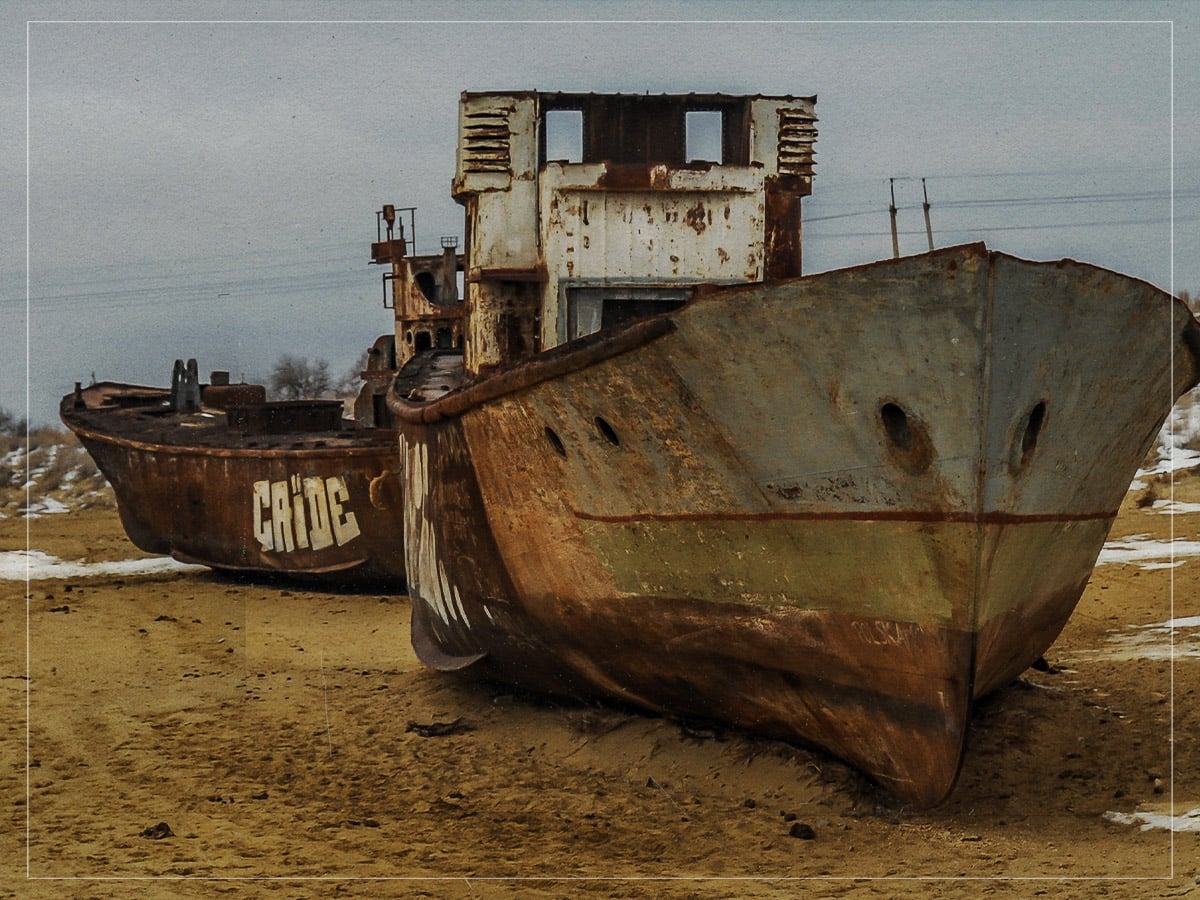
The fishing industry was decimated due to the reduction in sea levels, and then again when the salinity of the water meant that barely any life could survive in it. Not only that, the locals have had to endure health issues from pesticides and toxic chemicals that had originally run back into the Aral Sea and were now resurfacing from the dried-up former seabeds, and generations continue to suffer from the after-effects in a myriad of ways.
In Turkic languages, the name Aral Sea loosely translates to ‘Sea of Islands’, a nod to the over 1000 islands that were once there. Sadly, one of those islands, Vozrozhdeniya, hid Aralsk-7, a Soviet bio-weapons lab, which tested some of the world’s most dangerous chemicals and strains, such as smallpox and anthrax, which was first deserted and then became part of the resultant desert.
The city of Aralsk, as well as other towns around the Aral Sea, have since become hotbeds for dark tourism. They may be remote and hard to reach, but there’s a real appeal for extreme tourists. It’s a quirk of human nature that we long to see the aftermath of our stupidity or our cruelty. It’s understandable in many ways to want to see the remains of the dried-up harbour, or to see rusting fishing vessels marooned in a desert; there’s an odd beauty in seeing the juxtaposition of the past and present so clearly, akin to finding a swanky shopping mall in a preserved 200-year-old architectural marvel.
While Aralsk’s glorious heyday is remembered in the form of a Soviet-era mosaic in the train station, the reality is very different, with the economy struggling in what is one of the poorest regions in Kazakhstan.
There’s good news for the region as a whole, with the Aral Sea slowly but surely getting larger again. It’s still a long way from reaching the levels that it was at half a century ago, but there are hopes that one day the fishing industry could thrive again. In the meantime, the town attracts visitors hungry to see the impact of those poorly-planned policies, but could increased tourism negatively impact the regeneration of the area? While there is a debate to be had about the pros and cons, keeping in mind the physical and environmental impacts of visitor numbers increasing, or perhaps a desire to keep things as they are, the growing tourism trade is surely bringing in money to the local area, which has been a boon and can hardly be discounted in the conversation.
