


The five best movies from the 1970s that nobody remembers

The 1970s were a great decade for cinema, especially in Hollywood.
The blockbuster emerged in the form of Jaws, closely followed by the sensation that was Star Wars, which paved the way for modern cinema as we know it. The Godfather was released among many other New Hollywood classics that we all remember, from Taxi Driver to Dog Day Afternoon, asserting American cinema’s dominance once again.
Horror was rapidly progressing with the likes of The Texas Chainsaw Massacre and Halloween, while many great films came from all corners of the globe, like France’s The Mother and the Whore and Italy’s Amarcord. But what about the films that didn’t get as much praise during the decade? With so many incredible movies emerging during these exciting years, it’s no surprise that many inevitably went under the radar, especially those from countries with much smaller film industries.
Over in Britain, some great low-key dramas and thrillers were released, like Barney Platt-Mills’ Private Road, which offered a realistic and bleak depiction of romance, while Czech New Wave pioneer Věra Chytilová delivered an avant-garde retelling of the Adam and Eve story in the form of Fruit of Paradise.
So, if you’re in the mood to watch a slightly more obscure pick from the 1970s that’s not by the likes of Coppola, Scorsese, or Spielberg, here are five movies from the decade that are criminally overlooked.
Five incredible movies from the 1970s:
‘Peppermint Soda’ (Diane Kurys, 1977)

These days, female coming-of-age movies are much more common than they used to be, with tales of young girls trying to find their way few and far between back in the 1970s. Yet, Peppermint Soda, a French comedy drama about two teenage sisters directed by Diane Kurys, delivered an insightful look into female adolescence in 1977. The film might not have hit the mainstream, but it is a charming look at growing up during ‘60s France, with themes like first periods and becoming curious about sex intersecting with the increasing presence of war.
It’s a beautifully shot film, one that bears a certain dreamy influence on the subsequent work of Sofia Coppola, but it has never achieved adequate recognition outside of France. Peppermint Soda is a sweet film charged with inherently political undertones, and it’s an essential glimpse into the lives of young people trying to navigate the complex waters of adolescence where violence looms and adulthood seems both exciting and terrifying.
‘A Real Young Girl’ (Catherine Breillat, 1976)

Keeping with the French coming-of-age theme, up next is A Real Young Girl, although it’s not something you should watch unless you have a strong stomach. Before Catherine Breillat made movies like the brutal Fat Girl and the bizarre Anatomy of Hell, she directed her first feature, A Real Young Girl, in 1976. If you thought the erotic content of Breillat’s most popular work was transgressive, then brace yourself for the scenes found in her debut, which involve worms, spoons, and barbed wire.
This is by no means an easy watch, and while Breillat mastered her style later down the line – it wouldn’t be until the late 1990s and early 2000s that her work started to become popular – A Real Young Girl gives us a glimpse into the early machinations of her style, where shocking acts confront the viewer and leave us challenged, uncomfortable, and feeling as though we need to have a good wash.
‘I Start Counting’ (David Greene, 1970)

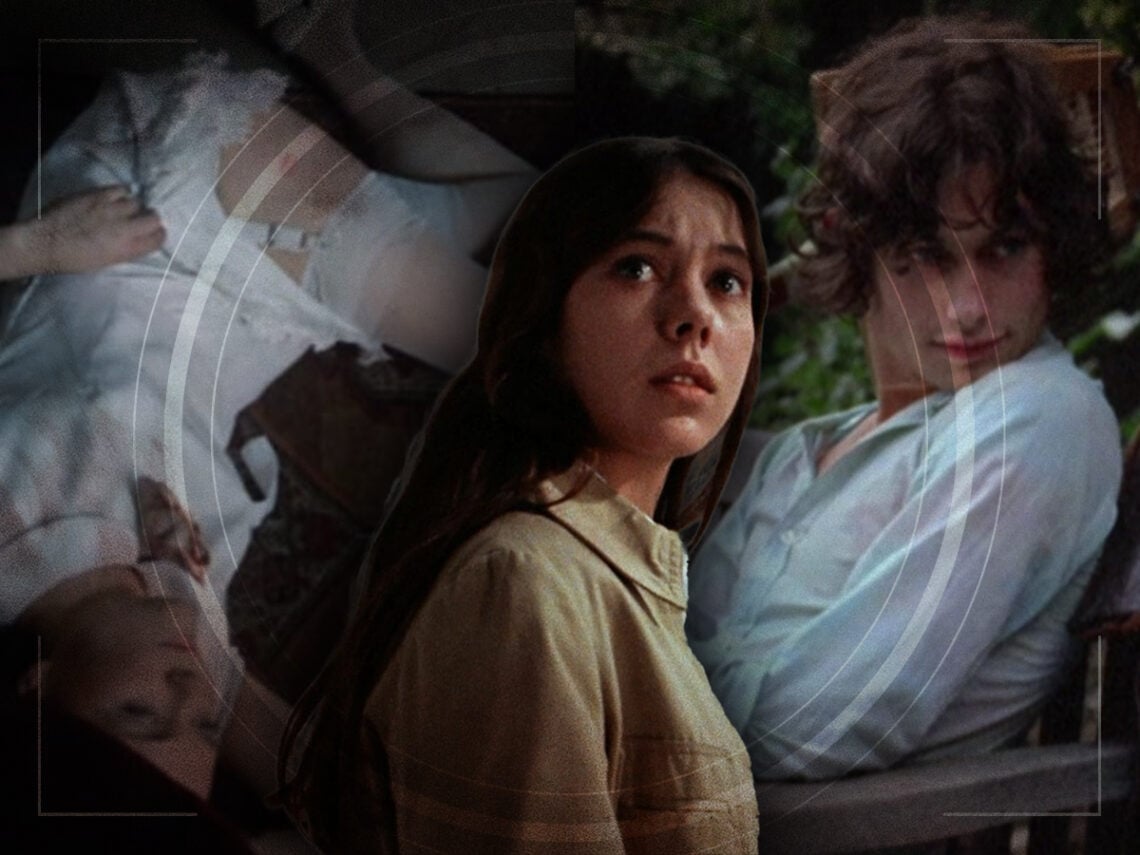
I Start Counting might have the seal of approval from the likes of Martin Scorsese and Edgar Wright, but David Greene’s thriller has since been widely forgotten by the masses, despite the fact that Jenny Agutter gives a fantastic performance as a suspicious teenager convinced that her step-brother is actually a murderer. This doesn’t stop her from fantasising about having sex with him, although her sleuthing ultimately leads to a series of dramatic events as the identity of the killer at large is revealed – and someone else ends up dead.
As Agutter’s character, Wynne, who has been adopted, comes to terms with her growing sexual feelings, the mystery of the adult world and sex soon gets mixed up with the mystery of the murderer on the loose. It’s an underrated British gem that demonstrates Agutter’s skill while giving her one of her first adult-oriented roles following her career as a child actor, where she was best known for her performance in The Railway Children.
‘Private Road’ (Barney Platts-Mills, 1971)

Following his kitchen sink drama, Bronco Bullfrog, released in 1969, Barney Platts-Mills focused his attention on the relationship between a writer and a receptionist in Private Road. However, the young couple soon comes to discover that relationships aren’t always everything they’re cracked up to be. Portrayed by Bruce Robinson, who would later go on to direct Withnail and I, and Susan Penhaligon, the couple’s tenure together is initially pleasant, but when pregnancy arises, the pair soon begin to crumble.
It’s a quiet film – there are no fast-paced sequences and major scenes of action – but Platts-Mills lets us into this fragile domestic world at the end of a decade and the start of a new one. They’re both trying to find their way, and it appears that being together is only holding them back, even if they’re initially hopeful in love.
‘Fruit of Paradise’ (Věra Chytilová, 1970)

If you know any Věra Chytilová movies, it’s likely Daisies, her seminal Czech New Wave feature that revelled in experimental editing and surrealist humour. Yet, the filmmaker, who was banned for several years due to her staunchly political approach to cinema, made Fruit of Paradise in 1970, which is a criminally overlooked gem. It’s a beautiful film where every frame really could be screenshotted and displayed on your wall, but this isn’t simply a movie that’s all style and no substance.
Rather, Chytilová uses these gorgeous images to retell the story of Adam and Eve, including forbidden love, a serial killer, and the desire not to know the truth. Avant-garde and bizarre, the film doesn’t always make perfect sense, but Chytilová requires us to sink into the images and soak up their possible interpretations, creating a visual and sensual feast.
