


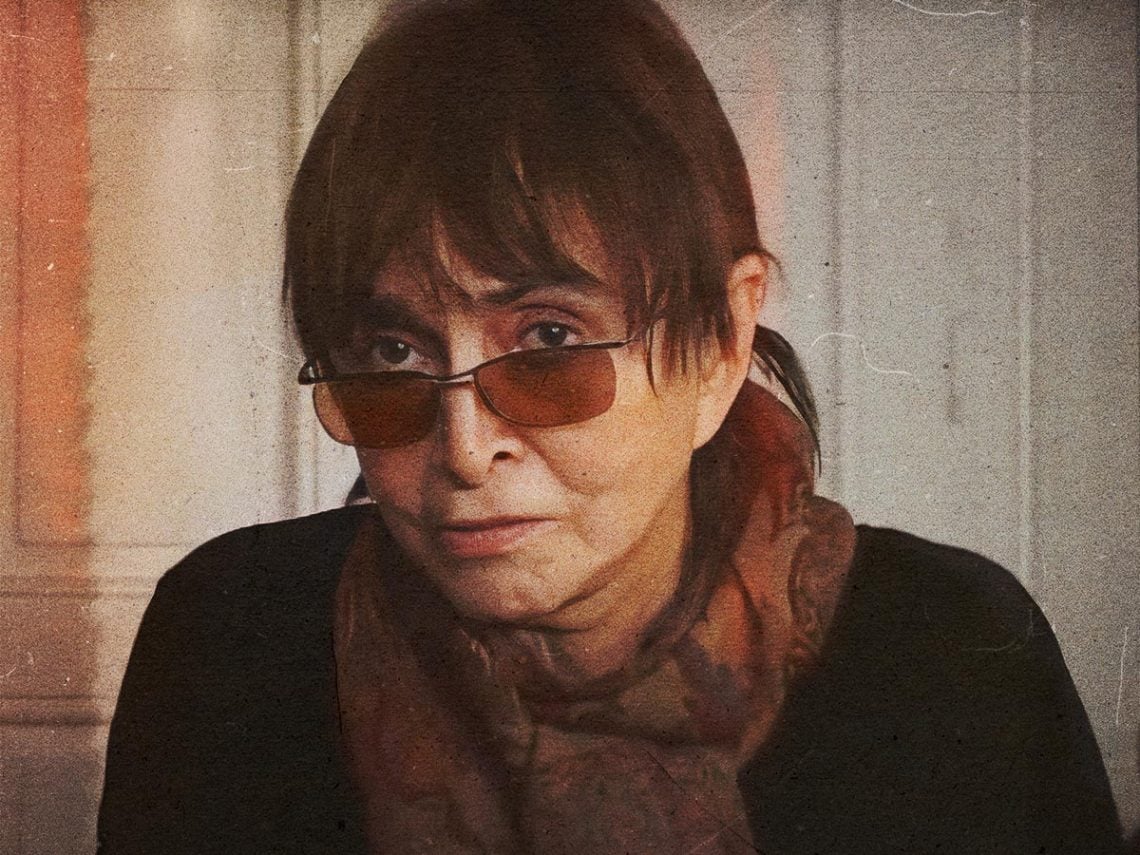
Věra Chytilová: How the banned feminist filmmaker revolutionised cinema

The 1960s were a transformative decade for cinema. Across the world, filmmakers continued to experiment radically with form and content like never before. Significant movements, such as the French New Wave and the New Hollywood era, blossomed, subsequently changing the cinematic landscape. The decade marked a shift towards more sexually and politically charged films in a radical way. Věra Chytilová’s work was no exception.
Born in Czechoslovakia in 1929, Chytilová attended the Film and TV School of the Academy of Performing Arts in Prague, aged 28, becoming the first woman to study directing at the institution. After graduating, Chytilová released her first feature film, Something Different, in 1963. However, she is best known for her seminal 1966 surrealist masterpiece, Daisies. The film stood out amongst the works of Chytilová’s Czech New Wave contemporaries, who were all men.
Chytilová took a distinctively feminine approach to filmmaking. She centred her sagacious work around female characters armed with anti-patriarchal and anti-capitalist sensibilities. This subtle but vital undertone added great depth.
Whereas her fellow Czech filmmakers radically attacked the government through experimental form and surrealist metaphors, Chytilová’s feminist lens, (although this is a term she never used), marked her out as a director capable of pushing boundaries one step further. Thus, Chytilová’s work has continued to inspire for decades, admired for her fearless attacks on the hegemonic governmental structure that eventually banned her from filmmaking for eight years.
Daisies presents audiences with the ultimate vision of female disobedience. The film follows two young women named Marie as they repeatedly engage in acts of debauchery, inspired by the nihilistic notion that everything has already been ruined. As the pair begin their badly behaved spree of hedonistic destruction, Chytilová disrupts all formal cinematic conventions, creating one of the most dizzyingly kaleidoscopic visual odysseys ever put to film. According to the director, she chose such innovative and unusual techniques to “restrict [the spectator’s] feeling of involvement and lead him to an understanding of the underlying idea or philosophy.”
The underlying philosophy at work in Daisies is inherently critical of how men perceive women. Chytilová presents the two Maries as the antithesis of what is considered the ‘ideal woman’. They are reckless and gauche, conning men for free meals and disrupting the refined setting of a restaurant in the process. Chytilová’s film has no solid structural narrative. Instead, Daisies cuts between scenes of the girls engaging in uncivilized behaviour, shot in both colour and black-and-white film, and other surreal imagery, such as a train pummeling down the tracks, warped by a psychedelic filter.
Scenes are sped up, intercut with seemingly unrelated images, and at one point, one of the girls’ heads is cut away from her body. Furthermore, the girls cut up and burn phallic foods such as sausages, a direct attack on male power. Their exaggerated doll-like personas, moving with marionette fashion at the film’s beginning, represent the absurd notion of patriarchal power and the control exerted over women, who are expected to confine to unrealistic standards of femininity.
Chytilová’s blatant disregard for formal convention is a testament to her disregard for systematic convention. By creating a surrealist assemblage of images, the director highlights the nonsensical nature of government and patriarchal oppression – a theme she continued to return to over the following decades.
Following Daisies, Chytilová released Fruit of Paradise, her arthouse retelling of the Adam and Eve story. The film takes the terms ‘experimental’ and ‘avant-garde’ to new levels, using bizarre imagery and symbolism to explore the fall of man, female oppression, and the inability to return to a state of innocence. After its release in 1970, Chytilová was banned from filmmaking for several years, and the government highly censored her existing works.
Despite the suppression that attempted to destroy her career, Chytilová’s uncompromising vision was never interrupted, making her one of the most inspiring filmmakers of all time. In a male-dominated landscape, she continued to create what she believed in, crafting wildly innovative depictions of women and attacking societal norms by completely destroying the cinematic rulebook.
