


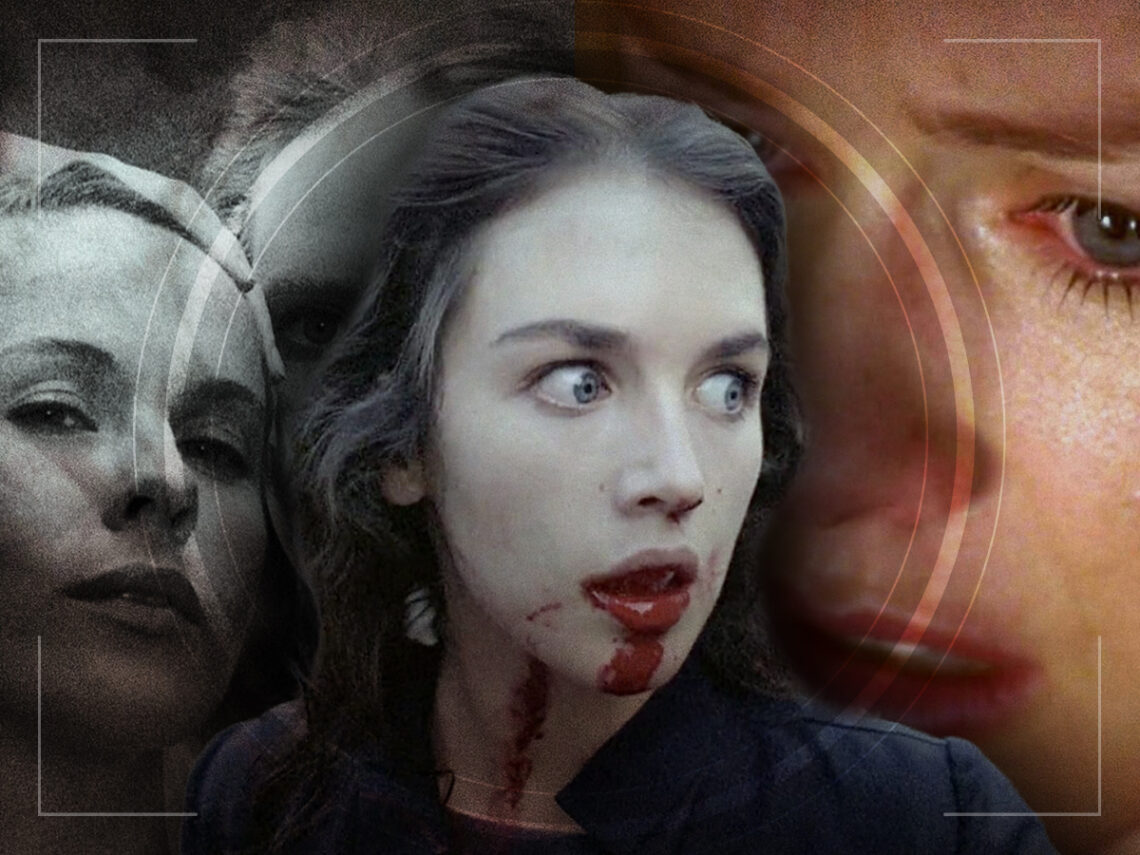
The five best movies about female doppelgängers and identity

Supposedly, we each have seven doppelgängers out there in the world, which is a theory that is as fascinating as it is terrifying. Someone who looks just like you could be out there, and you’d never know, but what if you got to meet them? What if your doppelgänger came to actively affect your own life? There are quite a few movies about doppelgängers out there, but the greatest ones are predominantly about women.
Female identity is significantly shaped and affected by outside factors, like patriarchy, sexist beauty standards and gendered expectations, but this pressure can result in consequences. In the films listed below, female identity is compromised and complicated, with devices such as doppelgängers revealing the fragility of identity.
Good versus evil or fantasy versus realism can be explored through the use of doppelgängers, showing two sides of one identity or the merging and clashing of individuals. In some instances, audiences are left wondering which character is which, with doppelgängers slyly inserting themselves into the narrative to blur the lines of fixed identity.
In other cases, explorations of female identity use doppelgängers more loosely, depicting separate characters who may or may not be figments of one’s imagination, for example. So, from Persona to The Double Life of Véronique, here are five of the best movies about female identity and doppelgängers.
The five best movies about female doppelgängers and identity:
‘Possession’ (Andrzej Żuławski, 1981)

In Andrzej Żuławski’s intense 1981 film Possession, arguably one of the most exhausting and painful explorations of divorce in cinema history, doppelgängers emerge in the form of both the male and female leads, played by Sam Neill and Isabelle Adjani, although it’s the latter who takes a more prominent role. The film follows Anna and Mark as their relationship bitterly disintegrates, although Mark comes to meet a school teacher who looks exactly like his wife, Helen, also played by Adjani.
In this instance, Helen seems to represent the version of Anna that Mark wishes he could be with. She is kind, submissive, caring, and dutiful, while Anna is prone to violent outbursts and has been unfaithful. While the meaning behind the doppelgängers in Possession is open to interpretation, the film poses interesting questions about the nature of an idealised self and the one who actually exists, and how people’s varying perceptions of us can dramatically influence their interactions with us.
‘The Double Life of Véronique’ (Krzysztof Kieślowski, 1991)

Have you ever felt like something is missing from your life, but you don’t know what it is? In the case of the titular protagonist in Krzysztof Kieślowski’s The Double Life of Véronique, the feeling that there is someone out there somehow connected to her plagues her. It turns out that on the same day in a different country, an identical woman named Weronika was born, who also grew up to be musically gifted. As Véronique becomes the object of fascination to a puppeteer, she grapples with these feelings of a fractured identity, as though she is missing out on a key connection in her life.
Perhaps the pair are two sides of the same coin, representing different sides of one individual. The presence of the puppeteer is particularly significant – he even makes two identical marionettes – with the film exploring how identity is constructed and moulded by both internal and external forces. Dreamy and philosophical, Kieślowski’s movie is a gorgeous meditation on the nature of femininity and identity.
‘Persona’ (Ingmar Bergman, 1966)

Like Vertigo, Persona is one of the definitive movies about fractured female identity, with Ingmar Bergman’s 1966 film going on to inspire many films in its wake, like 3 Women. It’s the most experimental movie on this list, however, with its avant-garde montages and confronting cinematic techniques, such as actively bringing attention to the artifice of film with the image of celluloid ripping over the frame. Bergman allows these unique choices to create a destabilising atmosphere as the relationship between a nurse and her patient unravels, leaving us to wonder whether the characters are individuals or two halves of one person.
Bergman uses clever framing devices, such as placing the two women’s faces in a way that allows them to merge together. As dialogue reveals key information about Alma’s life, we’re left to piece together the backgrounds of the two women, although Bergman continually blurs the lines between fantasy and reality. In one instance, Elisabet’s husband even treats Alma as though she is his wife, and we’re forced to question how separate identities can really be, and how trauma can significantly impact one’s mental state.
‘Mulholland Drive’ (David Lynch, 2001)

David Lynch was preoccupied with doppelgängers and female identity, first exploring the theme in Twin Peaks in the form of Maddy Ferguson, Laura Palmer’s identical cousin. With Lost Highway and Inland Empire, Lynch continued to dissect this idea, but it’s Mulholland Drive that arguably contains his most interesting case of dual identities. When we meet Naomi Watts’ Betty and Laura Harring’s Rita, we follow the pair as the latter tries to figure out who she is after she is struck with amnesia. As the plot unravels, we discover that we’re watching a guilty fantasy imagined by Betty, who is actually a woman named Diane. Rita is really Camilla, who has been targeted by a hitman employed by Diane following the messy end to their love affair.
So, as Diane struggles with her conscience, she projects an idealised and innocent version of herself, a Hollywood ingénue, into her dream, while she turns Camilla into a seductive femme fatale. As Rita tries to figure out who her real identity is, Lynch poses questions about how fixed we are as individuals, or whether we can embody different personas as and when they suit us. In this case, Diane’s attempt to transfer her pain into another version of herself completely backfires.
‘Vertigo’ (Alfred Hitchcock, 1958)

A classic doppelgänger tale is Alfred Hitchcock’s Vertigo, which was released to widespread acclaim in 1958. The film even proved to be a huge source of inspiration for David Lynch, who named Laura Palmer’s lookalike cousin Maddy Ferguson in Twin Peaks after Madeleine Elster and Scottie Ferguson in Hitchcock’s classic thriller. The movie is a dazzling tale of obsession, with Scottie becoming enthralled by Madeleine, whom he is instructed to follow by his friend. Eventually, Madeleine ‘dies’, only for Scottie to meet a woman who strikingly resembles her named Judy.
Whether Hitchcock intended the interpretation or not (he wasn’t exactly a feminist), the depiction of Judy as a copy of Madeleine, with Scottie trying to shape her into the woman he was infatuated with, only serves to reflect the objectifying eye of the male gaze. He tries to fabricate his own desires, and in doing so, the film highlights how women (and the female body) are so often seen as lacking in individuality.
