


Revisiting Robert Altman’s dreamy masterpiece ‘3 Women’

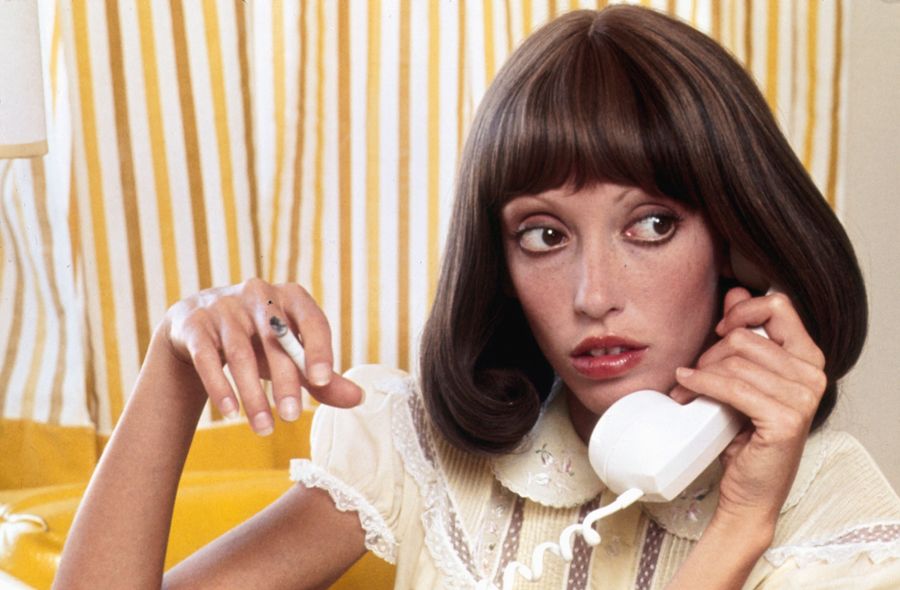
One of the most elusive and enigmatic films that emerged from the 1970s was Robert Altman‘s 3 Women. During the decade, the director released 13 features, including some of his most outstanding works, M*A*S*H, McCabe and Mrs Miller, Images, and Nashville. However, 3 Women, primarily forgotten about until its release on home media in 2004, is arguably his most captivating work.
The film stars Shelley Duvall as Millie, a relentlessly self-obsessed young woman who seems unable to move on from her adolescent fancies, flirting with any man she meets, gossiping and spouting lines that sound straight out of a teen magazine. No one notices her until she meets Pinky, played by Sissy Spacek, who grows enamoured by Millie. The pair become roommates, despite their personalities being worlds apart. Pinky is excitable and childish, and it is hard to believe she has navigated adult life independently thus far.
From the get-go, 3 Women feels like a pastel-coloured dream – one that slowly turns into a nightmare. This makes sense because Altman conceived the storyline from a dream he had about directing Spacek and Duvall in an identity-themed movie. Furthermore, Ingmar Bergman’s Persona significantly influenced the film’s focus on fractured identities and the use of an ambiguous narrative. Watching Altman’s film is, at times, a challenging experience, yet incredibly rewarding. An ominous score created by Gerald Busby sets the tone for the film, which slowly crumbles in on itself as Millie and Pinky’s identities begin to blur. The introduction of a third woman, Willie, played by Janice Rule, complicates the plot even further, as she mainly appears in the background, silently painting bizarre murals of reptilian women on abandoned swimming pools whilst waiting for her baby to be born.
Altman told a journalist that he was “trying to reach toward a picture that’s totally emotional, […] where an audience walks out, and they can’t say anything about it except what they feel.” He near enough achieves this with 3 Women, a film that leaves audiences both perplexed and captivated. It begs to be watched again, not just as a way to attempt to piece together the loose narrative but also to indulge in the rich aesthetics of the film’s Californian desert setting and hazy atmospherics created by long takes and mesmerising performances. 3 Women stays with you, even if you’re unsure of what happened on screen, because it is so tonally enthralling.
Fans and critics have posited countless theories over the years, and there is no solid answer to the film’s actual meaning. However, the feature is best read as a tale of morphing identities; after all, the tagline for 3 Women read, “1 woman became 2, 2 women became 3, 3 women became 1.” Arguably, each of the three women represents one whole person. In this sense, there is no past and no present. All versions exist simultaneously as one entity, divided into three individuals. Pinky, with her girlish nickname (she and Millie are both called Mildred), represents a naive child who is obsessed with who she wants to become as she grows up – represented by Millie. After Pinky is exposed to sex, she jumps into a pool, submerging herself as though in her mother’s womb. This attempted suicide lands Pinky in a coma, transforming Millie from being careless and selfish into a worried mother-like figure. Yet when Pinky awakes, it is as though she has been reborn.
As her personality changes, Pinky subsumes the role of a rebellious teenager, akin to Millie’s previous behaviour, and the pair argue like mother and daughter. Pinky has finally become who she wants to be – Millie – and Millie sees herself through an alternative lens, but she can’t stand the sight. The third act disorientates viewers even more when Willie is drawn closer into the picture. She gives birth to a stillborn child, which acts as a catalyst for another shift in personality. Pinky returns to her old self, but Millie seems to act as a mother figure to both characters, whilst Willie simultaneously represents the grandmother. The film ends with the three women living together – finally, their fractured identity is merged under one roof – and their futures are left up to our imagination.
Any attempt to find coherent meaning in 3 Women is reductive. Instead, the film happily resides in the ambiguous and mysterious, prompting audiences to take from it what they may. 3 Women is a soft-coloured vision of obsession, femininity and identity, swirling around together before breaking apart and merging back together again.
