


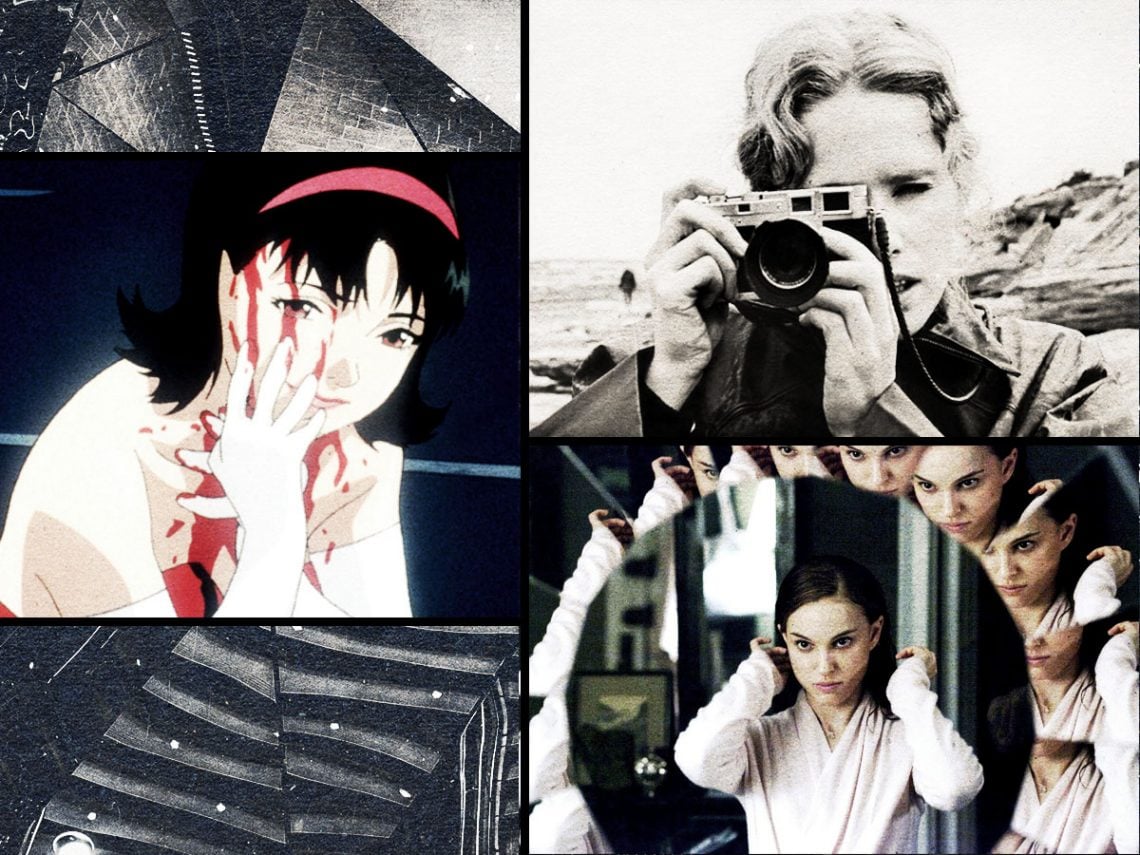
Identity Crisis: The curious connections between ‘Perfect Blue’, ‘Persona’ and ‘Black Swan’

You will be hard-pressed to find many diehard anime fans that would not include Satoshi Kon’s directorial debut Perfect Blue in at least their top ten favourite anime films of all time, so far-reaching was its impact, direction and illustration.
Perfect Blue is a psychological thriller at heart and explores the consequences of fame on mental health. In fact, we recently included the film on a list of the best examinations of mental health in cinema, as it closely examines the decline in the stability of its protagonist.
The film follows Mima, a recently retired Japanese pop superstar who has recently begun to pursue a career in acting. However, given Mima’s wild popularity in Japan, she soon becomes the victim of a stalker. Then, as several murders begin to take place around her, Mima’s control of reality is severed, and the distinction between it and fantasy is blurred.
It could be argued – though rarely has the connection been made, it seems – that Kon took great inspiration from Ingmar Bergmann’s 1966 film Persona, which also examined the fraying mental state of a famous celebrity. Persona’s story revolves around a famous actress, Elisabet, and her nurse, Alma.
As with Mima’s reality becoming wrapped up in another person completely – notably her manager and ex-pop idol, Rumi, and the several film characters she portrays – Alma begins to lose control of her own personality and has trouble distinguishing herself from Elisabet.
There are several shots in Perfect Blue that appear to have taken inspiration from Persona, particularly towards to end of the film, where Mima visits Rumi in the hospital, where she herself is suffering from dissociative identity disorder.
Whilst its connection with Persona may be evident on some basis, one film that Perfect Blue shares a more direct relationship with is Darren Aronofsky’s, Black Swan. In fact, Aronofsky had purchased the American rights to Kon’s film before he made Requiem for a Dream in the year 2000. This meant that by the time Black Swan came around, he could be as referential to Perfect Blue as he wished.
For starters, Black Swan’s main character is called Nina, admittedly close to Mima, no? Both Mima and Nina portray characters who are in an identity crisis; Nina is both the Black Swan and the White Swan, and Mima plays a woman with dissociative personality disorder in the film Double Bind – as well as suffering from it herself. And these roles both confound Nina’s and Mima’s lives; they soon become the very work of art that they are portraying.
And if these connections still remain slightly under the radar, perhaps Aronofsky’s own comments ought to clear it up. He once said of making Black Swan, “I want to do what Perfect Blue did but do it in my own way and make it my own.” Although Kon himself once criticised Aronofsky for copying his film in Requiem for a Dream.
Check out the trailer for the films below to see the clear connections between all three.
