


Five bands who hated their support acts: “Overrated midget”

From The Beatles to Bob Marley, Barbra Streisand and Big Bill Broonzy, every legend has started off as somebody else’s support act. That’s just one of the reasons why you should always make time to see them.
Most of the time, audiences don’t give much thought to the opening act of a gig. People usually focus their excitement and expectations on the headline performer, which makes sense since they’re the reason for buying the tickets in the first place. However, this tendency often causes some to overlook the support acts, even though their absence would leave the show feeling lacking in something glaringly obvious.
Support bands, often referred to as warm-up acts, exist to achieve exactly what they say on the tin, to get audiences exuding the right amount of energy, ready for the main act to appear on stage. Imagining the show without them is a strange concept; most would likely hang out in their seats or around the bar, engaging in increasingly boozy chatter before a sudden dimming of the lights indicates the show is about to start.
However, setting the scene with the warm-up act places you in that mindset where the excitement gradually builds organically while also providing the obvious opportunity to explore and enjoy new talent you wouldn’t otherwise stumble across. There’s also the added benefit from a business standpoint, if a show is longer, not only will audiences get their money’s worth, but it gives vendors a chance to sell out, bringing the entire notion full circle.
So, it all seems rather wholesome on paper. Just an old tradition bringing the whole music industry together, right? Hmm, not entirely…
Over the years, however, the prospect of having a worthy warm-up act hasn’t always gone smoothly. While the likes of Arctic Monkeys and The Black Keys, and the Foo Fighers and Queens of the Stone Age might have become friends, on the rare occasion that things go wrong, it doesn’t just result in boring audiences of hundreds or thousands; it can also frustrate the main act.
Rock ‘n’ roll stories about bands feuding with their support aren’t a new thing, but looking at some of the following entries, some of the reasons why seem a little adolescent or minimised, to say the least.
Bands who hated their support acts:
ZZ Top vs Black Crowes
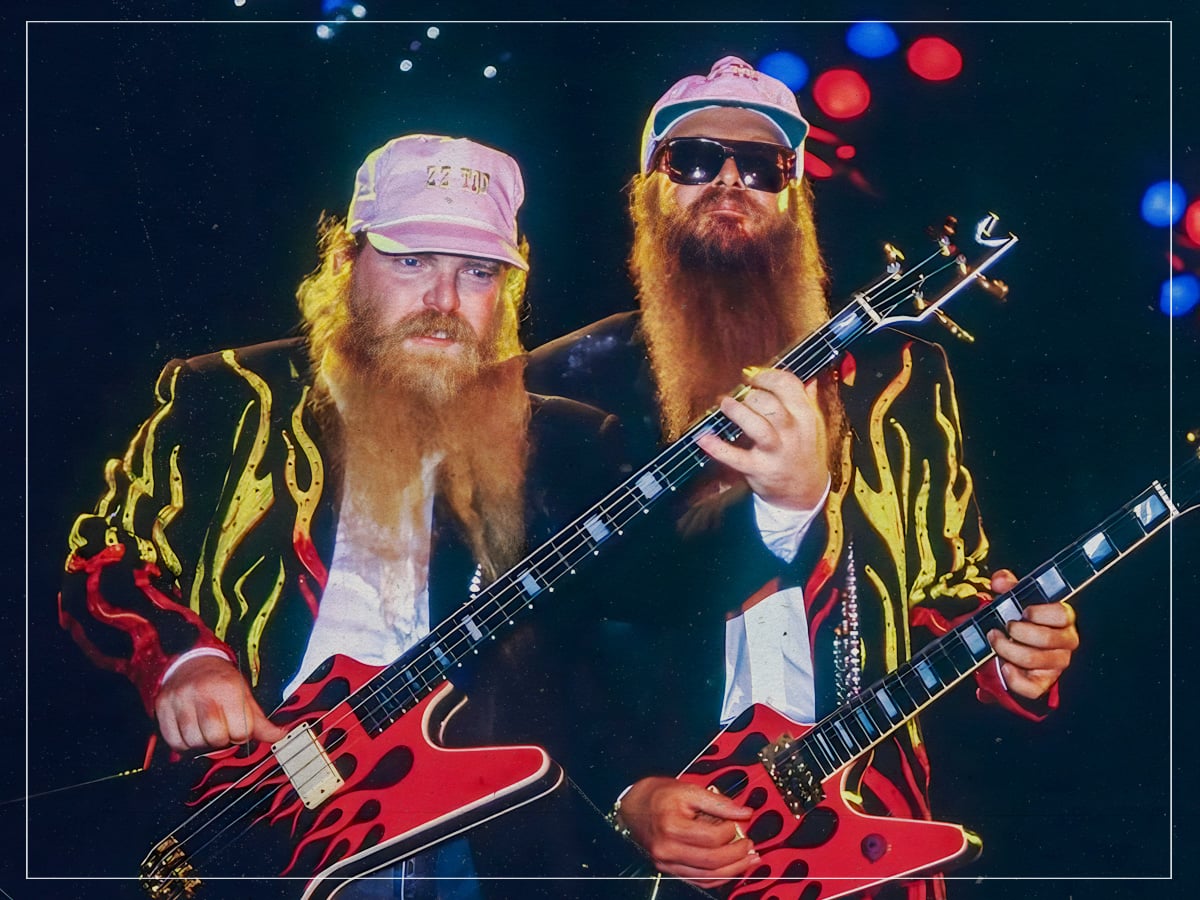
Black Crowes ended up bagging an infinite amount of luck during the 1990s with several hits that placed them in the same arenas as some of their more well-established contemporaries. More often than not, their ploy to play dirty set them apart, and their anti-establishment, robust take on rock ‘n’ roll built a reputation based on them being a force no one could beat.
At the beginning of 1991, the band were billed to open for ZZ Top for around five months, which was a monumental opportunity for the band to establish themselves as grand players in the broader stadium rock scene. However, from the beginning, Chris Robinson took issue with the tour’s sponsor and branded the entire venture a commercial ploy rather than an artistic adventure. As a result, the team threatened to fire the group from the tour after Robinson made a series of comments on stage about the partnership, pushing them to hit the road just as they were about to play in their hometown.
Of course, Robinson had a different recollection of events and later described the disagreement as a product of ZZ Top’s management trying to “censor what we were about.” In a more recent interview, however, Robinson reflected on the events through a more distant lens, mentioning his burgeoning friendship with Billy Gibbons and describing the mishap as a “hardcore” statement about their “independence” at the time.
Mötley Crüe vs Steel Panther
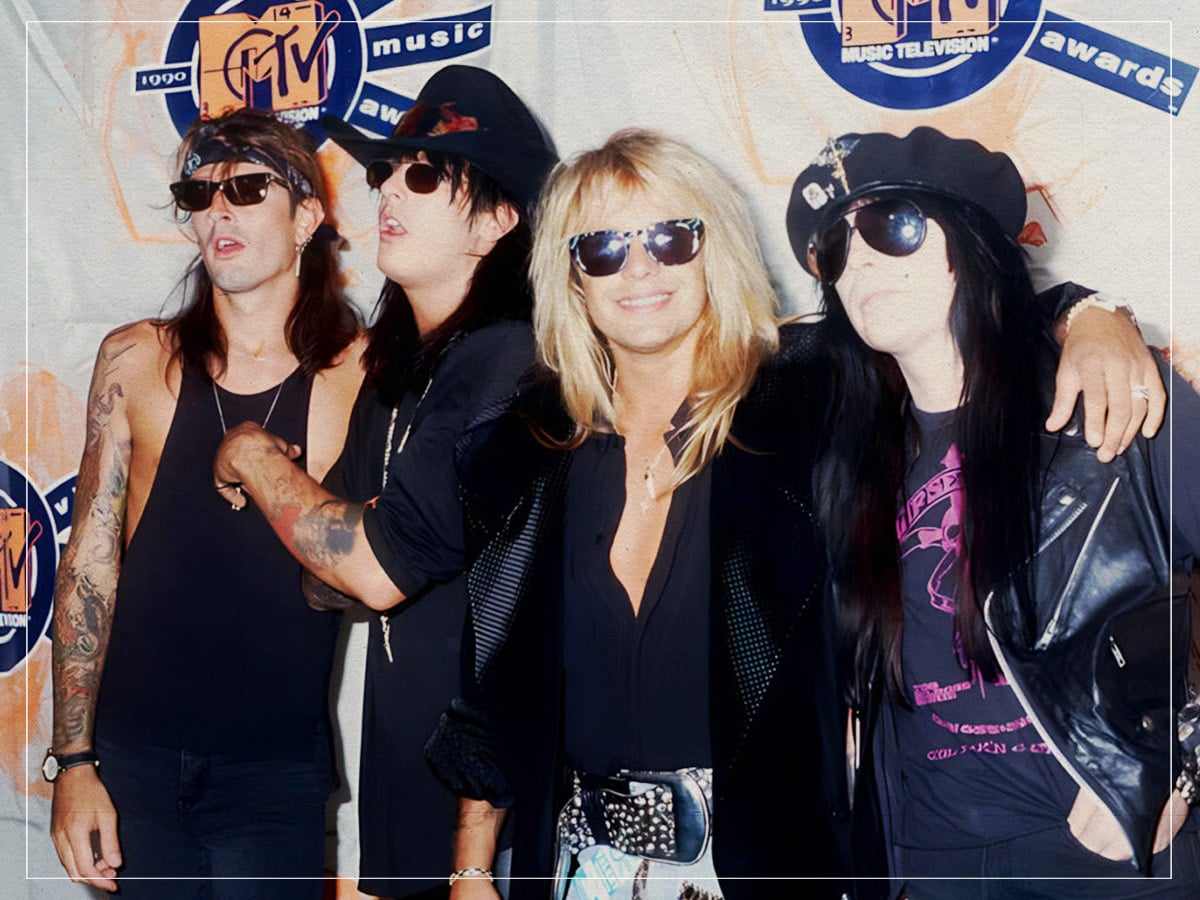
Mötley Crüe and Steel Panther’s feud isn’t exactly subtle in the metal world, but the root cause of such an endless rift seems a little more shrouded in ubiquitous haze. Various members have continuously hit out at each other over the years, making it seem like a spat far from over and one which draws on a series of fights and disagreements that will likely never be resolved.
However, their mutual hatred reportedly began in 2011 during a tour that featured Steel Panther and Def Leppard as Crüe’s opening act. Known for their comedic antics, audiences were excited to catch a glimpse of the Panther in action, but the Crüe weren’t exactly convinced. In fact, according to the band’s drummer, Stix Zadinia, hostility exuded from Tommy Lee and Nikki Sixx almost immediately, which caused some tension between the groups.
As he put it: “I think they thought we were actually making fun of them directly. And I just gotta chalk that up to their egos being too big because nothing that we do has anything to do with them directly.” Albeit you can even see how that comment might have been taken the wrong way.
Ozzy Osbourne vs Iron Maiden

No other names stand out as prominent as Ozzy Osbourne and Iron Maiden in the broader pantheon of rock music. However, amid the most significant metal event in recent times, Iron Maiden joined Black Sabbath on the lineup at 2005’s Ozzfest, a partnership that quickly turned sour when the Bruce Dickinson-fronted group took issue with the commercial nature of the entire event.
Anger settled in from day one, but as time went by, disruptions and disputes defined the band’s experience, with Dickinson neglecting to bite his tongue on numerous occasions. At one point, he muttered an obvious dig at Osbourne, which his wife Sharon had overheard. According to her, Dickinson said: “We don’t need a teleprompter” and “we don’t need a reality show to be legit.” The more she heard the negativity, the more she became pushed to do something about it.
On top of Sharon’s rage, Ozzy apparently didn’t care much for their disposition either, later explaining: “Unbeknown to me, every night he was going on stage slagging me off. That wasn’t fair. If he didn’t like the fuckin’ tour, he should have said, “I’m jumping [off] the fuckin’ tour”, but to go on stage and fuckin’ slag me off for no reason… I’d never said a fuckin’ bad thing to him.” Needless to say, that certainly led to sour acrimony.
The Rolling Stones v Prince

Today, Prince is considered a prodigy whose ability to churn out hit after hit wasn’t just a testament to his superior ability but a broader cultural comment on audience expectation and oppression. Amid his brilliance, Prince managed to disrupt the status quo, leaving sceptics afraid of what his influence would do to the minds of impressionable youth while fans shook their heads in disbelief at the unrelenting disapproval of others.
However, when Prince was invited to open for The Rolling Stones in 1981, he was far from the legendary figure he would become, with only a single hit pervading the airwaves at the time. The audience, unsure what to make of his flamboyance and eccentricity, neglected to welcome him with open arms and proceeded to hurl racist and homophobic abuse and throw objects onto the stage. Years later, Mick Jagger and Keith Richards didn’t exactly sympathise with the singer; instead, they called out his sensitivity to indicate that he wasn’t cut out for a life in show business.
“If you get to be a really big headliner, you have to be prepared for people to throw bottles at you in the night,” Jagger said, to which Richards chimed in, “Prince has to find out what it means to be a prince. That’s the trouble with conferring a title on yourself before you’ve proved it.” He also said Prince’s appearance was “insulting to our audience” – his usual self-absorbed conjecture when looking at the misfortunes of others. He even went as far as to call him an “overrated midget”, despite Charlie Watts and Jagger thinking the ‘Purple Rain’ star was a supreme talent.
Aerosmith vs Megadeth

Some support acts seem entirely appropriate, tapping into one or many aspects that audiences love about the main act. On other occasions, their inclusion is a total surprise but a good one nonetheless. On other rare occasions, the convergence of the two acts seems like an extreme case of chalk and cheese, and the touring collaboration of Aerosmith and Megadeth seems more an example of the latter than anything resembling serendipity.
Megadeth supporting Aerosmith for their Get a Grip tour could have been an unexpected match made in heaven, with 1970s rock tropes mixing well with Metallica-laden metal elements like a swirling mix of energy and excitement. However, Dave Mustaine seemed to have an unrelenting issue with the band from the moment they hit the road, and he wasn’t afraid to voice it.
Apparently, Mustaine took issue with the way Aerosmith was treating them, but the real reason that later emerged centred around something more akin to egocentricity—with Megadeth already at the point of being headline acts, they didn’t like Aerosmith’s success and joined the tour to watch them fall rather than rise to new heights.
Recalling the strange dynamic in his book Rocks, Joe Perry explained their position, saying, “Although for the most part, we enjoyed an easy and respectful relationship with other rock bands, at the start of the Get a Grip tour, when Megadeth was opening for us, there was a nasty moment. Dave Mustaine was onstage and bad-mouthed us for being over the hill. Not cool. We dropped them from that tour.” And they’ve never spoken since.
