


Five amazing songs with five chords or fewer

For anyone who is just starting out with learning how to play a musical instrument, the first thing you’ll learn is what all the individual notes are, and once you’re familiar with the relationship between them, you’ll eventually move on to playing a few of them at once and creating one of pop music’s most essential features: chords.
Of course, the concept of chords has existed for as long as humans have been making music, but while they were utilised a lot more sparingly prior to the 20th century, they’ve since become a staple of popular music in all of its forms, forming the backbone of everything from blues to trance. The importance of chords to music, to put it simply, cannot be overstated.
But in all truth, just how many do you need in order to write a great song? You may well hear stories of bands like Radiohead having contests to see who could jam the most chords into a single song, which is ultimately what led Thom Yorke to writing ‘Just’, but at the same time, 12-bar blues exists on the idea that you only need to be able to play three chords in a song, and you’ve got something that people can immediately recognise from its form.
Many famous songs are based around the same I-V-VI-IV chord progression and are delivered in the same key, and it’s been demonstrated on many occasions that several songs are interchangeable with one another for this exact reason. While this might lead you to believe that using fewer chords leads to a lack of innovation, but there’s plenty of songs that disprove this notion. Just look at where three chords got Status Quo, and you’ll realise that there simply isn’t a need for a fourth chord – or maybe you will, depending on your outlook.
With that in mind, here are five examples of songs that, when written down on paper, don’t appear to have much going on in terms of the chords utilised, but once you start to unpack everything they have going on, it becomes clear that the chords they’ve used sparingly are dealt with incredible effect.
Five songs that prove you don’t need any more than five chords:
Bob Dylan – ‘It Ain’t Me Babe’

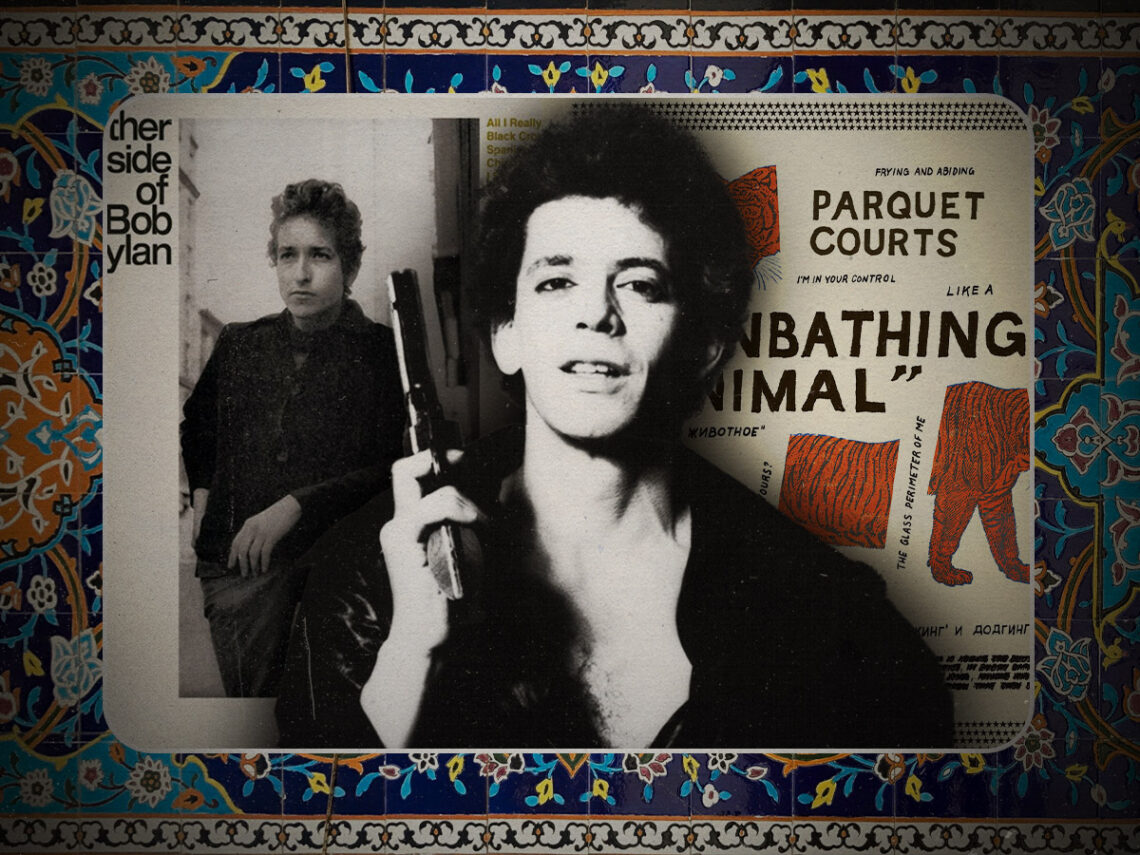
There are countless songs that have been written with only five chords, but an absolute master of the art of using the minimum amount required is Bob Dylan. Never overcomplicating his compositions with too many changes so that it distracts the listener from the simplistic beauty of what he’s written, very few have managed to create such timeless classics to the same level that Dylan was able to, especially on his earliest work, and the Another Side of Bob Dylan track, ‘It Ain’t Me Babe’, shines while showing little in the way of variation.
The fact that the song has become a modern standard only goes to show just how impeccable it is as a mark of his songwriting ability, and while there are a few transitional chords that other performers have chosen to throw into the chorus, Dylan’s original only needs five in order for it to feel complete.
Chords: (G C D Bm Am)
Stereolab – ‘Brakhage’

Certainly not the fewest number of chords used in a song by the Anglo-French art pop retro-futurists, with ‘Blue Milk’ taking almost 11 minutes to change to a second chord, the opener of their seminal 1997 album Dots and Loops is based around a simple two chord structure that is built up with layers of vocals, complex rhythms and vibraphones, and yet, nothing about the song ever feels straightforward.
Towards the tail end of the track, which is aptly named for experimental filmmaker Stanley Brakhage, there’s a brief detour where the song modulates into its relative minor key, causing the two chords to change for all of a handful of bars. Repetitive it might seem on paper, but the way in which the song is arranged so deftly makes it feel like there’s far more going on than the chords would suggest, and the overarching jazziness of the composition only serves to add further depth to this highlight from the band’s opus.
Chords: (G#m7 F#m7 Bm7 Am7)
Parquet Courts – ‘Sunbathing Animal’

Punk has never really professed to be a complex genre, and plenty of acts from this world will argue that the less you put into a song, the easier it will connect with its audience, who are only after an explosion of energy. While Parquet Courts don’t always fit squarely into the punk sphere, having delved into more songwriting-driven territory on other material, ‘Sunbathing Animal’ is a truly ferocious track that revels in the fact that it only has three chords.
Every instrument is thrashed around with wild abandon, with the song barely able to contain the fervent energy with which it is delivered, and there’s an overarching rawness that the New York act manage to inject into the title track of the album of the same name. As frontman Andrew Savage delivers his verbose diatribes at breakneck speed, most of the song only uses a single chord, but those two extra ones that they briefly switch to are the proverbial cherry on top.
Chords: (B E F#)
The Velvet Underground – ‘Heroin’
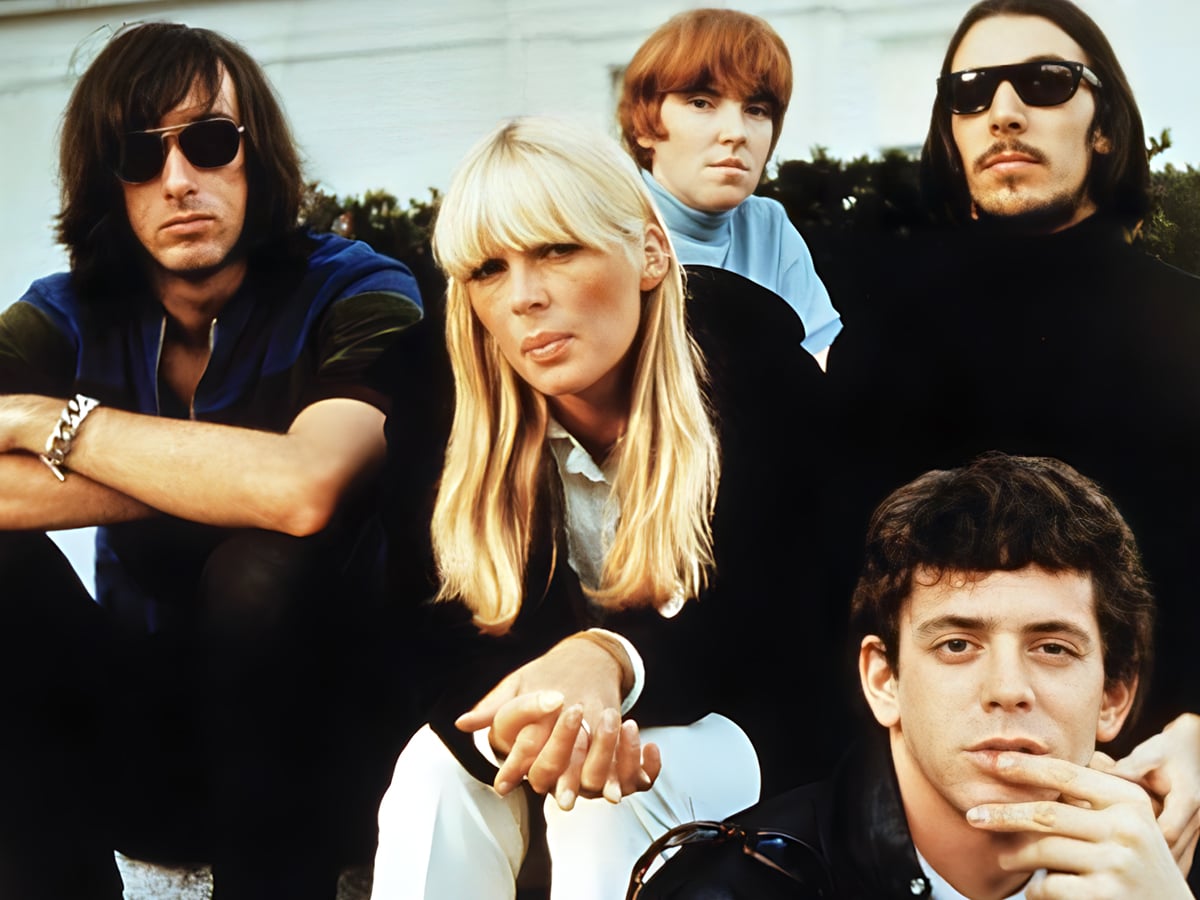
It shouldn’t be a surprise that Parquet Courts chose to write a song with only three chords in it, considering one of their most overt influences is The Velvet Underground, masters of writing songs with even fewer chords. While ‘Sister Ray’ is perhaps some people’s favourite example of a Velvets track that only uses two chords, whether or not it actually only has this few is debatable, given the amount of chaos that the song finds itself descending into and how many subtle changes Lou Reed and Sterling Morrison squeeze into its 17-minute runtime.
On a less debatable note, ‘Heroin’ definitely only uses two chords, and while it doesn’t pack the same angular punch as ‘Sister Ray’, the way the song gradually builds from its languid beginnings to reach a point of frenzied ecstasy is a marvel to behold, and serves as the perfect centrepiece of the band’s landmark debut album. While the subject matter is heavy and caused plenty of controversy upon release for its frank depictions of drug use, the way the song mimics the highs and lows of addiction while doing very little is ingenious, and one of Reed’s finest works as a songwriter.
Chords: (C# F#)
Harry Nilsson – ‘Coconut’

If you thought that two chords was testing the limits of what constitutes a functional pop song, then surely an entire track can’t be built over a single chord without driving its listeners to boredom? Step forward Harry Nilsson, a truly gifted songwriter usually known for his elaborately written songs that utilise far more than a handful of chords, who chose to squeeze every last bit of enjoyability out of a C7 chord in order to create ‘Coconut’ as a stark contrast to his regular style.
Some may turn their noses up at this being considered as an example of a song that uses just one chord, owing to the fact that the bass note fluctuates between C and G throughout the song, and also because the single C7 chord used throughout is arpeggiated rather than played as a cluster of notes, but does that really matter? For close to four minutes, Nilsson uses melodic variation in order to develop the song rather than any structural variation, and if there’s any song that perfectly demonstrates how less can sometimes function as more, it’s this whimsical track about using lime and coconut as a remedial concoction.
Chord: (C7)

Never Miss A Tale
The Far Out Bob Dylan Newsletter
All the latest stories about Bob Dylan from the independent voice of culture.
Straight to your inbox.