


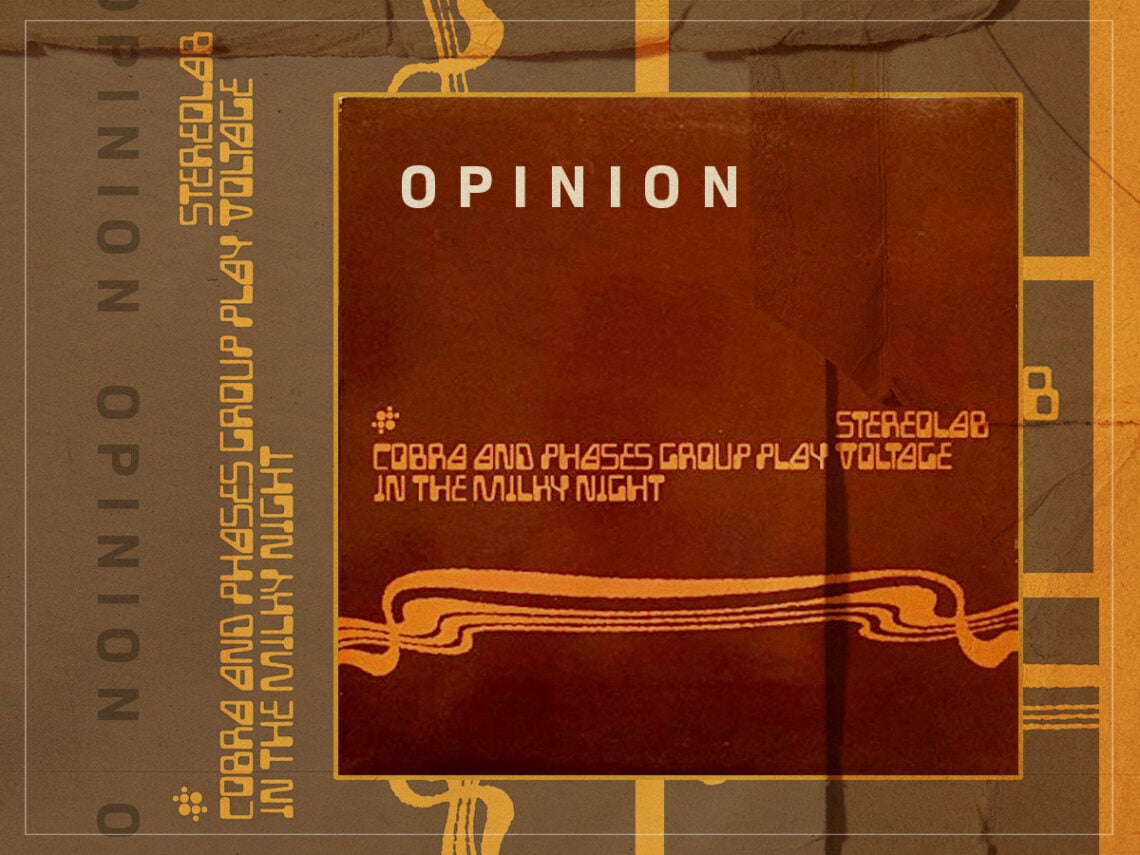
Hear Me Out: Stereolab’s ‘Cobra and Phases Group…’ is a flawed masterpiece

From the start of the 1990s, the British-French art rock group Stereolab had been gradually approaching perfection. Their early releases might have been a little rough around the edges, but it was clear that their approach to songwriting was unlike any of their contemporaries, affording plenty of space to integrate their avant-garde tendencies into a sound that bore a resemblance to the rising post-rock and shoegaze trends.
Their first three albums, Peng!, Transient Random-Noise Bursts With Announcements and Mars Audiac Quintet saw them veer ever closer to striking the desired balance between their hodgepodge of influences, but it was clear that eventually they’d create a stunning work that forced audiences to take note of just how adept they were at their craft. In 1996, that masterpiece arrived in the form of Emperor Tomato Ketchup.
It might have been considerably poppier than previous releases, but it also saw the band shift towards a greater amount of electronic experimentation, with sprinklings of space-age psychedelia and cocktail lounge jazz. This heady melange went even further on the follow-up, Dots and Loops, and by the end of the decade, they were determined to make it a hat-trick of triumphs in abstract pop. However, if these two albums so perfectly encapsulated everything the band had been striving for, what was left for them to aim for?
The resulting album, Cobra and Phases Group Play Voltage in the Milky Night, doesn’t see the band reinvent the wheel or try much new, but what it does succeed at being is a victory lap for the band after their two strongest releases. They didn’t need to attempt anything drastically different in order to prove that they still had ideas in the tank and instead opted to grab one more opportunity to celebrate the evolution they had gone through since forming before venturing elsewhere.
However, this rubbed a lot of people up the wrong way, and listeners didn’t seem to be content with the way that Stereolab presented themselves on Cobra. On the one hand, people were growing tired of the retro-futuristic shtick that they’d been leaning into, and the ‘do-be-do-be-do’ harmonisations of Lætitia Sadier, Mary Hansen and Morgane Lhote were becoming increasingly grating. Contemporary critics of the album accused the band of using these tropes to prop up a dying enthusiasm for making music together and found its obtuseness to be deliberately slapped on top of their songs rather than carefully considered.
One change that may be to blame was the addition of another Chicagoan producer, bolstering the services of Tortoise’s John McEntire, who had been such a crucial part of the two previous albums with the ears of experimental icon Jim O’Rourke. The differences are subtle, but O’Rourke’s predisposition for harsher textures made for a disorienting listen in comparison to the prior releases.
So what did fans want? Too much farfisa organ was supposedly getting annoying, but replacing it with glitches and drones was also an egregious move. There was simply no right response that Stereolab could’ve made with Cobra when the restlessness of listeners meant that every option they were faced with would’ve been scrutinised to death. It should’ve been obvious that this was where the band were heading, and in theory, it was the album that everyone was asking for. Rattles had truly been thrown out of collective prams.
There are some faults in the album, but it still has all of the charm of a Stereolab record. Yes, ‘Blue Milk’ is 12 minutes of the same idea building slowly, but pretending that there’s no overlap between the fanbases of Stereolab and Can is frankly a lie. If you can tolerate one doing it, you can suck it up when the other chooses to. Yes, I appreciate that you may be sick to death of the vibraphone after two-thirds of the album, but every time it returns, it’s used in a fashion that feels complementary to the rest of the track rather than an unnecessary embellishment.
The flow of Cobra from start to finish is majestic, and while it might feel like a huge undertaking to listen to it all in one go, it’s a rare example of a 75-minute album that is completely worth your time. For every complaint that someone has about its sound, production or duration, there’s a much stronger rebuttal that only goes to prove that this is the album that completes Stereolab’s three-peat of masterpieces.
