


Five albums that inspired the sound of Wooden Shjips

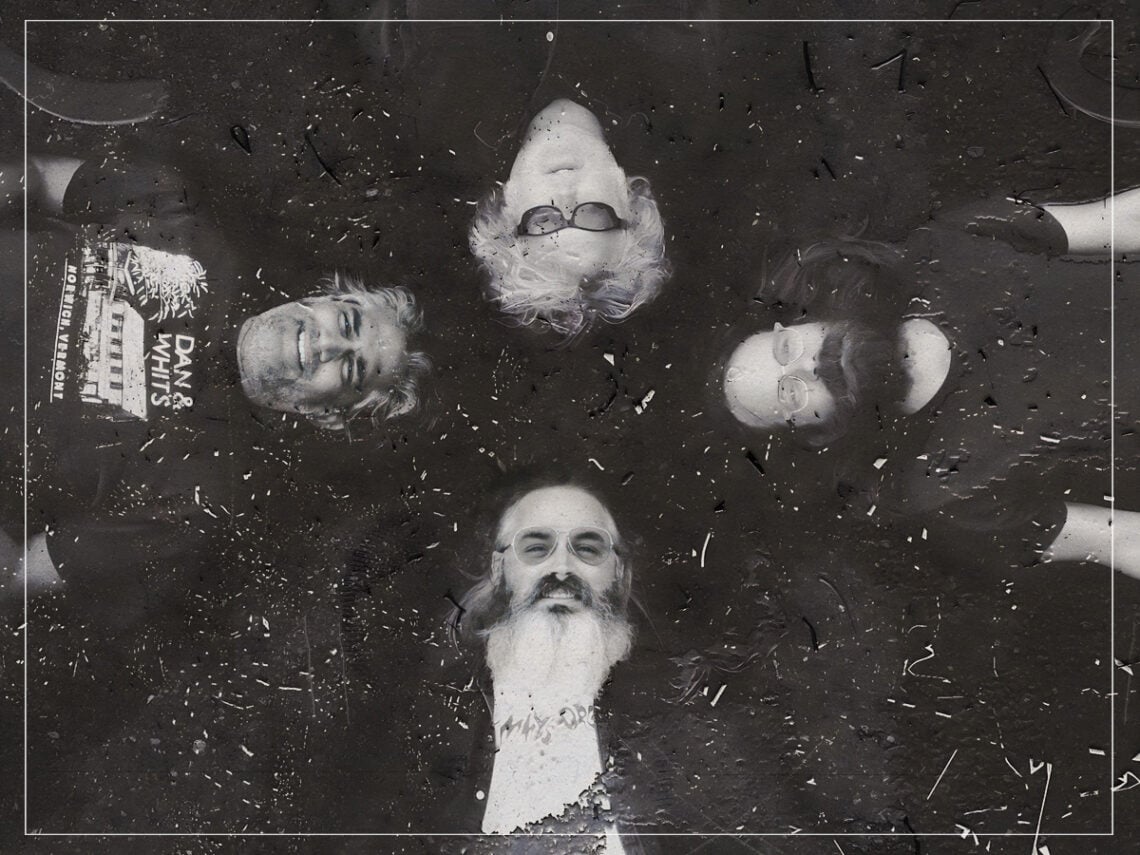
We’re almost 20 years into the reign of Wooden Shjips, five albums in, and still desperately awaiting a sixth. During that time, the band’s stately bow barely came close to cresting the shores of mass recognition. The band barely seem to care. Instead, they quietly jam away somewhere on the outskirts of San Francisco, crafting a droning psychedelic sound that has intoxicated a clique of dedicated fans.
Their sound is not an ominous hum but rather a whirling reinterpretation of a drone, full of hidden hooks and Lou Reed’s spirit. The band, however, actually began as “non-musicians”, and even though there has been a level of mastery since, the faint remnants of their rudimentary origins are evident in the slow jigsaw build of their gathering songs. This creates a unique concoction that creeps up on you, like the moment you try to stand up after a few ‘easy’ White Russians.
So, who was it the band were trying to channel in the early days as they juggled jamming between jobs in IT, geology, pharmaceuticals and the post-production of films? “Link Wray made me want to strip everything back, down to the groove,” bandleader Erik ‘Ripley’ Johnson told Tidal regarding the band’s tenet of favouring energy and atmosphere over anything overly intricate too early.
“He also showed how much you could do with just a guitar and amp, and the importance of feeling and tone,” he added regarding Link Wray’s Greatest Hits album. “For the original Shjips stuff we looked to early rock ‘n’ roll in general, especially as a dance music, for inspiration.” They’re certainly not alone, with Iggy Pop, Pete Townshend, Jimmy Page, Mark E. Smith and more all citing the intoxicating ‘Rumble’ by Wray as the moment they fell in love with rock ‘n’ roll, if you can even term it as simply as that.
The second most prominent energy that they draw upon can be heard in The Velvet Underground. In V and Back to Land, in particular, there is a lucid sense of the band swirling the avant-garde into something smooth and absorbing without shedding any of the vitality of experimentation. One of the key forces that formed this within The Velvet Underground was their forgotten founder, Angus MacLise.
However, he certainly wasn’t a name lost on Ripley, with the frontman hailing his solo release The Cloud Doctrine as a pivotal record. “Another big influence on the Shjips was the classic minimalist stuff: Terry Riley, LaMonte Young, John Cale, Tony Conrad,” he explained. “But Angus MacLise was always my favourite. The original drummer for the Velvet Underground, his sound was woolier than the rest, and he used bongos a lot, which I love. We were really into the drone, the repetitive grooves, but we merged it with the rock ‘n’ roll.”
Among their other key influences are II by High Rise, Träd, Gräs och Stenar’s self-titled release, and Vincebus Eruptum by Blue Cheer from 1968. Though evidently eclectic, the one element these seminal records have in common is a cool groove and bliss of making music mentality: exactly how Wooden Shjips sound.
