


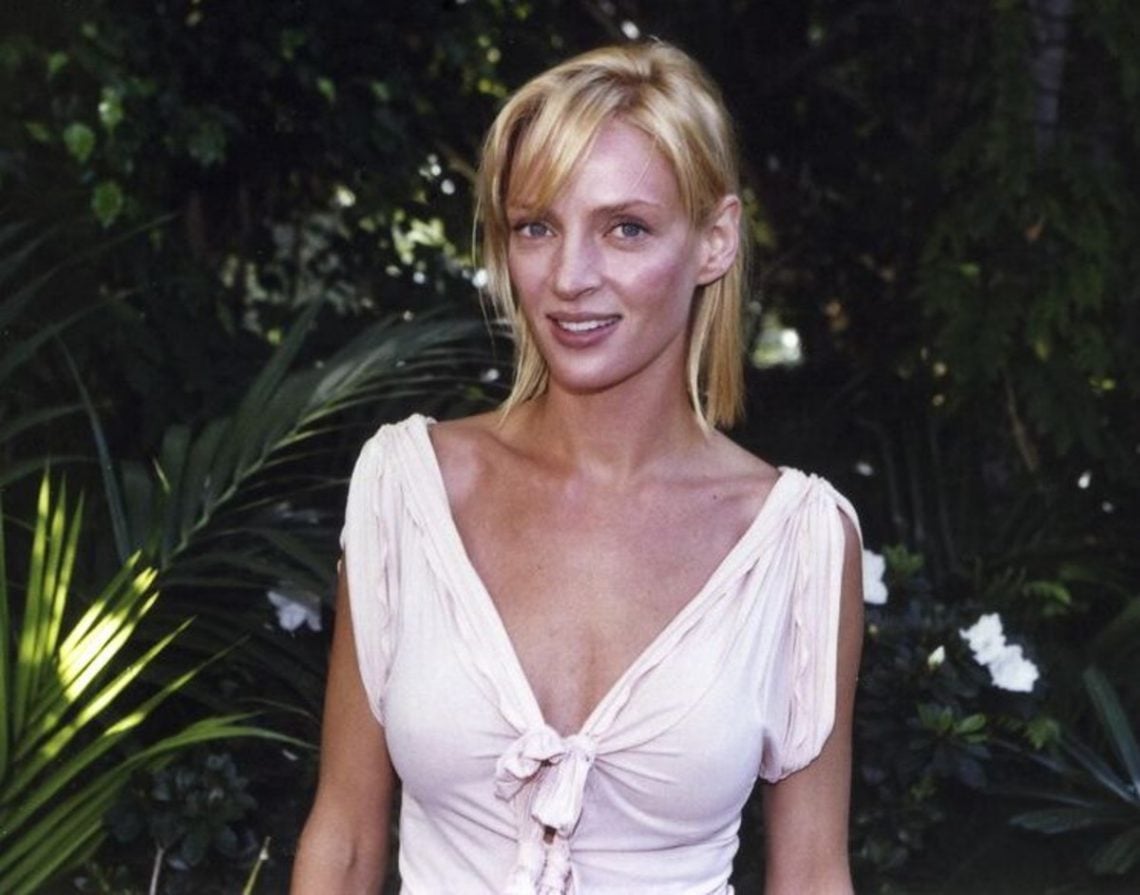
A healing experience: The filmmaking style Uma Thurman calls “masterful”

Uma Thurman has linked up with some of the most accomplished directors in the business over the course of her impressive acting career. From a starring role in a Richard Linklater film to a series of projects with arthouse auteur Lars Von Trier, her filmography has no shortage of esteemed names, but Thurman has become most well-known for her work with cult director Quentin Tarantino.
After landing a starring role as Mia Wallace in the filmmaker’s iconic 1994 offering Pulp Fiction – posters of which still adorn college dorm walls worldwide – Tarantino and Thurman would continue to work together for the next decade. In the early 2000s, Thurman fronted his two-part tale of revenge, Kill Bill, donning a yellow tracksuit to embody one of the most iconic characters in modern cinema.
With a stunning soundtrack, intriguing action sequences, and a number of well-developed characters, Kill Bill bolstered all of the elements that make Tarantino’s filmmaking so distinctive. This was reflected in the response to the film, which continues to have praise heaped upon it over two decades after its release.
Thurman’s experience of shooting Kill Bill was particularly intense, including an instance where Tarantino encouraged her to drive a stunt car, leaving her in a neck brace. Thurman has not worked with the director since Kill Bill: Volume 2, though her daughter, Maya Hawke, did appear in his 2019 offering, Once Upon a Time in Hollywood.
After the experience of filming Kill Bill, Thurman found solace under the direction of John Woo. In the same year Kill Bill: Volume 1 hit cinemas, so too did a film called Paycheck, which starred Thurman alongside Ben Affleck. The experience of shooting the sci-fi seemed to be much calmer than Kill Bill had been. “I had a nice time,” the actor recalled to IGN, “Ben did all the heavy lifting…”
The shoot felt particularly therapeutic for Thurman because of the connection between Woo’s work and Kill Bill. Tarantino had been heavily inspired by the action filmmaker during the making of his revenge saga, citing The Killer as a particular inspiration during a conversation with Thurman. “It seemed like I probably wasn’t in good enough condition to carry a movie in that moment,” Thurman acknowledged, “but to go work with him it was almost like a heal.”
The actor didn’t limit her praise to the healing nature of the film, she also termed Woo’s style “masterful”. From his iconic 1997 film Face/Off to the action film that initially inspired Tarantino, this directorial mastery can certainly be found in Woo’s filmography, but not necessarily in her own collaboration with the filmmaker.
The response to Paycheck by critics and audiences wasn’t particularly commendatory and paled in particular comparison to Kill Bill. While the legacy of the latter lives on in bright yellow Halloween costumes and lists of the greatest films of all time, the former has been relatively forgotten.
Though Kill Bill may have attained a cult legacy, it is tarred by the dangerous working conditions its star was subjected to on set. Meanwhile, Woo provided Thurman with a healing experience on set, both through his directorial style and through his connection to Tarantino. While Paycheck may not have performed quite as well as Kill Bill, upon release or decades later, it was the perfect project for Thurman to take during that time.

Never Miss A Take
The Far Out Quentin Tarantino Newsletter
All the latest Quentin Tarantino content from the independent voice of culture.
Straight to your inbox.